Madri panoramic view — Espanha

Voyspark · Destinations · Espanha

Madri.
The capital that lives after midnight.

Free
7 bairros24°C primaveraTapas grátis em LavapiésPrado · Reina Sofía · Thyssen

📊 Quick comparison

ItemValue
Best seasonabril, maio, junho, setembro, outubro
LanguageEspanhol (castellano)
CurrencyEuro (EUR)
Power plugTipo C/F · 230V · 50Hz
Emergency112 · Polícia 091 · SAMUR 061
Avg cost/day (couple)~US$ 394 /day (couple)
Direct flightsFrom São Paulo (GRU), Latam and Iberia operate direct daily, 11 hours, fares US$ 950-1,500 round-trip low season (Mar, Apr, Nov)
Vaccines / docsSchengen Area — Spain integrates

Madrid isn't Barcelona with more museums. It's another Spain — the Spain of dry highland, sky-high blue, light that cuts. No sea, no beach, no Gaudí. But Velázquez, Goya, Picasso, three museums fifteen minutes' walk apart. Tapas that come free with the beer. Streets alive at 3am on any random Sunday.

The city runs on another clock. Lunch at 2:30pm. Dinner at 10pm. Beer at 2am. Sleep at 5am. Travelers expecting "postcard Spain" feel off — Madrid is urban, dense, work-hard-party-hard, a real capital. Open travelers discover what may be the world's best city for "going out without a plan".

It's not a checklist city. It's a barrio city. You don't "see Madrid" — you live in Malasaña for three days and Malasaña becomes part of you. Then you cross over to La Latina on a vermut Sunday and find another Madrid. Then Lavapiés at night and find a third. Many cities stacked on top of each other.

Voyspark editorial · updated monthly by our resident editor in Madri.

By the numbers.

Population

3.3M (cidade) / 6.7M (metro)

Time zone

CET / CEST (UTC+1 / +2)

Language

Espanhol (castellano)

Currency

Euro (EUR)

Plug · voltage

Tipo C/F · 230V · 50Hz

Emergency

112 · Polícia 091 · SAMUR 061

Known for

Triángulo del ArteTapas grátisMovida MadrileñaReal MadridVida noturna 24hCocido madrileño

History.

From Muslim Magerit to global capital: the Madrid few tell about.

Madrid's history begins small. In the 9th century, Cordovan emir Muhammad I founded a fortress called Mayrit (Arabic for "place with water") on a dry plateau in central Iberia — exactly where the Royal Palace stands today. It was a military outpost defending against northern Christian kingdoms, with no political importance, no cathedral, no university. Madrid was born as a military base, not a city. This pragmatic DNA — functional, without aesthetic pretension — persists today compared to Seville, Granada or Toledo.

In 1083, Castilian king Alfonso VI conquered Magerit and Christianized the name to Madrid. For four centuries the city remained provincial — between 5 and 10 thousand people, behind Toledo, Seville, Valencia. The turning point came in 1561, when Philip II — king of the largest empire in history until then, spanning from Manila to Peru via Brussels — chose Madrid as permanent capital. The decision was strategic: a city at the exact geographic center of the Peninsula, with no dominant regional identity, politically malleable. In 50 years the population exploded to 100 thousand. It was the first major "created" capital, not a city that grew organically.

The 17th century was the Spanish Siglo de Oro — painting, literature, theatre. Velázquez was named royal painter to Philip IV and painted "Las Meninas" in the Alcázar Palace (which burned in 1734 and was replaced by today's Royal Palace). Cervantes wrote "Don Quixote" while living in Madrid (published 1605, the first modern novel of Western literature). Lope de Vega wrote over 1,500 plays. Calderón de la Barca, Quevedo, Góngora — all circulated through taverns in the Barrio de las Letras (today around Calle de las Huertas, with verses embedded in the sidewalk).

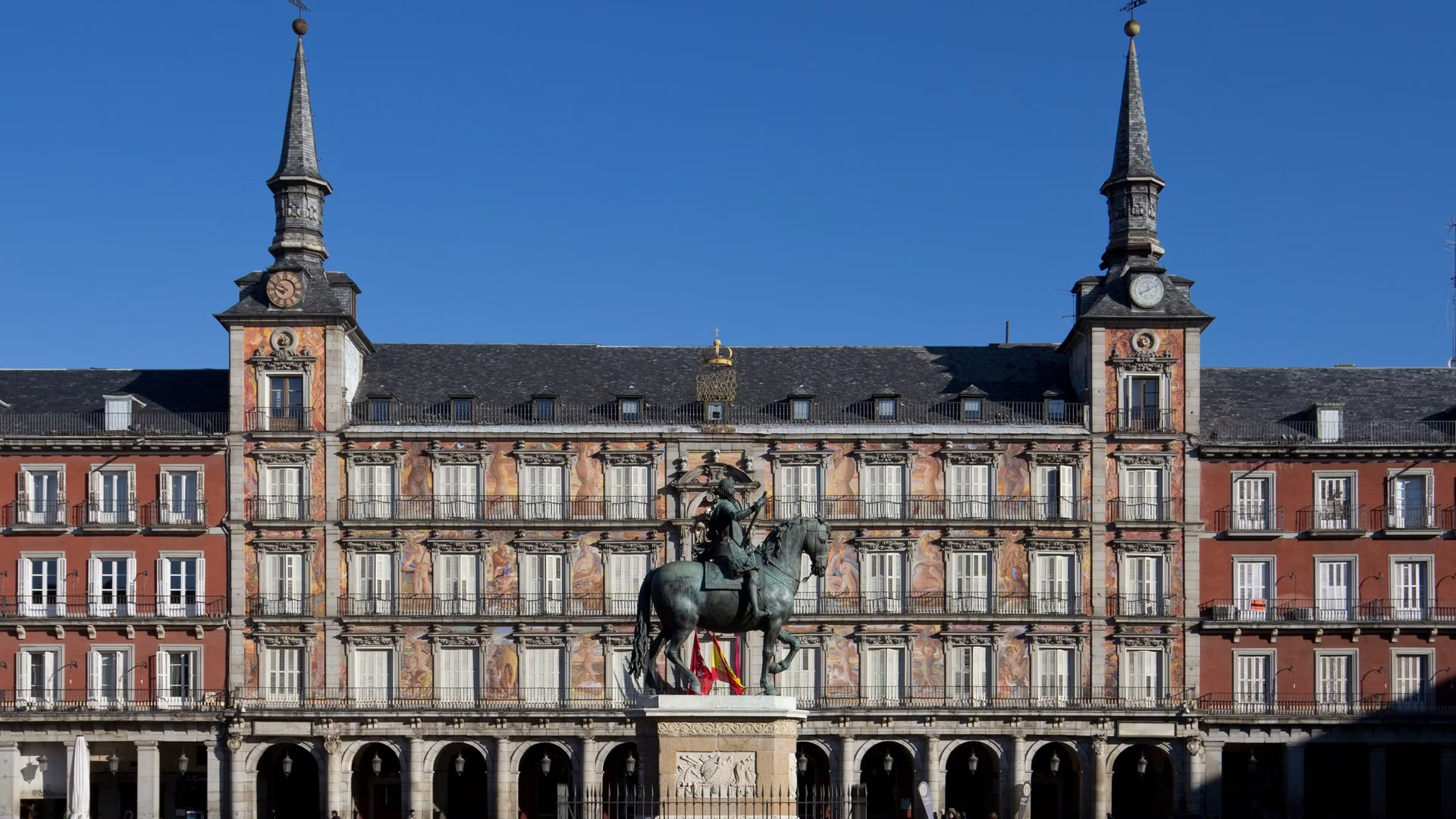
Plaza Mayor de Madri com a estátua de Felipe III
Plaza Mayor — coração histórico de Madri. · Wikimedia Commons · CC BY-SA 3.0 · Carlos Delgado

The Habsburg → Bourbon transition in 1700 changed the city's aesthetic. The Bourbons (French family) brought Enlightenment urbanism to Madrid: the Paseo del Prado became a monumental avenue, the Botanical Garden was created (1781), the Prado Museum started construction as a Natural History Museum (1785, opened as art museum 1819). Charles III, the king who most transformed Madrid, is today called "the city's best mayor" — public lighting, sewerage, paving, order. Plaza de la Cibeles, Puerta de Alcalá, Neptune Fountain are all from this era.

The Napoleonic occupation (1808) was catastrophic and defining. On May 2, 1808, the people of Madrid rose against French troops — the uprising was crushed in 24 hours and dozens of madrileños were shot at Cerro del Príncipe Pío. Goya, eyewitness, painted "The 2nd of May" and "The 3rd of May" (both in the Prado) — for the first time in Western art history, a political massacre was portrayed as denunciation, without heroization. The war against Napoleon lasted until 1814 and devastated the Spanish economy. May 2 became the Comunidad de Madrid holiday and marks the symbolic beginning of modern Spain.

The 19th and early 20th centuries were chaotic: three Carlist wars, First Republic (1873-74), Bourbon Restoration, Primo de Rivera Dictatorship, Second Republic (1931). In 1936 the Spanish Civil War broke out, perhaps the bloodiest civil conflict in 20th-century Europe. Madrid was the heart of Republican resistance — "No pasarán!" was shouted on Casa de Campo barricades. The city resisted three years of siege and bombing, with 30,000 dead from hunger, cold and bombs. It fell March 28, 1939. Picasso painted "Guernica" (1937) in Paris upon learning of the Nazi bombing of the Basque town — today in the Reina Sofía, symbol of modern war's brutality.

Franco ruled Spain from 1939 to 1975 — 36 years of dictatorship, censorship, international isolation, Catholic conservatism. Madrid became the regime's showcase: monumental buildings (Edificio España, Torre Madrid, Valle de los Caídos 50km away), imperialist architecture, repression of Catalan and Basque movements. Franco's death on November 20, 1975 and the Democratic Transition (1975-82) released energy repressed for a whole generation. The Movida Madrileña exploded — Almodóvar started filming, Alaska sang "A quién le importa", Mecano and Hombres G ruled radio, Malasaña bars stayed open until 6am, drugs and sexual freedom circulated openly. It was post-traumatic Madrid reinventing what it means to be modern Spanish.

2026 Madrid is a mature global capital. EU member since 1986, NATO since 1982, euro since 2002. Hosts global events (Madrid Conference 1991, NATO Summit 2022), houses Ibero-American institutions (SEGIB), is reference in LGBTQ+ rights (world's third country to legalize gay marriage 2005). The 2020 pandemic hit Madrid hard — the city was a European epicenter — but recovery was fast and tourism returned to pre-2020 levels by 2023. In 2026, dominant debates are gentrification (Lavapiés and Malasaña rents nearly doubling in 5 years), Airbnb saturation in the historic center (regulation still debated), and the chronic Madrid-Barcelona tension over Spanish identity.

Neighborhoods by personality.

Every neighborhood has its own temperature. Tell us your vibe — we'll re-rank.

01

Malasaña

93% match with your Slow Romantic profile

The alternative neighborhood, cradle of the 1980s Movida Madrileña. Today full of third-wave coffee, vintage shops, signature cocktail bars and creative-scene residents. Plaza del Dos de Mayo is the heart — terrace packed from morning to late-night last sip. Best place to stay to understand real young Madrid, but also the noisiest.

✓ Vida noturna autêntica✓ Cafés autorais✓ Sebos e vintage⚠ Barulhento à noite

02

Chueca

89% match with your Slow Romantic profile

Madrid's historic LGBTQ+ neighborhood and world reference. Inclusive energy year-round, peaking at Madrid Pride in July (1 million people). Sunday brunch is institution. Plaza de Chueca, Calle Hortaleza, Calle Augusto Figueroa concentrate the scene. Central, well-connected, considered one of the best for solo female travelers due to 24h safety.

✓ LGBTQ+-friendly mundial✓ Brunch dominical✓ Seguro 24h✓ Central

03

La Latina

91% match with your Slow Romantic profile

The traditional tapas neighborhood and Sunday vermut hub. Cava Baja is the world's densest tapas-bar street — 40+ bars in 500 meters. Sunday morning the whole neighborhood becomes aperitif ritual: vermut with olive, gin-soda, escabeche mussels, callos, before lunch at 2:30pm. Mercado de la Cebada and El Rastro flea market are here. The most castizo, traditional Madrid.

✓ Tapas autênticas✓ Vermut dominical✓ El Rastro⚠ Lotado fim de semana

04

Lavapiés

84% match with your Slow Romantic profile

The multicultural neighborhood — Madrid's largest Indian/Bengali/Moroccan/Senegalese communities. World cuisine at neighborhood prices: tikka masala, biryani, tagine, jollof, dim sum. Authorized street art (Tabacalera is a huge cultural center). Accelerated gentrification in the last 5 years has triggered public debate — "Lavapiés is not for sale" graffiti on walls. Vibrant but with edge, better at night with company.

✓ Comida internacional barata✓ Arte urbana✓ Multicultural real⚠ Edge à noite

05

Salamanca

76% match with your Slow Romantic profile

Madrid's chic neighborhood. Wide orthogonal avenues (19th-century urbanism), noble-facade buildings, Calle Serrano with Louis Vuitton, Hermès, Cartier, Loewe. Michelin restaurants (DiverXO by Dabiz Muñoz, 3 stars, is here). Expensive, elegant, but with less soul than Malasaña or La Latina. Good to stay if prioritizing comfort and discreet safety.

✓ Luxo e Michelin✓ Seguro e tranquilo⚠ Sem alma de bairro⚠ Caro

06

Chamberí

81% match with your Slow Romantic profile

The elegant residential neighborhood where middle-class madrileños live. Well-connected metro, Mercado de Vallehermoso, authentic neighborhood restaurants, morning bakeries. No tourist crowds, more civil prices. Near Sorolla Museum (hidden gem, the Valencian painter of light's house-museum). Good choice for 5+ days stays wanting local rhythm.

✓ Vibe local autêntica✓ Preços civis✓ Museo Sorolla⚠ Sem nightlife próximo

07

Conde Duque

79% match with your Slow Romantic profile

The new museum-neighborhood. The 18th-century military barracks (Cuartel de Conde Duque) became a huge cultural center — exhibitions, cinema, library, outdoor concerts. Around it, small restaurants, independent shops, neighborhood life without Malasaña's chaos next door. Strong trend in Madrid's gastronomic scene 2023-2026 — several award-winning restaurants opened here.

✓ Cena gastronômica emergente✓ Centro cultural Conde Duque✓ Quieter than Malasaña

When to go.

We crossed climate, average price, crowds and your tastes. Green = good, gold = great, red = avoid.

Jan · €€
Fev · €€
Mar12° · €€€
Abr15° · €€€
Mai19° · €€€
Jun24° · €€€€
Jul31° · €€€
Ago31° · €€
Set25° · €€€€
Out18° · €€€
Nov11° · €€
Dez · €€€

Voyspark AI suggests: Maio, junho, setembro e outubro são os meses honestos. Julho e agosto a cidade evapora (40°C+ e madrilenho foge pra praia). Inverno tem frio seco cortante mas a vida noturna não para. Se for em maio, San Isidro (15/05) lota tudo mas é a melhor festa do ano.

Gastronomy.

Dishes worth the trip — no tourist traps, no gimmicks.

Cocido madrileno servido em tres voos.

Cocido madrileño

The city's signature dish. Chickpea stew with meats (chicken, veal, chorizo, blood sausage, bacon) and vegetables (cabbage, potato, carrot), served in three courses (vuelcos): first broth with noodles, then chickpeas and veg, then meats. Quintessential winter Sunday lunch. Don't dine — lunch.

📍 La Bola (1870), Lhardy, Malacatín💶 € 25-40

Wikimedia Commons

Bocadillo de calamares.

Bocadillo de calamares

Fried calamari sandwich in crusty bread, with lemon and optional mayo. Symbol of Madrid's fast lunch — improbable and perfect. Traditionally eaten standing at a Plaza Mayor bar, but the best versions are in neighborhood bars.

📍 La Campana, La Ideal, Bar Postas💶 € 4-6

Wikimedia Commons

Prato de churros com chocolate quente

Churros con chocolate

Iconic breakfast (or post-party dawn). Fried dough dusted in sugar, dipped in thick hot chocolate. San Ginés (1894) is the historic 24h spot, but neighborhood chocolaterías rival it.

📍 Chocolatería San Ginés (24h), Valor, Los Artesanos 1902💶 € 4-7

Wikimedia Commons · CC BY 2.0 · LWY from Pasadena, USA

Tortilla espanhola fatiada.

Tortilla española

Thick potato-egg omelette, optional onion (national debate). In Madrid eaten both cold as tapa and warm at lunch. Serious ranking of best tortillas — Sylkar, Casa Dani.

📍 Casa Dani (Mercado Antón Martín), Sylkar, Pez Tortilla💶 € 3-8/tapa

Wikimedia Commons

Gambas al ajillo em cazuela de barro.

Gambas al ajillo

Shrimp sautéed in olive oil, garlic and chili (guindilla), served in a clay cazuela still bubbling. Classic Spanish tapa Madrid does as well as Andalusia. Comes with bread for soaking — don't waste the oil.

📍 La Casa del Abuelo (desde 1906), Casa Labra💶 € 8-14

Wikimedia Commons

Fatias finas de jamon iberico.

Jamón ibérico de bellota

World's best cured ham, period. From Iberian pigs fed acorns (bellota) in Extremadura and Andalusia pastures. 36-48 month cure. Hand-sliced paper-thin, room temperature, with red wine or beer. In Madrid, the best houses are jamón-specialized.

📍 Cinco Jotas (Velázquez), Joselito, Mercado San Miguel💶 € 12-28/ração

Wikimedia Commons

Copo de tinto de verano com gelo.

Tinto de verano

The summer drink no local orders bottled — they order the mix: red wine + gaseosa (carbonated lemonade) + ice + lemon slice. Refreshing, low ABV, perfect at 35°C on a terrace. Don't confuse with sangria (that's for tourists; tinto de verano is for madrileños).

📍 Qualquer terraza de bairro💶 € 2-4

Wikimedia Commons

Vermut servido em taca.

Vermut

Madrid's Sunday ritual. Red vermouth (semi-sweet, bittersweet) served in a tumbler with ice, orange slice and olive, between noon and 2pm, before lunch. "Ir de vermut" is a verb. La Latina on Sundays is the heart. Tradition that survived tourism intact.

📍 Casa Lucio, Casa Lucas, La Violeta💶 € 3-5

Wikimedia Commons

Callos a la madrilena em panela de barro.

Callos a la madrileña

Tripe stewed with chorizo, blood sausage, paprika, in dense sauce. Winter dish, popular, polarizing — love or hate. Lovers consider it as madrileño as cocido. Casa Lucio is the reference but any castizo tavern serves it.

📍 Casa Lucio, La Bola, Malacatín💶 € 12-18

Wikimedia Commons

Oreja a la plancha servida com pimentao.

Oreja a la plancha

Grilled pig's ear, crispy outside, gelatinous inside, with spicy sauce. Most traditional tapa that still divides opinions. Those who try it well-made (Casa Toni near Puerta del Sol) become fans. Vegetarians skip.

📍 Casa Toni, Casa Antonio💶 € 7-12

Wikimedia Commons

Patatas bravas com molho picante.

Patatas bravas madrileñas

Madrid version of patatas bravas differs from the Catalan one. Here the sauce is pure red-spicy, no aioli mixed (that's Barcelona). Cubed fried potato, paprika-cayenne sauce on top. Las Bravas (1933) invented the recipe.

📍 Las Bravas (desde 1933), Docamar💶 € 4-7

Wikimedia Commons

Croquetas espanholas douradas.

Croquetas

Creamy croquette (béchamel + filling: ham, chicken, cod, cheese) breaded and fried. Queen tapa of any decent bar. In Madrid there's a serious ranking of best croquetas — Casa Dani, Sala de Despiece, Santerra. May seem simple but huge technique.

📍 Sala de Despiece, Santerra, Casa Dani💶 € 2-4/un

Wikimedia Commons

Chuleton de buey grelhado.

Chuletón de buey

Old beef steak (min. 5 years), 800g-1.2kg weight for two, wild grilled (sea salt, high heat, rare). Northern Spain (Basque-Castilian) cuisine that Madrid embraced. Rustic meat, deep flavor, yellow fat. Comes with fried green pepper and potato.

📍 Asador Donostiarra, Casa Julián, El Capricho💶 € 60-90/un (rachado p/2)

Wikimedia Commons

Variedade de tapas espanholas servidas em mesa

Tapas grátis em Lavapiés

Madrid's most threatened and most preserved tradition. In some Lavapiés and La Latina bars, ordering a caña (small beer, €1.50-2.50) comes with a courtesy tapa: olive, fried potato, piece of tortilla, croqueta. Five beers = five tapas = dinner. Doesn't work in touristy zones. Test neighborhoods: Lavapiés, Embajadores, parts of Tirso de Molina.

📍 Bares de Lavapiés (Cervezas La Lupe, El Boquerón)💶 € 1,50-3 caña + tapa grátis

Wikimedia Commons · CC BY-SA 4.0 · Luis Miguel Bugallo Sánchez (Lmbuga)

Getting there and around.

Airport, public transport, direct flights, walkability.

From airport to center

Madrid-Barajas Adolfo Suárez Airport (MAD), 12km from center, Europe's 5th largest. Four terminals. Center options: (1) Metro Line 8 (Nuevos Ministerios) — 25 min, €4.50-5 with airport supplement, runs 6am-1:30am. (2) Cercanías C-1 (T4 only) to Chamartín and Atocha — 25-40 min, €2.60. (3) Airport Express Bus to Atocha — 40 min, €5, 24h. (4) Fixed-rate taxi to center — €30, 20-30 min. (5) Uber/Cabify — €25-35.

Public transport

Madrid Metro is among Europe's best — 12 lines, 302 stations, runs 6am-1:30am (until 2am Fri/Sat). Single ticket €1.50-2 (zones A). 10-ride Multi ticket €12.20 — shareable. Tourist Card 1-7 days €8.40-35.40, unlimited. EMT (bus) integrates with metro. Night service (búhos) 23:45 to 6am. Cercanías RENFE connects suburbs and airport. Official app: Metro de Madrid Oficial.

Direct flights

From São Paulo (GRU), Latam and Iberia operate direct daily, 11 hours, fares US$ 950-1,500 round-trip low season (Mar, Apr, Nov). Air Europa also operates. From Rio (GIG) Latam direct. From Brasília, BH, or Recife: connection via GRU. From New York (JFK) 7h direct, US$ 600-900. From Tokyo 14h. AVE links Madrid to Barcelona in 2h30 — useful for combining the two cities.

Walkability

Historic center (Sol, Mayor, Letras, Latina, Malasaña, Chueca) is all walkable — you can spend 5 days without metro. Typical distances: Sol → Prado 15 min walk, Sol → Malasaña 12 min, Malasaña → Latina 18 min. Salamanca, Chamberí, Conde Duque need metro. City is flat in part (center) and gentle hills around. July-August heat makes long walks hard — use metro.

Safety.

88.0/10

Solo female travel

Madrid rates very high for solo female travelers. Active nightlife means streets always have people until 4am. Catcalling exists but less than Rome/Naples. Calmer neighborhoods: Salamanca, Chamberí, Chueca (inclusive). Watch at night: Lavapiés (not dangerous, but edgier), empty Plaza Mayor in late hours.

LGBTQ+

Madrid is one of the world's most celebrated LGBTQ+-friendly capitals. Spain was the third country to legalize gay marriage (2005). Chueca is the historic neighborhood. Madrid Pride (1st week of July) is one of the planet's largest, with 1M+ people. Hand-holding between same-sex couples is fully normalized in any neighborhood.

Don't miss.

  • Museo del Prado — reserve minimum 4 hours. Velázquez "Las Meninas" room 12 mandatory. Goya "Black Paintings" room 67 are direct impact. Bosch "Garden of Earthly Delights" room 56A rewrites your notion of medieval painting. Entry €15, free 6-8pm Mon-Sat and 5-7pm Sun (arrive half hour early for line).
  • Museo Reina Sofía — Picasso's "Guernica" (room 206) is 20th-century Spain's most important painting. Protest form against 1937 Nazi bombing of Guernica. No photos nearby. Sit, observe 30 min. Dalí, Miró, Tàpies collections complement. Entry €12, free 7-9pm Mon-Sat and all day Sun.
  • Museo Thyssen-Bornemisza — completes the Golden Triangle. Private collection with Caravaggio, Dürer, Van Gogh, Monet, Hopper "Hotel Room", Rothko, Lucian Freud. More chronological and didactic than Prado. Entry €13. All three museums together with Paseo del Arte = €32 (worth it).
  • Royal Palace of Madrid — Europe's second-largest royal residence by built surface (135k m², only after Versailles), 3,418 rooms. Used only in official ceremonies — royal family lives in Zarzuela. Visit Throne Room, Royal Chapel, Armory, historic Kitchen. Entry €13. Combine with Almudena Cathedral (free) next door.
  • Plaza Mayor at dusk — unified 17th-century square (completed 1619), 9 accesses, 237 balconies, Philip III equestrian statue. Morning has numismatic-philatelic market. Dusk fills with local families, kids running, vermut on terraces, vibe of city's collective living-room.
  • Mercado de San Miguel — 1916 art nouveau covered market, rebuilt 2009 as gastromarket. No longer "neighborhood market" (expensive, crowded, touristy), but worth ONE visit to sample various things: fresh oysters, sliced Iberian ham, vermouth on tap, glass of cava. Strategy: arrive noon or 4:30pm, avoid 2pm and 9pm (peak).
  • Parque del Retiro — Madrid's lung (118 hectares in the center). Rent a rowboat on the central lake (€8, 45 min) — one of the most madrileño experiences, couples and families rowing under the Alfonso XII monument. Palacio de Cristal (1887) with contemporary art exhibits. Sunday morning has drummers and clowns.
  • Templo de Debod — 2nd-century BC Egyptian temple donated by Egypt to Spain in 1968 (gratitude for Spanish help saving Abu Simbel from Aswan flooding). Re-erected stone-by-stone in Parque del Oeste. Sunset here is madrileño ritual — all Madrid shows up, sitting on grass, watching the sun fall over the Sierra. Free.
  • Pinchos crawl in Malasaña — pick Thursday or Friday night, start at Plaza del Dos de Mayo, walk down Calle San Andrés / Calle del Espíritu Santo. Stop at Pez Tortilla (signature tortillas), Sala de Despiece, La Musa, Casa Julio. Each stop: caña + 1 tapa, no sitting, standing at the bar. In 4 stops you spend €25 and dined.
  • Sunday vermut in La Latina — uninterrupted ritual since 1880. Start on Cava Baja: Casa Lucio, Casa Lucas, Lamiak. Red vermut with ice, orange slice, olive, €3-4. With marinated anchovies, gildas, Iberian. Peak noon-2pm. Sunday is sacred. Don't skip.
  • El Rastro — antiques, vintage, flea-market shops occupying streets around Ribera de Curtidores every Sunday, 9am-3pm. Five centuries of history. Visual chaos, crowds, shouting sellers. Go to see — not buy (most is junk). End with tapa in La Latina nearby.
  • Santiago Bernabéu Stadium — Real Madrid's home (15x Champions League, 36x La Liga). Self-guided tour €25 includes pitch, locker room, trophy room, museum. 2019-2024 renovation (€1.2bn) made the stadium one of the world's most modern. For matches, tickets from €50 (sides) to €400+ (central Champions).
  • Authentic flamenco tablao — heads up: not every "tablao" is good (many are tourist traps). The authentic ones: Corral de la Morería (expensive, €50-80, but the world's best per dancers), Cardamomo (intimate), Casa Patas (classic). Reserve 1 day ahead. Order 1 menu (not expensive dinner). 1h-1h30 show.
  • Museo Sorolla — house-museum of Valencian painter of light Joaquín Sorolla (1863-1923). Not in the Golden Triangle, but a hidden gem. House preserved as he left it, Andalusian garden in the middle of Madrid, paintings that look like Mediterranean photographs. €3 entry, 2h. In Chamberí.
  • Signature cocktail scene — Madrid is Europe's best signature-cocktail city in 2026, several bars in World's 50 Best Bars. Salmon Guru (Calle Echegaray), 1862 Dry Bar (Pez), Macera (San Mateo, make their own rum), El Imperfecto (Lavapiés). €12-18 per cocktail. Reserve.
  • Indian / African food in Lavapiés — Calle Lavapiés has 30+ Indian, Bengali, Pakistani restaurants. Real-quality curry at €8-12 per dish. Restaurante Baisakhi, Curry Masala, El Triángulo (Ethiopian). Friday night becomes festival of aromas. Multicultural Madrid in 1km.
  • Gran Vía at night — Madrid's "Broadway". Early-20th-century avenue built demolishing whole old-Madrid neighborhoods. Today full of theatres (Spanish musicals, "Lion King", "Mamma Mia"), cinemas, department stores. Neon, crowds, capital energy. Walk from Plaza España to Plaza de Cibeles at night.
  • Parque del Oeste at sunset — less famous than Retiro but equally beautiful. Rose garden with 30 thousand roses, swans, calm. Templo de Debod is here. Sit on grass with wine from Mercado de Vallehermoso nearby and watch Sierra de Guadarrama change color.

Avoid.

  • Don't dine before 9pm. Most decent restaurant kitchens open only at 8:30pm and fill after 10pm. If you sit at 7pm in a "traditional" restaurant, you'll be alone and the waiter will look at you with pity — or you fell into a tourist trap.
  • Don't tip 20% like in the US. Spain's tipping culture is 5-10% at dinner restaurant (only if satisfied), and nothing or coins at tapas bar. Big tip isn't polite — it's embarrassing to the waiter.
  • Don't expect "siesta" closing all shops 2-5pm. That was 1980. Modern urban Madrid has El Corte Inglés (department), supermarkets, malls, chain stores open in the afternoon. Only small neighborhood shops and smaller pharmacies still close — but don't count on it.
  • Don't pronounce "Madrid" with English Z. Correct pronunciation is "Ma-DRI" (silent final, or very light "th" sound like "Mádrith" in native madrileño accent). English "muh-DRID" identifies tourist from afar.
  • Don't visit in August. Madrid empties in August — madrileños flee to beach, many neighborhood restaurants close, AC fights 35-40°C constants. Who stays is just tourists, and tourism pays with bad food at bad prices. Go in May, June, September or October.
  • Don't disturb "quiet hours" 2-5pm in residential buildings. Madrid apartments have daytime silence rules — no luggage banging, no loud talking, no music. Neighbors can complain to building admin and Airbnb can penalize you.
  • Don't underestimate pickpockets at Sol and Gran Vía. Madrid has organized pickpocket network specializing in tourists — some are 10+ year pros. Backpack behind becomes invitation. Phone hanging from pocket becomes gift. Keep it simple: front-pack, phone in front pocket, money in two parts.
  • Don't assume Spanish Spanish = Latin American Spanish. Vocabulary, accent, tú/vos/usted, rhythm: all different. "Coger" means to take/grab normally in Madrid — in Buenos Aires means to f***. "Tomar" a coffee in Madrid = drink; in Mexico = take/hold. Be careful speaking as learned in Argentine or Mexican school.
  • Don't ignore the "no to tourists" debate in Lavapiés. There's real gentrification tension — historic residents displaced by Airbnb and speculative rent. "Lavapiés is not for sale", "Tourist go home" graffiti on walls aren't jokes — serious debate. Stay in conscious Airbnb, prefer small hotels, spend in local commerce.
  • Don't fixate on "best paella in Madrid". Paella is Valencian, not madrileño. Madrid has decent paella in some places, but if you want authentic paella, go to Valencia. In Madrid, focus on cocido, callos, bocadillo de calamares, tapas — where Madrid is unbeatable.

Day trips.

To stretch the trip beyond the city — in 1 to 3 hours you're in a different world.

Vista de Toledo do mirador.

Toledo

30 min de AVE / 1h ônibus

The "city of three cultures" — coexistence of Christians, Muslims and Jews in the Middle Ages left a UNESCO historic center. Gigantic Gothic cathedral, Santa María la Blanca synagogue, Cristo de la Luz mosque. El Greco lived and painted here. Steep alley walking. Can be 1-day trip or overnight.

💶 € 25-40 train RT · entradas € 20-30

Aqueduto romano de Segovia.

Segóvia

30 min de AVE

Postcard town with three gems: the Roman Aqueduct (728m, 167 arches, built without mortar, 1st century AD), the Alcázar (castle that inspired Disney's Cinderella castle), and the 16th-century Gothic Cathedral. Cochinillo asado (crispy suckling pig) is the dish — Mesón de Cándido (1786) is the reference. Classic Madrid day-trip.

💶 € 25-45 train RT · refeição € 35-50

Mosteiro de El Escorial.

San Lorenzo de El Escorial

50 min de Cercanías

Monastery-palace-pantheon built by Philip II (1563-84) — austere combination of monastery, royal residence and king's crypt. UNESCO. Renaissance library with 40 thousand books. Royal Pantheon has nearly every Spanish monarch since Charles I. Town around (San Lorenzo) is mountainous, cool, great summer-heat escape.

💶 € 9 train RT · entrada € 14

Palacio Real de Aranjuez.

Aranjuez

45 min de Cercanías

Royal Palace of Aranjuez — Spanish kings' spring residence, Versailles-like gardens on the Tagus banks. UNESCO. Famous for Joaquín Rodrigo's "Concierto de Aranjuez" (1939). Ideal May-June with gardens in bloom. Calle Stuart restaurants serve local fresón de Aranjuez (large strawberry) in season.

💶 € 8 train RT · entrada € 11

Muralhas medievais de Avila.

Ávila

1h30 de AVE

11th-century walled city with 2.5km of perfectly preserved medieval walls — walk on top of them. UNESCO. Birthplace of Saint Teresa of Jesus (1515). Sweets: yemas de Santa Teresa, chuletón de Ávila. At 1,130m altitude, cool even in summer.

💶 € 30-40 train RT · entradas € 5-12

Universidade de Alcala de Henares.

Alcalá de Henares

35 min de Cercanías

Cervantes' birthplace (1547) — Casa Natal de Miguel de Cervantes is must-visit house-museum. University of Alcalá (1499) is one of Europe's first, with spectacular Plateresque facade. UNESCO for university history. Lunch tapas at Plaza Cervantes and return in afternoon.

💶 € 8 train RT · entradas € 0-6

Salamanca em Madrid

Salamanca

1h30 de AVE

The "golden city" for sandstone changing color at sunset. University of Salamanca (1218) is one of the world's oldest — find the "frog on a skull" on the Plateresque facade. Plaza Mayor is considered one of Spain's most beautiful. Good for overnight — intense student nightlife.

💶 € 50-70 train RT · pernoite € 60-120

Casas Penduradas de Cuenca.

Cuenca

55 min de AVE

City of the Hanging Houses (Casas Colgadas) — medieval houses hanging over the Huécar River gorge. UNESCO. Museum of Spanish Abstract Art (in the Casa Colgada) has Tàpies, Saura, Chillida. Walking the bridges across the gorge is breathtaking — literally.

💶 € 45-65 train RT · entradas € 0-5

Visual gallery of Madri.

Curated images from Wikimedia Commons — click to enlarge.

Real cost.

Three profiles. Daily items and averages verified in 2026.

Budget

€60/day — hostel dorm bed €25-35, menu del día €12-15, free tapas with caña €2-3, daily public transport €4-6, museum €0-12 (several have free hours).

Mid-range

€120/day — 3-4* hotel in Malasaña or Chueca €110-160, lunch menu €15-22, à la carte dinner €28-38, transport €6-10, two museums €14-30, two evening drinks €14-20.

Luxury

€350/day — 5* hotel (Rosewood Villa Magna, Mandarin Oriental Ritz, Four Seasons) €380-700, Michelin dinner €90-260, taxi/Cabify free €40, private experiences (VIP flamenco, Prado tour with curator) €80-150.

Avg flight

EUA US$ 600-900 · ARS US$ 800-1.300 · JP ¥130k-200k · UK £40-180 · BR US$ 950-1.500

Mid hotel

€ 140-220/noite (4* boutique Malasaña/Chueca)

Coffee

€ 1,80-2,50 (café con leche em bar de bairro)

Mid dinner

€ 28-38/pessoa (jantar a la carte, sem vinho topo)

Metro day

€ 8,40 (Tarjeta Turística 1 dia) · € 12,20 (10 viagens)

Documents.

What you need to enter and stay legally.

Visa

Schengen Area — Spain integrates. Brazilians, Argentines, Mexicans, Americans, British, Japanese DO NOT need tourist visa for up to 90 days within 180-day period. From 2026, ETIAS is mandatory — €7 electronic authorization, valid 3 years, online application ~10 min (similar to US ESTA). Over 90 days needs national D visa (student, work, digital nomad — Spain has specific visa).

Travel insurance

Travel insurance with minimum €30,000 coverage is formal Schengen border requirement — may be asked at entry (rarely is, but it's law). Recommended €100,000+ with medical, repatriation and luggage coverage. World Nomads, IATI, AXA Assistance are references. Without insurance, private ER costs in Madrid can go from €200 (consultation) to €8,000+ (hospitalization).

Proof of funds

May be required at entry: passport valid 6 months beyond return date, return or onward ticket, accommodation proof (reservation), proof of financial means (€100/day or credit card with equivalent limit). Yellow fever vaccination card required for those coming from endemic areas (Brazil including North/Center-West regions).

Ready to make it happen?

Complete curated plan based on your Taste Genome. Every item links to the official partner to book — no markup, best available price.

Estimated total

~US$ 1.970

7 nights · 2 people

Build full trip →

Voo internacional ⇄ MAD

NYC/LAX/GRU · 8-11h

US$ 950

Boutique Malasaña

5 noites · 4*

€820

Triángulo del Arte

Prado + Reina Sofía + Thyssen

€45

Tour 6 tapas com sommelier

La Latina · 4h

€82

AVE Madri ⇄ Toledo

Day-trip · 30min

€31

Seguro Schengen €100k

World Nomads

US$ 48

Community

Ask the locals

Ask real questions to travelers and locals about Madri.

Reads before you go.

All stories →

Go deeper.

Voyspark Journal articles to dive in.

Frequently asked questions.

What people ask before booking the flight.

Do Brazilians need a visa for Madrid?+

No for tourism up to 90 days within 180-day period (Schengen). From 2026, ETIAS is mandatory — €7 electronic authorization, valid 3 years, online application ~10 min. Above 90 days needs national D visa (study, work, digital nomad — Spain has specific attractive visa).

When's the best time to visit?+

May, June, September and October. May is ideal — 19-24°C, San Isidro May 15 (big festival), terraces full. September and October similar. July-August: avoid (35-40°C, empty city). Winter (Dec-Feb): biting dry cold but nightlife never stops, empty museums, lower prices. March-April: transition, unstable.

Madrid or Barcelona — which to choose?+

Depends what you want. Madrid: political capital, world-class museums (Prado, Reina Sofía), dense nightlife, authentic tapas, dry highland. Barcelona: beach, Gaudí, Catalan identity, modernism, Mediterranean. Enough time? Do both — AVE connects in 2h30 for €40-110. Tight time and priority art/food/nightlife: Madrid. Priority architecture/beach: Barcelona.

Where to find free tapas in Madrid?+

Neighborhoods: Lavapiés (Calle Argumosa, Plaza de Lavapiés), Embajadores, Tirso de Molina, parts of La Latina and Malasaña. Known bars: Cervezas La Lupe, El Boquerón, La Catapa (Argumosa). Rule: small beer caña (€1.50-2.50) comes with courtesy tapa. DON'T expect at Sol, Gran Vía, Plaza Mayor (touristy). Tradition at risk — support those who still do it.

How does tipping work in Madrid?+

Spanish culture doesn't require tip like US. At dinner restaurant: 5-10% if satisfied (€2-5 per couple is normal). At tapas bar: leave change or nothing. In taxi: round up (€0.50-2). At hotel: €1-2 to porter. DON'T leave 20% — draws uncomfortable attention and destabilizes local reference.

Do people speak English in Madrid?+

Young generation (under 35): yes, mid-to-good level. Older generation: little or none. In tourist restaurants/hotels: yes. In neighborhood bar, market, bakery: essential Spanish. Learn 20 basic Spanish phrases — Spaniards value the attempt, even wrong. Basic Spanish dramatically opens doors.

Is Madrid good for families with kids?+

Excellent. Spanish culture loves kids — restaurants always have highchairs, waiters pamper, kids circulate freely late. Parque del Retiro is ideal (lake, puppets, clowns). Faunia (zoo) and Parque Warner (theme park) for older kids. Museums have kids sections. Only watch: Spanish schedule (dinner 10pm) can be hard with small kids.

Is €100/day enough budget?+

Tight, doable. Private hostel or Airbnb studio outside touristy zone €50-70, menu del día €14, two tapas + caña €10, metro €5, museum €12, two evening drinks €10. Total ≈ €100. For more comfort, €120-150. For luxury, €250+. Madrid is cheaper than Paris, London, Rome.

Is the Toledo day-trip worth it?+

Yes, with notes. Toledo is stunning (UNESCO, three cultures, El Greco) but tourist-packed. Strategy: take AVE (30 min) and sleep one night — Toledo at night, empty after 6pm, is magical. Day-trip with 4-5h works but rushed to see everything. Cost: €25-40 train RT, €20-30 entries.

How to buy Real Madrid tickets?+

Official site realmadrid.com (English) opens sales 1-2 weeks before match. Categories: La Liga €50-200, Champions League €100-500. Stadium tour (no match) €25 buy on the day. Beware resellers — only buy official. Stadium is at Santiago Bernabéu (metro L10), 30 min from center.

What's the real theft risk in Madrid?+

Violence: very low (Madrid is among Europe's safest). Pickpocketing: high in tourist zones. Probability of being picked on metro L1 or at Sol with backpack behind: significant on packed day. Protocol: front-pack in crowds, phone out of back pocket, money in two parts, attention in transitions (exiting metro, going down escalator).

Are there vegetarian options in Madrid?+

Yes, and the scene has grown enormously since 2018. 100% vegetarian/vegan restaurants: Vega (Malasaña), Distrito Vegano, El Vergel, Levél Veggie Bistro. In traditional tapas: tortilla, shrimp (not vegan), patatas bravas, pimientos de Padrón, cheese croquetas, pan con tomate, ensaladilla rusa. Vegan + halal/kosher in Lavapiés (Indian and Middle Eastern cuisine).

Day or night — where does Madrid shine?+

Both, but if you sleep early, you miss 40% of the city. Typical madrileño schedule: lunch 2-4pm, optional siesta 4-6pm, beer 7-9pm, dinner 9:30pm-midnight, drinks midnight-3am, club 3-7am (yes, 7 in the morning). City best at "going out without plan" nightlife in Europe. Daytime: Retiro, museums, markets, El Rastro. Nighttime: Malasaña, Chueca, La Latina, Lavapiés.

Is AVE Madrid-Barcelona worth it?+

Yes, definitely. AVE links Madrid-Barcelona in 2h30 for €40-110 (cheaper with 30+ days advance). Flight is 1h15 but with check-in/security/airport-transfer becomes 4-5h door-to-door — AVE wins on total time. Superior comfort (wide cabin, wifi, no belt, coffee). Recommendation: combine 4-5 nights Madrid + 3-4 Barcelona, AVE in middle, fly home from one.

How many days are enough for Madrid?+

Minimum: 3 days (Golden Triangle + Plaza Mayor + La Latina + 1 night Malasaña). Ideal: 5 days (add Retiro, Templo de Debod, Sunday Rastro, 1 day-trip Toledo or Segovia, more neighborhoods). Comfortable: 7-10 days with 2-3 day-trips and absorbed madrileño rhythm. More than 10 days only for those who already know and want to "live" the city's pace.
Sources and external references.

Minha viagem
Voyspark AI