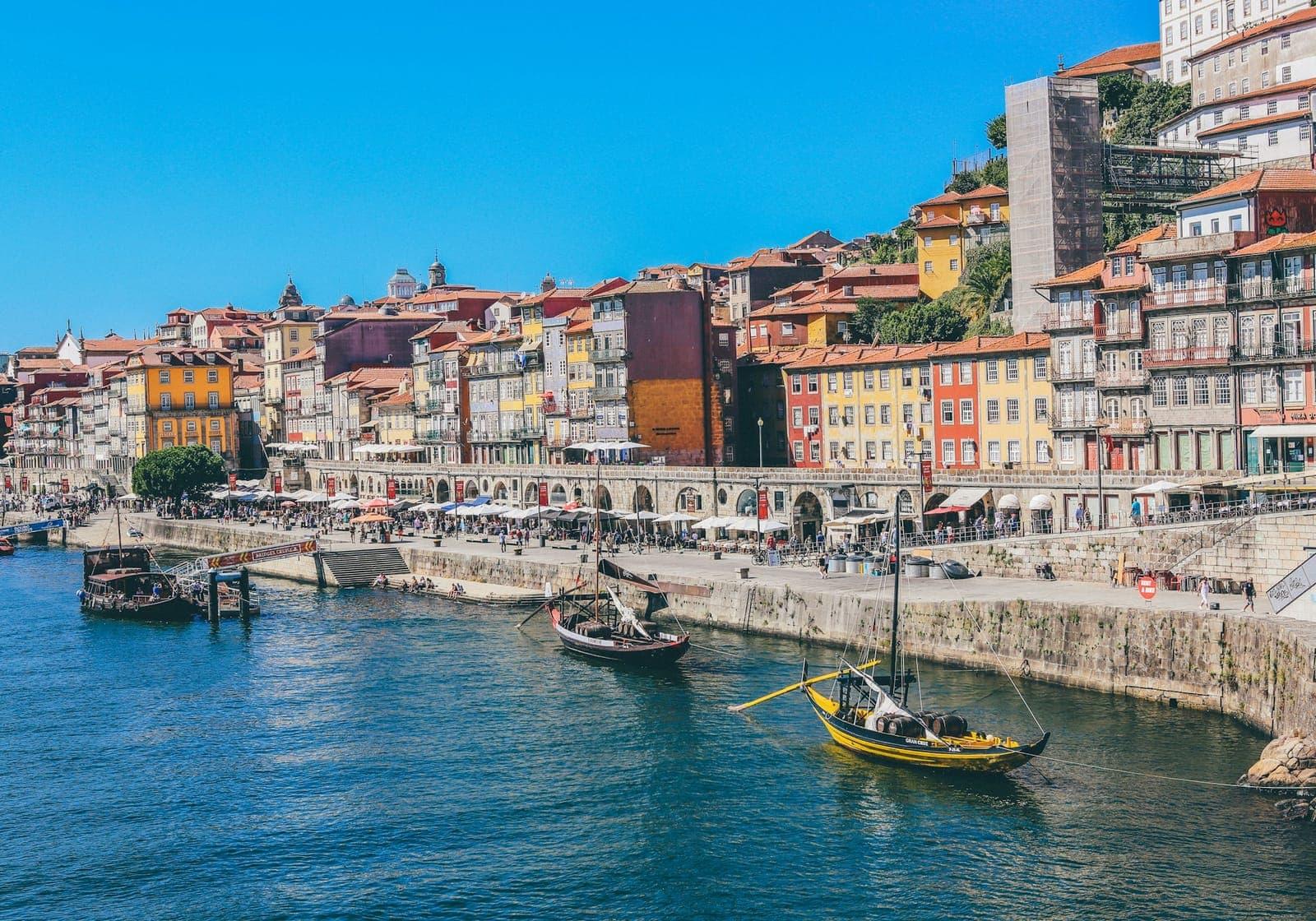
The question "how much cash should I bring on a trip?" has no single answer. The US with USD 100-200 covers an entire stay. Vietnam without cash leaves you stuck at your first pho. Cuba without cash breaks the whole trip. Tokyo accepts cards less than you'd think. This guide covers 15 destinations with a recommended daily cash table, the currency that performs best (USD, EUR, or local), whether it pays to bring it from home or exchange at destination, and why the airport is always the worst option. At the end, a rule of thumb that works for any country in the world.
15 min de leitura
The question "how much cash should I bring on a trip?" sounds simple, but it actually packs three different decisions: how much, in which currency, and where to exchange. Most travelers answer it from the couch based on cousin-folklore — "take 500 bucks, that'll do" — and discover at destination that the math doesn't work. Too much cash pays for expensive insurance, becomes a target in a robbery, and sits idle in a hotel safe. Too little forces you into an airport ATM with rotten rates, or worse, leaves you hostage to a single card that may get blocked on first use.
The right answer depends on the destination. The US and Canada are card economies: you spend 10 days and barely touch cash. Tokyo, counterintuitively, still demands daily cash for eating outside the tourist circuit. Vietnam, Cambodia, Laos, and Cuba are almost pure cash economies — without physical money you don't move. Argentina is a parallel universe, where USD in hand is worth 30-50% more than card. Each place has its logic. This guide is the table that was missing.
The 30% rule
Before diving country by country, fix this rule of thumb for any destination:
Cash in hand should never exceed 30% of the total trip budget.
The other 70% splits between:
- International credit card (40-50%): hotel, flights bought at destination, expensive dinners, medical emergencies.
- Global-account debit card (20-30%): daily spending in destination currency, with low spread — Wise and Revolut lead in May/26.
Cash stays with you for three reasons only: street markets, local transport (taxi, tuk-tuk, bus), and countries where cards don't work. Anything that can be paid by card should be paid by card — provided your card's spread is decent.
Destination table — recommended daily cash
The values below are for a middle-class traveler at a "city explorer" pace, eating out twice a day, mixing public transport with taxi when needed. Doesn't include accommodation (always card) or domestic flights. This is the cash that stays in your pocket to run the day.
| Country / Destination | Recommended daily cash | Preferred currency | Cards work? | Where to exchange |
|---|---|---|---|---|
| USA | USD 30-50 | Local USD | Yes, 98% of places | At home (better rate) |
| Canada | CAD 30-50 | Local CAD | Yes, 98% of places | At home (USD) and exchange there |
| Western Europe (FR, IT, ES, PT, DE, NL) | EUR 30-50 | Local EUR | Yes, 95% | At home |
| United Kingdom | GBP 30-50 | Local GBP | Yes, 98% (contactless dominant) | At home |
| Japan (Tokyo, Kyoto) | JPY 10k-15k | Local JPY | Hybrid (60% of places) | At home in JPY or USD + local exchange |
| Vietnam | USD 40-60 or VND equivalent | USD or VND | Limited (hotels/tourist restaurants only) | At destination (downtown exchanges) |
| Cambodia | USD 30-50 | Clean USD (yes, USD circulates locally) | Almost not | No need to exchange — use USD |
| Laos | USD 30-50 or LAK | USD or LAK | Poorly | At destination |
| Thailand | THB 1,000-1,500 | Local THB | Hybrid (70% of places) | At destination (Bangkok has better rates than airport) |
| Indonesia (Bali) | IDR 500k-800k | Local IDR | Hybrid (60% of tourist places) | At destination (reliable exchanges) |
| Argentina | USD 30-60 | Physical USD (exchange at blue) | Yes, but loses 30-50% | At home in USD + blue exchange there |
| Cuba | EUR 50-100 | Physical EUR (USD has penalty) | Barely works | At home in EUR |
| Mexico | MXN 500-1,000 | Local MXN | Yes in cities (90%) | At destination or at home in USD |
| Egypt | USD 30-50 or EGP | USD or EGP | Poorly (only big hotels) | At destination (reliable exchanges) |
| Morocco | MAD 300-500 | Local MAD | Hybrid (60% of places) | At destination (dirham is a closed currency — can't be brought from home) |
| Turkey | TRY 1,000-1,500 or USD | USD (high inflation) | Yes, but lira devalues fast | At destination (daily exchange to avoid accumulation) |
US, Canada, and Western Europe — the card world
In these destinations, cash is almost decorative. The US has had dominant contactless since 2020, Western Europe followed, Canada too. You spend 10 days in New York, Paris, Lisbon, or Toronto and barely see a bill. Everything is card, Apple Pay, or Google Pay.
When you need cash: hotel tips (USD 1-2 per bag, USD 2-5 a day for housekeeping), traditional taxi tip outside Uber, street markets (Borough Market in London, producer markets in southern Europe, Chinatown in any big city), and small bars in non-tourist neighborhoods. In Paris and Lisbon, neighborhood bakeries sometimes have a card minimum (EUR 5-10) — cash solves the friction.
How much to bring: USD 100-200 or EUR 100-200 easily covers 7-10 days. Bringing more is just paying spread for nothing.
Where to exchange: At home, always. A downtown exchange in your origin city beats any airport counter. Compare three places before committing.
Tokyo (and Japan generally) — the paradox
Japan looks like the most technological country in the world. You see robots in hotels, vending machines on every pole, trains that arrive to the exact second. Then you walk into a neighborhood izakaya in Shinjuku at 10 PM and the guy at the register points to the sign: cash only. It's a surprise that catches 100% of first-time visitors.
The Japanese reality: 60-70% of small restaurants, neighborhood shops, temples, and ryokans (traditional inns) accept cash only. Cards work at big hotels, department-store depachika (gourmet food halls), tourist restaurants, convenience stores (7-Eleven, Lawson, FamilyMart), and malls. Doesn't work elsewhere.
How much to bring: JPY 10,000-15,000 in hand per day. For 7 days, JPY 80,000-100,000 is ideal. Bringing JPY from home is more expensive than bringing USD and exchanging there (Tokyo has decent exchanges in Shibuya, Shinjuku, and Ginza). Or use a global account with multi-currency debit card at 7-Eleven ATMs — works with foreign cards, low spread, and sits in 24h convenience stores.
Classic mistake: arriving in Tokyo with only a card and finding out on day one that the restaurant recommended by your guide is cash only. There won't be time to exchange before lunch.
Southeast Asia — Vietnam, Cambodia, Laos, Myanmar
Here the world flips. Cards are the exception, cash is the rule. In Hanoi you walk for days without seeing a card terminal. In Siem Reap (Cambodia), the tuk-tuk, the pho, the takeaway coffee, everything is cash. And the best part: across much of Southeast Asia, USD circulates as an unofficial local currency.
Cambodia is the extreme case: USD is practically the country's currency. ATMs dispense dollars. Hotel and tourist restaurant prices are quoted in USD. You spend 10 days using USD and almost never touch riel (local currency — only used for change under USD 1).
Vietnam and Laos: USD accepted in many places (hotels, tour agencies, tourist restaurants), but markets, taxis, and street food require Vietnamese dong or Lao kip. You exchange a portion of USD at local exchanges (downtown Hanoi, Luang Prabang, etc.).
How much to bring: USD 300-500 cash for 7-10 days of travel covers comfortably. Bring it in small, clean bills. USD 50 and 100 bills with folds, pen marks, writing, or any minor tear are frequently rejected. USD 1, 5, 10, and 20 bills always pass.
Cards: only work at branded hotels (Hilton, Marriott, Accor) and some package tour agencies. Don't count on them for anything daily.
Argentina — the parallel universe of the blue dollar
Argentina is the most singular case on the continent. There are two official dollar rates (official and MEP) and one parallel (blue). The gap between them in May/26 is roughly 30-50%. Whoever pays with a foreign credit card pays at the official rate (the worst). Whoever brings physical USD and exchanges at the "blue" (in cuevas — legal informal exchange houses) gains over the official rate.
How the blue works in May/26:
- Bring physical USD from home.
- In Buenos Aires, go to a known cueva (Calle Florida has dozens; always prefer one recommended by a trusted source).
- Exchange USD for Argentine pesos at the blue rate.
- Spend pesos on daily life.
The difference goes into your pocket. On a 10-day trip with USD 1,500 spending, savings versus card reach USD 400-600.
MEP card (purchase at MEP rate, intermediate) improved in 2026 but still loses to blue by 10-20%. Worth it for emergencies and large purchases, not daily life.
How much cash to bring: USD 50-80 per travel day (physical USD). For 7 days, USD 400-600.
Caution: carrying more than USD 10,000 in cash requires customs declaration when leaving your home country. Above that without declaration means seizure. For average trips (USD 1,000-3,000), no problem.
Receba uma viagem por semana.
Newsletter editorial Voyspark — long-forms, dicas e descobertas que não cabem no Instagram. 1x por semana, sem ads.
Sem spam. Cancela em 1 clique.
Cuba — the last bastion of absolute cash
Cuba is the destination where cards are practically decorative. The US embargo prevents US-issued cards from working. Foreign cards work poorly — Visa and Mastercard frequently block transactions for compliance. Whoever arrives with only a card becomes hostage to ATMs (which fail 50% of the time) and hotel exchanges (terrible rates).
How it works in May/26: The Cuban peso (CUP) is the official currency. The informal street rate is radically different from the official one. EUR is the preferred exchange currency for a political reason: the Cuban government charges a 10% penalty on USD-to-CUP conversion. EUR doesn't have that penalty.
How much to bring: Physical EUR equivalent to 100% of trip budget (except lodging if reserved and paid before from home). For 7 days, EUR 500-1,000 depending on level. Clean, unfolded EUR 50 and 100 bills. Exchange at a CADECA exchange house or via informal exchange recommended by the hotel.
Cards: only for big emergencies (accident, medical issue). Don't count on them for anything planned.
Mexico, Thailand, Indonesia, Egypt — the hybrids
These countries have a mixed economy. Big hotels, malls, tourist restaurants accept cards without issue. Markets, taxis without apps, street food, tuk-tuks, boat tours — cash only.
Mexico: MXN 500-1,000 a day in cash covers what you need outside hotels and malls. Exchange USD at a downtown exchange (Mexico City has dozens; the airport charges 8-12% above). Cards work in 80-90% of urban situations.
Thailand (Bangkok, Phuket, Chiang Mai): THB 1,000-1,500 a day in cash. Bangkok has better exchanges than the airport at SuperRich and Vasu Exchange (Sukhumvit). Cards work at malls, hotels, and tourist restaurants. Tuk-tuks, taxis without apps, markets, and Khao San — cash only.
Indonesia (mainly Bali): IDR 500k-800k a day in cash. "PT Central Kuta" and "BMC" are the reliable exchanges. Cards at hotels, beach clubs, and tourist restaurants. Warungs, taxis, and boat tours — cash.
Egypt (Cairo, Luxor, Sharm): Physical USD or EGP. Big hotel exchanges in Cairo are decent. Cards work in 30-40% of places — only count on them for hotels. Extra care with informal exchange (scams are common). Always check bill by bill.
Where to NEVER exchange
Airport, international or domestic. Airport exchange spread is 8 to 15% above the commercial rate. On a USD 1,000 purchase, that's USD 80-150 more than a downtown exchange. It's the worst financial decision of the entire trip.
The only exception: grab USD 50-100 in local currency for immediate emergency on arrival (taxi, meal), and exchange the rest later.
Hotel. Big hotels have in-house exchanges. Spread is the second worst after airports, 6-10% above rate. Only use in a country without decent alternatives outside the hotel (Cuba, parts of Egypt).
Street changer without signage in a country you don't know. Classic scam in Marrakech, Cairo, La Paz, and big Southeast Asian cities. Counterfeit bill, change scam, or defective bill rejected later. Always an official exchange with signage, even if the spread is slightly higher.
The backup nobody mentions — global account
Most travelers enter 2026 with a traditional bank credit card and cash. That's over. The correct combo today is:
- Cash in strong currency (USD or EUR, depending on destination) for cash-heavy countries.
- International credit card for hotels, flights, emergencies, and big purchases.
- Global-account debit card (Wise, Revolut) for daily spending in destinations that accept cards.
The global account solves the "I need cash but don't want to pay 8% spread at the ATM" problem. In May/26, Wise multi-currency withdraws at ATMs in 80+ countries for 1.5-2% total spread (versus 5-8% on traditional bank cards). For direct merchant spending, spread around 0.5-1% — beats any traditional bank card.
For cash-heavy Southeast Asia, it's the perfect backup: you bring USD 300-500 in hand, and when it runs out, you withdraw more at 7-Eleven (Japan), Vietcombank (Vietnam), BCEL (Laos), Bangkok Bank (Thailand) — all compatible with Wise cards. No more grabbing expensive dollars at hotel exchanges.
The inverse question — how much cash NOT to bring
There's a limit where bringing more cash stops being an advantage. The 30% rule serves as a ceiling. But there's another: credit card travel insurance covers cash in hand only up to USD 500-1,000. Above that, you're uncovered in a robbery or loss.
For a 7-day trip to a cash-heavy destination (Southeast Asia, Cuba), USD 500-800 is within limits. For a 21-day trip across multiple countries, better to bring USD 500 and re-exchange at destination than to walk around with USD 2,000 in a money belt. Recovering lost cash from a robbery is a long process, low coverage, and lots of headache.
Practical summary — pre-boarding checklist
Paste this in a phone note before sealing the suitcase:
- Confirm destination's preferred currency (table above).
- Calculate daily cash × days = total cash.
- Check 30% cap of total budget.
- Exchange currency downtown at home (never airport).
- Check bills: folds, stains, small denominations (USD 1, 5, 10, 20).
- Activate credit card for international use in the bank app.
- Load global account (Wise/Revolut) with 30-40% of budget in USD or EUR.
- Note 1-2 reliable exchanges at the destination (Google Maps + reviews).
- Money belt or split: never all cash in the same pocket/bag/safe.
- Photo of passport and cards in email for emergency.
The question "how much cash to bring" has 15 different answers in this guide. Each destination has its logic, its preferred currency, and its optimal exchange point. Whoever brings too much pays expensive insurance and sleeps with money idle in the safe. Whoever brings too little becomes hostage to airport exchanges and bad-brand ATMs. The sweet spot is the table above. Print it, save it, travel with it.
Pontos-chave
US, Canada, and Western Europe: cards dominate. Cash only for emergencies, tips, and small markets. USD 100-200 or EUR 100-200 covers 7-10 days.
Tokyo is the inverted myth: it looks modern but 70-80% of small restaurants only accept cash. JPY 30k-50k a day in hand is the minimum.
Southeast Asia (Vietnam, Cambodia, Laos, Myanmar): cash is king. Clean, unfolded USD works almost everywhere. Cards only at branded hotels.
Perguntas frequentes
For 10 days in the US, USD 100-200 in cash is enough. Almost everything is card (98% of places accept contactless). Cash goes to hotel tips, markets like Ferry Building (SF) or Smorgasburg (NYC), and small neighborhood bars. Above USD 300 is wasted — it'll sit in the safe.
Conversa
…Faça login pra deixar seu insight
Conversa séria, sem trolls. Comentários moderados, vínculo ao seu perfil Voyspark.
Entrar pra comentarCarregando…

Sobre o autor
Curadoria Voyspark
2 anos no editorial Voyspark
Time editorial da Voyspark — escritores, repórteres, fotógrafos e fixers em Lisboa, Tóquio, Nova York, Cidade do México e Marrakech. Coletivo. Sem voz corporativa. Cada peça com checagem cruzada por um editor regional e um chef ou curador local.
Especialidades