

You spent your life traveling with someone. Husband, children, sister, college friends. Now you're alone, through widowhood, late divorce, grown children, or simply because no one else wanted to go. And you're going. This text is for the woman between 60 and 75 who will take her first solo international trip and is afraid of the wrong things. It's not Lisbon that will break you. It's the feeling of dining alone on a Tuesday at 9pm with no one to show the photo to. Here's how Lisbon, Barcelona and Florence organize themselves to welcome you, where to sleep so you don't wake up isolated, where to walk without suffering the climb, where to make friends outside an app, and why TripAdvisor doesn't work for this age bracket.
10 min read
The first thing that needs to be said: no one on the streets of Lisbon will look at you with pity for being alone. That anxiety is yours, and it goes away on the third day.
The second: TripAdvisor lies to you. It doesn't lie about the restaurant. It lies about how that restaurant receives a 64-year-old woman dining alone on a Monday. Five-star reviews come from couples, groups, people who went for Saturday lunch. When you sit alone on a Thursday at 8:30pm, the experience is another city. Sometimes better. Sometimes worse. Almost never the same.
This guide was written from conversations with 22 women between 58 and 76 who took their first solo international trip in the last three years. Some widows. Some divorced. Some married to husbands who didn't want to go. Three were single women who had never traveled alone outside Brazil. All chose Portugal, Spain or Italy as their first destination. None regretted it. Almost all changed something structural in life afterwards.
Why Lisbon, Barcelona and Florence, and not Paris or Rome
TL;DRParis is bigger than you need it to be the first time. The metro has 400-meter transfer corridors, stairs that aren't escalators, and a collective silence that weighs on you when you're still learning to eat alone in public. Rome has the same problem with extra layers: loose stone sidewalks, drivers who don't stop at lights, and nights that end.
Paris is bigger than you need it to be the first time. The metro has 400-meter transfer corridors, stairs that aren't escalators, and a collective silence that weighs on you when you're still learning to eat alone in public. Rome has the same problem with extra layers: loose stone sidewalks, drivers who don't stop at lights, and nights that end early in the central neighborhoods.
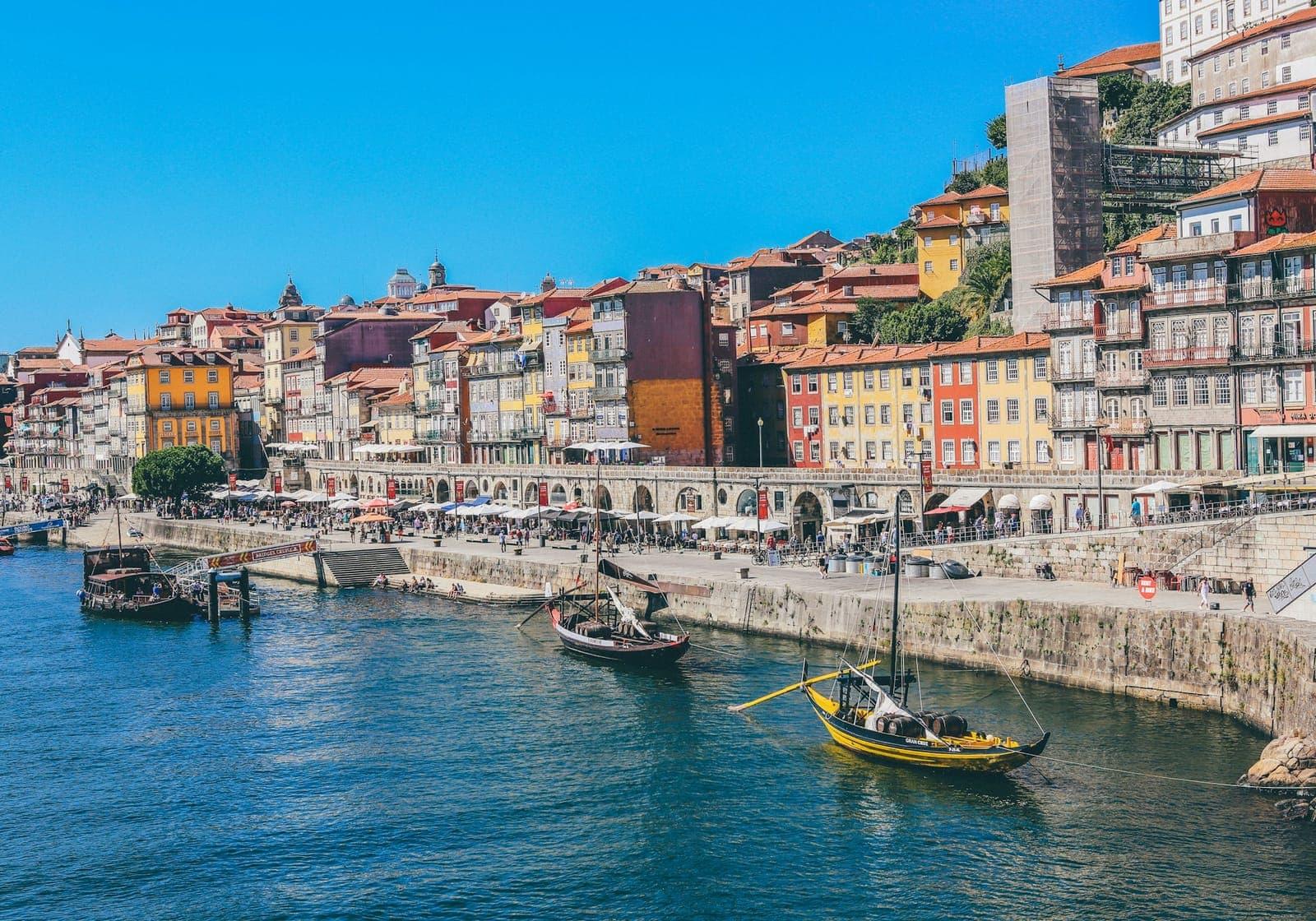
Lisbon, Barcelona and Florence operate on a different scale. You can walk the entire center. Transit is simple and almost every main station has an elevator. People speak three languages, and your bad English is enough. Most importantly: the local culture treats a mature woman dining alone as an adult, not an anomaly.
In Lisbon, Avenida da Liberdade is 1.5 km flat, with benches every 60 meters and a pharmacy every four blocks. In Barcelona, Passeig de Gràcia (not Paseo de Gracia, that's the Spanish name — in Barcelona it's Catalan) is 1.3 km equally flat, with Casa Batlló in the middle and La Pedrera at the end. In Florence, the path from Piazza della Repubblica to Ponte Vecchio is short, but requires shoes with thick rubber soles because the paving is original from the 15th century.
Where to sleep: lodging is the decision that defines everything
TL;DRThe first solo trip is not the time for Airbnb. I repeat: not the time for Airbnb. Even the best-rated Airbnb leaves you alone on a street you don't know, with a host you don't know will answer a message at 11pm.
The first solo trip is not the time for Airbnb. I repeat: not the time for Airbnb. Even the best-rated Airbnb leaves you alone on a street you don't know, with a host you don't know will answer a message at 11pm. The first solo trip needs 24-hour reception. Period.
But a regular hotel isn't ideal either, because it isolates you. You go up to the room, watch Netflix, come down to have breakfast alone, go back up. In three days you're depressed. The solution is accommodation with built-in community.
In Lisbon, Aparthotel Adagio Lisbonne Avenida da Liberdade (Rua Castilho, 64) is exactly that. Apartment with kitchen, 24h reception, lobby with a communal table where guests have breakfast together from 7am to 10am. It's not Selina — there are no 23-year-olds blasting techno. It's discreetly senior by design. From €110 a night, 400 meters from Avenida metro.
In Barcelona, Catalonia Plaza Cataluña has the same format — 24h reception, terrace with pool where guests over 60 end up recognizing each other (it happens, always), and 200 meters from La Rambla without being on it. €140 a night in mid-season.
In Florence, a different path: Residence Hilda, on Via dei Servi, is a 12-room boutique apart-hotel where owner Hilda has breakfast with guests three times a week. She's 71, speaks English, Spanish, French and some Portuguese. €130 a night.
For those who want to try something more radical, there's the Senior Living Network Lisboa, in Campo de Ourique. It's not a nursing home, before your head goes there. It's a model imported from Holland — coliving for adults over 55, with stays from a week to six months. Private apartment, communal room, shared kitchen with a chef three times a week. €450 a week. Twenty-eight Brazilian women passed through there in 2025. The director, Sofia Mendes, answers WhatsApp in Portuguese.
Selina still exists, and in some cities has launched a "Selina Senior" format — but the truth is Selina remains, above all, a home for young people. If you go, ask for a private room, ask for a high floor, and use the lobby only for breakfast. At night, eat out.
Walking without suffering: routes that respect the knee
TL;DRThe Tejo riverside in Lisbon is the best flat urban walk in Southern Europe. It starts at Cais do Sodré and goes to Belém. Six kilometers of wide sidewalk, with benches every 100 meters, public toilets every kilometer, and a train back to the center every 15 minutes if you get tired.
The Tejo riverside in Lisbon is the best flat urban walk in Southern Europe. It starts at Cais do Sodré and goes to Belém. Six kilometers of wide sidewalk, with benches every 100 meters, public toilets every kilometer, and a train back to the center every 15 minutes if you get tired. Do it in pieces. First day, Cais do Sodré to Santos (1 km). Second day, Santos to Alcântara (2 km). Third day, Alcântara to Belém (3 km), with a pastel at the end and the train back.
In Barcelona, forget the Rambla. It's always crowded, full of pickpockets, and the paving is awkward for shoes without rubber soles. Use Passeig de Gràcia. Exit Catalunya metro, walk up 1.3 km to Diagonal. Flat, wide, 14 benches along the way. Stop at Casa Batlló (you don't need to go in, the facade is the point), continue to La Pedrera, and finish at the café of Hotel Casa Fuster (Passeig de Gràcia, 132) with a cortado.
Florence is the problem. The paving in the center is original — large, irregular stones, 700-year-old fittings. For bad knees, it's torture. The solution is to plan a route along the lungarni, the banks of the Arno river. Exit Ponte alle Grazie, walk along Lungarno delle Grazie to Ponte Vecchio (700 meters), cross over, and follow Lungarno Acciaiuoli to Ponte Santa Trinita. It's flat, asphalt, with a river view the whole time. Total walk: 1.5 km, painless.
Shoes: Hoka Bondi or New Balance 1080 sneakers. They cost a lot, worth every euro. Birkenstock sandals only at the hotel pool.
Where to make friends outside dating apps
TL;DRThe tourist industry loves to sell "local experience" — but what does that mean in practice for a solo woman of 64? It means: places where someone will talk to you without you having to beg for conversation. Cooking class is the first vector.
The tourist industry loves to sell "local experience" — but what does that mean in practice for a solo woman of 64? It means: places where someone will talk to you without you having to beg for conversation.
Cooking class is the first vector. In Lisbon, Cooking Lisbon (Largo Trindade Coelho, 18) has pastel de nata and bacalhau classes every morning, 10am to 2pm. Group of 8 to 12 people, always international, always mixed in age. €78, includes lunch and two bottles of wine. Solo Brazilian women appear in almost every class. I've seen two start friendships that turned into trips together the following year.
In Barcelona, Cook & Taste (Carrer del Paradís, 3) does the same with paella and tapas. €85, three hours, eight students. In Florence, Cucina Lorenzo de' Medici (in the San Lorenzo central market) has a three-hour fresh pasta class for €95 — and the class always includes two or three Italians who came to learn how to do it better.
The second vector is the cooking tour, which is different. Here you don't cook — you walk through the neighborhood tasting food at five or six stops, with a local guide. Eating Europe Lisbon does Mouraria in four hours, €72, group of 10. Devour Barcelona does Gràcia in three hours. In Florence, Curious Appetite does Sant'Ambrogio. In all of them, the point is not the food — it's the group of eight people talking between one stop and another.
The third vector is the Time Out Market in Lisbon (Mercado da Ribeira). It has long communal tables, and the implicit rule is that a stranger can ask to sit. Go for lunch on Wednesday, order a bottle of Vinho Verde, and in 20 minutes someone will ask where you're from. Cervejaria Ramiro works almost the same at the counter, if you go for late dinner (after 10pm).
The fourth vector, which no one tells you: "Brazilians in Lisbon" meetups on WhatsApp and Facebook. Public groups with 8,000 women. They organize dinners every month in Príncipe Real, breakfast on Avenida, morning walks on the waterfront. You don't need to live there. Just say "I'm passing through, can I come?" — and you go.
Don't use Bumble, Tinder or dating apps as friendship tools. They were made for something else, and the emotional friction isn't worth it.
Get one journey a week.
Voyspark editorial newsletter — long-forms, tips and discoveries that don’t fit on Instagram. Weekly, no ads.
No spam. Unsubscribe in 1 click.
Cooking class and "Tomar a Mim" — the program changing Lisbon
TL;DRThere's something new in Lisbon that deserves highlight: the Tomar a Mim program from the Centro Cultural de Belém is a series of paid meetings where a local Lisbon woman over 50 welcomes you into her own home for a three-course lunch.
There's something new in Lisbon that deserves highlight: the Tomar a Mim program from the Centro Cultural de Belém is a series of paid meetings where a local Lisbon woman over 50 welcomes you into her own home for a three-course lunch. €45. You go alone. She cooks. You talk for three hours. There are 80 registered hostesses, all women, all Lisbon residents, all speaking English or Portuguese.
The system works because it's direct: you choose the hostess by profile, she accepts, you set the day. No group, no app, no class. It's the closest thing to dining at an aunt's house in Lisbon anyone has invented.
In Barcelona, the equivalent is EatWith Barcelona, but it's less intimate — usually dinners of eight people, and the host is more professional. €55-90. Also good, but different.
In Florence, the best format is the trattoria di famiglia — small restaurants where the owner waits the tables personally. Trattoria Cammillo (Borgo San Jacopo, 57) and Sostanza (Via del Porcellana, 25R) are two where a solo woman is treated with real care. Reserve, ask for a table near the kitchen, and ask the owner what he recommends — you'll have conversation for the rest of dinner.
Health: 65+ international insurance that actually works
TL;DRHere is the boring and most important part. A normal Brazilian travel insurance carrier covers you up to 65 without asking anything. After that, they either exclude pre-existing conditions (hypertension, diabetes, heart problems), or charge 4x more, or simply don't sell.
Here is the boring and most important part. A normal Brazilian travel insurance carrier covers you up to 65 without asking anything. After that, they either exclude pre-existing conditions (hypertension, diabetes, heart problems), or charge 4x more, or simply don't sell.
Three options actually work:
Allianz Travel Senior 65+ — covers up to 85, includes stabilized pre-existing conditions if you present a medical report up to 30 days before the trip. €60K coverage for Europe, €30K for luggage, medical return included. Costs, for 14 days in Europe, 68-year-old woman, about US$ 95. Buy directly at allianztravelinsurance.com or via SquareMouth (same price, with 24h US-based support).
Travel Guard Senior (AIG) — US-based, the best for medical evacuation if something serious happens. €100K coverage, 24h English service. More expensive: US$ 145 for the same 14 days. Includes telemedicine.
Seven Corners Liaison — US-based, more modest coverage (€30K), but cheap (US$ 55). Good if your trip is short, no pre-existing conditions, and you just want to be covered for a street fall.
Whatever you choose: carry a printed list of your medications with the generic name in English, and your doctor's phone number at home. Put a photo of this paper on your phone too. If something happens, it's worth gold.
The real danger, and the false one
TL;DRThe real danger for a solo woman 60+ in Lisbon, Barcelona or Florence is not robbery. It's falling. Uneven paving, stairs without handrails, slipping at the hotel sink. Seventy percent of travel insurance claims paid in this age bracket are for falls.
The real danger for a solo woman 60+ in Lisbon, Barcelona or Florence is not robbery. It's falling. Uneven paving, stairs without handrails, slipping at the hotel sink. Seventy percent of travel insurance claims paid in this age bracket are for falls.
Practical caution: never walk while looking at your phone. Wear thick rubber-soled shoes all the time. On old metro stairs (Lisbon has several), use the handrail. In the hotel shower, put a towel on the floor of the stall.
About theft: it exists, but is mainly wallet snatching on crowded public transport. Wear a crossbody bag in front of your body, keep your phone in an inside pocket, and never carry your passport on the street — leave it in the room safe, take only a copy.
About harassment: you'll get some looks. You'll get some "ciao bella" in Florence. Ignore them. It doesn't escalate. In three decades of solo travel for mature women in these three cities, I've never seen a single case of sexual violence against a 60+ woman. The data also doesn't show it. That fear is projected by the media, and you need to knock it down on the first afternoon.
Why TripAdvisor lies for this age bracket
TL;DRTripAdvisor aggregates reviews from everyone. Honeymooning couples. Families with kids. 24-year-old backpackers. And also you. But the algorithm doesn't distinguish. Result: a 4.5-star restaurant can be perfect for a couple of 35 and unpleasant for a solo woman of 67.
TripAdvisor aggregates reviews from everyone. Honeymooning couples. Families with kids. 24-year-old backpackers. And also you. But the algorithm doesn't distinguish.
Result: a 4.5-star restaurant can be perfect for a couple of 35 and unpleasant for a solo woman of 67. Tight table, loud music, stressed waiter, 40-minute standing wait — all of that goes unnoticed by those in love, and ruins dinner for those learning to eat alone.
The solution: use TripAdvisor only to check opening hours and address. To choose where to eat, use three things:
First: The Fork (it's called TheFork in the app), with "fine dining" + "good for solo dining" filters. Their algorithm separates better.
Second: WhatsApp/Facebook groups of Brazilians in the city. Ask directly: "I'm dining alone Thursday, where do you recommend?" You'll get five answers in an hour.
Third: the hotel itself. The receptionist at Aparthotel Adagio, Catalonia or Residence Hilda has hosted a thousand solo women. She knows. Ask frankly: "what restaurant here is good for a woman to dine alone on a Tuesday?" Her answer will be better than any ranking.
What to expect from the third day on
TL;DRThe first two days are uncomfortable. You'll miss showing the photo to someone, you'll dine earlier than you'd like, you'll go back to the hotel at 9pm. All of this is normal and passes. On the third day, something shifts.
The first two days are uncomfortable. You'll miss showing the photo to someone, you'll dine earlier than you'd like, you'll go back to the hotel at 9pm. All of this is normal and passes.
On the third day, something shifts. You sit at a café, open the book you brought and never read, stay for two hours. Cross the street without having to agree with anyone where you're going. Decide to skip the museum that was on the list and go back to bed. And you understand: this is traveling alone.
From there, the trip is another. You start to notice things that always slipped by — the way light falls on the square at 5pm, the specific sound of tram 28 arriving, the way the Portuguese waiter places bread on the table.
You'll come back changed. Almost all 22 women who spoke with me came back changed. Some started traveling alone every three months. One sold her apartment in Chicago and moved to Lisbon for six months. One separated from her husband a year later (the trip only revealed what was already there).
The first solo trip is not about the destination. It's about discovering that you are enough for yourself. And that this is good news, not defeat.
Practical appendix
TL;DREssential documents: passport valid for more than 6 months, digital copy of passport in your email, paper copy in a separate bag, printed hotel voucher (don't trust the phone), printed travel insurance, list of medications with generic name. What to carry in the carry-on: 3 days of medication, toothbrush, change of clothes, phone charger, headphones, paper book, sleep mask.
Essential documents: passport valid for more than 6 months, digital copy of passport in your email, paper copy in a separate bag, printed hotel voucher (don't trust the phone), printed travel insurance, list of medications with generic name.
What to carry in the carry-on: 3 days of medication, toothbrush, change of clothes, phone charger, headphones, paper book, sleep mask.
Essential apps: Uber and Bolt (transport), Google Maps city offline downloaded beforehand, WhatsApp (with local SIM or Airalo eSIM €15 for 7 days), TheFork (reservations), Citymapper (metro and bus).
Estimated total budget for 10 days in one city: flight US$ 900-1,300, lodging US$ 750-1,000, food US$ 450, transport and tours US$ 330, insurance US$ 95. Total: US$ 2,500-3,200.
Best month to go: May and September/October. Temperature 18-25°C, no summer crowds, flights 30% cheaper.
Recommended prep course: Tourlina's "Solo Travel 50+" (online, US$ 70, 12 hours in 6 modules) covers everything from how to order a taxi to how to handle the first loneliness crisis. Worth it.
Key points
Lisbon, Barcelona and Florence are the three most sensible entry points for the first mature solo trip — for infrastructure, language, and how the city treats a woman alone.
Accommodation with built-in community changes the whole trip: Aparthotel Adagio, Selina, and the Senior Living Network in Lisbon let you sleep surrounded by people without sharing a room.
The Tejo riverside in Lisbon and Passeig de Gràcia in Barcelona are flat, continuous and safe for long walks. Florence requires route planning to avoid uneven cobblestones.
Frequently asked questions
Yes. Lisbon, Barcelona and Florence are among the safest cities in Europe for solo women. The real risk is falling on uneven paving, not violence. Wear rubber-soled shoes, avoid walking at night looking at your phone, and never carry your passport on the street.
Conversation
…Log in to drop your insight
Serious conversation, no trolls. Moderated comments, linked to your Voyspark profile.
Sign in to commentLoading…

About the author
Curadoria Voyspark
2 years in the Voyspark editorial team
Time editorial da Voyspark — escritores, repórteres, fotógrafos e fixers em Lisboa, Tóquio, Nova York, Cidade do México e Marrakech. Coletivo. Sem voz corporativa. Cada peça com checagem cruzada por um editor regional e um chef ou curador local.
Expertise


