

The European river cruise has shed its image as something only retired Americans do and become the most civilized way to cross the heart of the continent in 2026. This guide sorts Viking, AmaWaterways, CroisiEurope and Scenic by real cost, compares the Danube, Rhine and Douro without cliché, and answers the question every travel agent dodges: which cabin is worth the money and which season delivers the best river.
16 min read
The European river cruise carries an unfair stigma. In many travelers' heads, it is the trip for the retired couple from Florida who doesn't want to walk much. That exists, sure. But reducing the river cruise to that is like reducing trains to a packed subway — you've missed the whole point.
What a river cruise does, and no other travel format does the same way, is dissolve the logistics. You unpack once. The hotel moves while you sleep. You wake in Vienna, lunch sailing past vineyards, dine in Bratislava. No check-in, no missed train, no dragging luggage across a rain-slick stone platform. For anyone short on time who wants depth instead of a sprint, it is the smartest format in central Europe.
The question was never "is it worth it?" The question is "which river, which line, which cabin, which month — and what does it really cost, without the travel agent's euphemism." That is what this piece answers, with names and numbers.
The three rivers, without cliché
TL;DRThe Rhine is the starter — castles, a UNESCO gorge and Strasbourg over easy terrain. The Danube is the most complete, with four capitals in a week, and it's the best-seller. The Douro is the intimate, slow one: smaller ships, terraced vineyards and Porto at departure. All three are good; the choice is temperament, not quality.
Forget the brochure. The three main rivers deliver distinct experiences, and confusing them makes people book the wrong itinerary.
The Rhine is the perfect debut. The classic stretch runs from Amsterdam to Basel (or the reverse), through the Middle Rhine Valley — 65 km of gorge with medieval castles at every bend, a UNESCO World Heritage Site since 2002. You see the Lorelei rock, taste Riesling in Rüdesheim, walk through Strasbourg and Cologne. It is a low-friction itinerary: mild weather, urban stops, nothing demands fitness. If it's someone's first river cruise, this is where you start.
The Danube is the best-selling itinerary in the world, and deservedly so. The flagship stretch is Budapest–Passau (or it extends to Nuremberg/Prague on 10–14-night programs). In a week you cross four capitals and three countries: the nighttime glow of Budapest's Parliament from the deck, the palaces of Vienna, the old town of Bratislava, the Wachau valley with its baroque abbeys and vineyards. It is the itinerary with the most "wow" per night sailed.
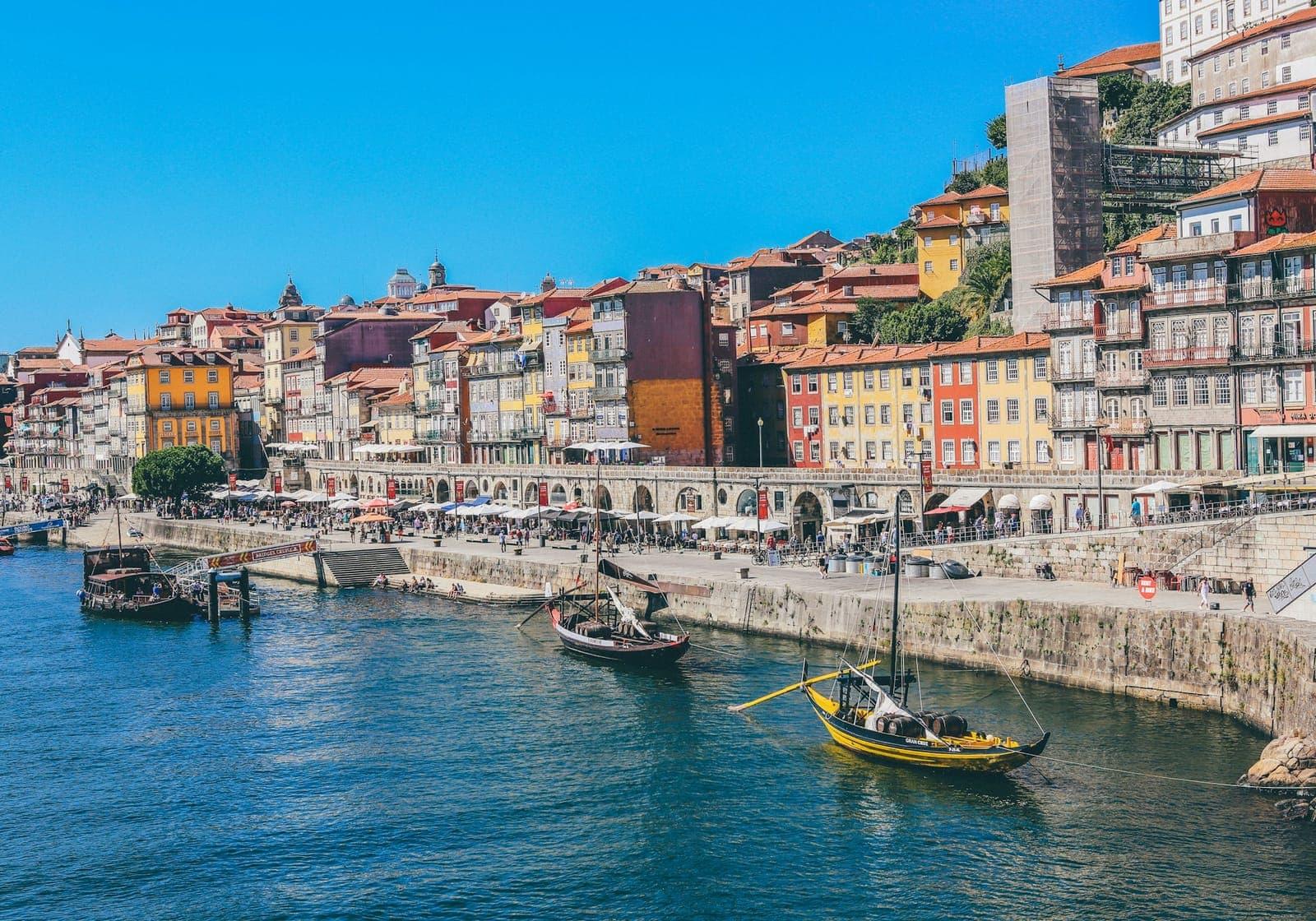
The Douro is the outsider that became a darling. Portuguese, it departs from Porto and climbs the Douro valley to the Spanish border (Salamanca on a shore excursion). The ships are smaller — an 80-metre limit because of the locks, so they hold at most 130 passengers versus 190 on the Danube. The landscape is the star: terraced vineyards carved into the hillsides, a UNESCO site, the birthplace of port wine. It is slower, more intimate, pricier per night. And the fastest-growing in demand.
The four lines that matter
TL;DRViking is minimalist Scandinavian, adults only, predictable and elegant. AmaWaterways has the best food and onboard bikes, with a lively American vibe. CroisiEurope is French and the best value, with smaller cabins. Scenic is the genuinely all-inclusive one — even premium excursions and a butler are in the price. Each serves a different traveler.
The premium river-cruise market in Europe is dominated by four names. Getting the line wrong is getting the whole trip wrong, because the ship is your world for a week.
Viking is the brand that popularized the format with its omnipresent advertising. Identical "longships," minimalist Scandinavian design, a strict adults-only policy (18+). It is predictable in the best sense: you know exactly what you'll get. It includes one excursion per port, wine and beer with meals, Wi-Fi. It does not include premium drinks or specialty excursions. An older crowd, a quiet atmosphere, no casino or party. For those who want elegance without surprise.
AmaWaterways is the favorite for those who take food seriously. A member of the Chaîne des Rôtisseurs, it has the best dinner in the segment and a complimentary Chef's Table. It brings bikes aboard — you can pedal between towns while the ship sails. American vibe, livelier than Viking, welcomes younger adults and couples. Excellent for active travelers who want to walk and cycle, not just look out the window.
CroisiEurope is the French value secret. Prices 20–35% below the American rivals, honest French cooking, a more European and less "floating resort" atmosphere. The trade-off: smaller cabins, older ships in part of the fleet, fewer premium inclusions. For the traveler who wants the experience without paying the American brand premium, it is the smart bet.
Scenic is the genuinely all-inclusive one — the word the others use with an asterisk. Everything is in the price: all excursions (including premium ones like a castle dinner), drinks all day, e-bikes, transfers, gratuities, a butler in every cabin. The sticker price startles, but when you add up what the others charge separately, Scenic often comes out equal or cheaper. Australian, understated luxury, for those who hate opening their wallet at every step.
What it really costs — numbers, not euphemism
TL;DRA 7-night Danube cruise in a standard cabin costs $3,400–6,000 per person in 2026, already including meals, wine with meals and base excursions. Add $700–1,300 for flights from the US, plus gratuities ($160–280) and optional excursions. The Douro costs 15–25% more per night. Booking 10–12 months out secures early-bird rates and the cabin you want.
Let's get to the number the travel agent hedges on. For a 7-night cruise on the Danube, standard cabin (lower deck, fixed window), all-inclusive on board:
- Viking: $4,000–6,000 per person
- AmaWaterways: $4,400–6,500 per person
- Scenic: $6,000–9,000 per person (but everything is included, no extras)
- CroisiEurope: $3,200–4,800 per person
These figures cover onboard accommodation, all meals, wine/beer with meals, one guided excursion per port, Wi-Fi and onboard entertainment. They do not cover: the international flight, gratuities ($25–40/day/person on the American lines, baked into Scenic), optional premium excursions ($70–180 each), premium drinks and travel insurance.
Add the flight from New York (JFK) to Budapest: $700–1,300 round-trip, usually with one connection in Frankfurt, Munich, Istanbul or Zurich. There is no nonstop JFK–Budapest in 2026.
The Douro costs 15–25% more per night than the Danube — smaller ships, fewer cabins, exclusivity. A 7-night Douro cruise runs between $4,000 and $7,500 per person depending on the line.
The tip that truly saves money: book 10 to 12 months ahead. The early-bird fares from all four lines give 20–30% off and secure the cabin on the deck you want. River cruises rarely drop in price last-minute — unlike ocean cruises, the cabin supply is tiny and sells out.
Get one journey a week.
Voyspark editorial newsletter — long-forms, tips and discoveries that don’t fit on Instagram. Weekly, no ads.
No spam. Unsubscribe in 1 click.
Cabins: the upgrade worth paying for and the money you're throwing away
TL;DRThe French balcony (a floor-to-ceiling window that opens like a door) is the sweet spot — it delivers air, light and the view for a fraction of a full-balcony suite. The fixed-window lower deck saves a lot and you spend the day ashore anyway. A suite is only worth it if you spend a lot of time on board or want status. Avoid cabins near the engine room (stern, lower deck).
A river ship's cabin structure is simple and has three tiers that matter.
Lower deck (fixed window, high on the wall): the cheapest category. The window is small and sits high, at the waterline. You don't get a panoramic view, but you save a lot — and the plain truth is you spend the day ashore on excursions and the night sleeping. For the rational traveler on a budget, it is the smartest choice. A difference of $1,200–2,000 per person versus the upper deck.
French balcony (Juliet balcony): the sweet spot of the segment. It's a floor-to-ceiling glass door that opens, with a railing — you don't step out, but you get fresh air, full light and the entire river view from the bed. It costs far less than a full balcony and delivers 90% of the feeling. If you're going to spend on an upgrade, spend it here.
Suite with full balcony: the real luxury, with space to sit outside. Beautiful, but expensive — $2,500–5,000 more per person. Only worth it if you're the type who spends a lot of time on board, wants breakfast on the balcony, or simply wants the best. For most, it's money that would do more as an extra hotel night in Vienna.
A technical tip: avoid lower-deck stern cabins — proximity to the engine room means vibration and noise. The best cabins are amidships, on the middle or upper deck.
Worth understanding the pricing logic too: the gap between a lower-deck cabin and a French balcony rarely exceeds $1,500 per person, but the jump from French balcony to a full suite can double that. In other words, the first upgrade is the most efficient in terms of return per dollar. The second is pure luxury. Decide where your trip stands — smart economy or conscious indulgence — before you pick the cabin, because once a deck closes the good categories vanish fast.
Best season: when the river cooperates
TL;DRMay–June and September are the sweet spot — mild weather, green or harvest vineyards, fewer ships and shoulder pricing. July–August brings 35°C heat, congested waterways and peak prices. December is the magical Christmas-market season, but cold and with unpredictable water levels. April and October are transition bets with good value.
The European river cruise operates from April to December, and the season completely changes the experience.
May and June are the absolute sweet spot. Weather of 20–26°C, lush vineyards, long days (dark by 9:30 p.m.), less heat than summer and shoulder-season pricing. It's when locals enjoy the river too.
July and August are peak — and not always in a good way. Vienna and Budapest hit 35°C, the waterway gets congested (ships dock three abreast, and you cross your neighbor's ship to reach land), and prices are the year's highest. Go only if it's your sole window, or if you travel with kids on school break.
September is the other sweet spot. The grape harvest in the Douro and the Wachau, weather still warm but civilized, the summer crowds dispersed. Many seasoned travelers swear September is the best month of all.
December is a completely different trip: the Christmas-market season. Every port becomes a lit market with mulled wine, and the ships decorate everything. It's magical and photogenic. The trade-offs: real cold (0–5°C), short days, and the highest risk of unstable water levels closing stretches. Short itineraries (4–5 nights) concentrate on the best markets.
The risk nobody mentions: the river level
TL;DRThe biggest risk of a river cruise is not the ship, it's the water. Drought (2018, 2022) lowers the river and blocks passage; flooding raises it too high to pass under bridges. When it happens, the line moves passengers by bus between cities — you lose the sailing. Always book a line that guarantees in writing a refund or an alternative itinerary.
Here's what the pretty brochures don't show. The river cruise depends on one thing nobody controls: the water level.
In drought years (2018 and 2022 were severe on the Danube and Rhine), the river drops so low that the ship runs aground or can't pass shallow stretches. In flood years, the water rises and the ship can't pass under the historic bridges. In both cases, the line resorts to plan B: it moves passengers by bus between the itinerary's cities, sometimes swapping ships midway. You visit the same places, but you lose the essence — sailing.
This is neither rare nor theoretical. It happens to some degree almost every year on at least one stretch. What changes is your protection.
Before booking, demand the contingency policy in writing: does the line refund proportionally if there's a bus transfer? Does it offer an equivalent alternative itinerary? Viking and Scenic have more generous policies; some smaller operators leave the risk in your lap. And always, always buy travel insurance that covers itinerary interruption. The Douro, because dams regulate its level, is the least affected of the three — one more point in its favor.
Danube, Rhine or Douro — choosing by temperament
TL;DRChoose the Rhine if it's your debut and you want castles and low friction. Choose the Danube if you want the most capitals and variety in a week. Choose the Douro if you've already done a river cruise and value intimacy, wine and a slow pace over the number of stops. None is better — they're different traveler temperaments.
After everything, the final decision isn't technical. It's temperament.
If it's your first time and you want the classic "Europe of castles and vineyards" package with minimal friction, take the Rhine. Strasbourg, Cologne, the Romantic gorge, Riesling. All easy, all enchanting, impossible to regret.
If you want density — the most capitals, countries and "wow" in seven days — the Danube is unbeatable. Budapest at night from the deck alone justifies it. It's the best-seller on merit, not marketing.
If you've already done a river cruise, or if you value intimacy, wine and a slow pace over the number of stops, the Douro is graduation. A small ship, a landscape that looks like a painting, Porto as a bonus at the tip. It's the itinerary the experienced traveler recommends quietly, afraid it'll go mainstream before their next trip.
For anyone deciding in 2026, Voyspark suggests: if it's your debut, the Danube in September. If you already know the format, the Douro in May. And if the trip is about the Christmas markets, the Rhine in December, a short itinerary, mulled wine in hand.
Key points
A 7-night Danube cruise (Budapest–Passau) in 2026 runs $3,400–6,000 per person in a standard cabin, all-inclusive on board (meals, wine with meals, base excursions). Flights from New York (JFK) to Budapest cost $700–1,300 round-trip.
Four lines dominate the premium market: Viking (Swiss-Swedish, adults only, Scandinavian design), AmaWaterways (American, best food and onboard bikes), CroisiEurope (French, best value, smaller cabins) and Scenic (Australian, truly all-inclusive with premium excursions included).
The Rhine is the starter itinerary. Castles, the Romantic Rhine Gorge (a UNESCO World Heritage Site), Strasbourg and the Black Forest. It works any month from April to October.
Frequently asked questions
No, though the crowd skews older. Viking is strictly 18+ and tends to draw 55+. AmaWaterways and CroisiEurope have a younger vibe and accept families on some itineraries. Couples in the 35–50 range are a growing presence, especially on wine itineraries like the Douro. The format rewards those who value depth and comfort, not age.
Conversation
…Log in to drop your insight
Serious conversation, no trolls. Moderated comments, linked to your Voyspark profile.
Sign in to commentLoading…

About the author
Curadoria Voyspark
2 years in the Voyspark editorial team
Time editorial da Voyspark — escritores, repórteres, fotógrafos e fixers em Lisboa, Tóquio, Nova York, Cidade do México e Marrakech. Coletivo. Sem voz corporativa. Cada peça com checagem cruzada por um editor regional e um chef ou curador local.
Expertise


