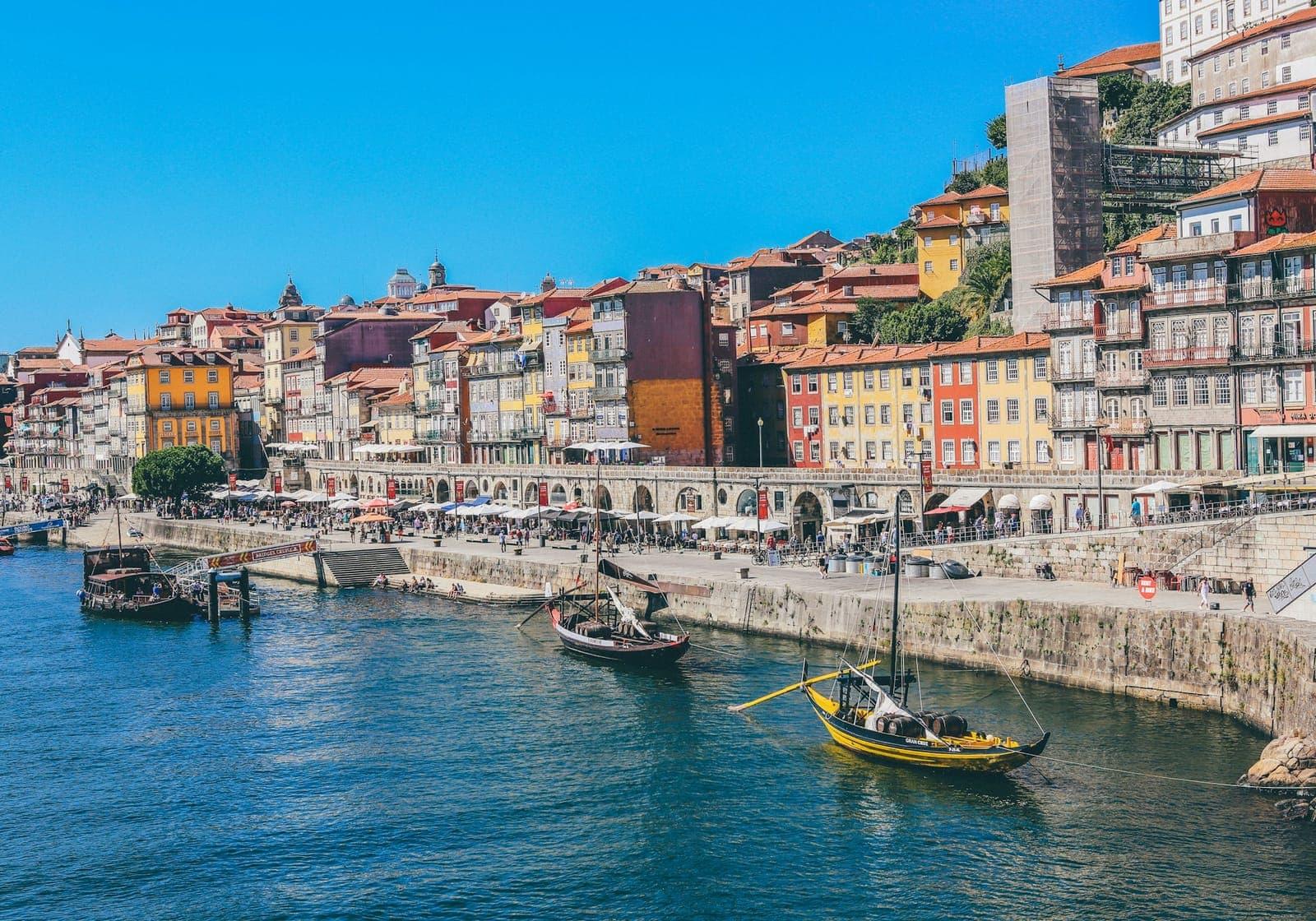
Lisbon became the go-to destination for those wanting to work remotely from Europe while speaking Portuguese. In 2020, it was cheap, empty, and offered generous tax benefits. By 2026, it's none of those things. Rent in Príncipe Real has tripled in five years, the NHR ended in January 2024, the D7 process slowed down, and middle-class Brazilians became targets of gentrification protests. Yet, there's still a queue to get in. This text is what I wish I had read before signing a six-month contract: real costs by neighborhood, decent coworking spaces, cafes with wifi measured in mbps, what's left of the tax regime, and the uncomfortable question — does Lisbon still make sense for you, or are you arriving ten years too late?
10 min de leitura
I arrived in Lisbon in February to stay for three months. I stayed for six. I left in August convinced of one thing: the city is good, but the story Brazil tells about Lisbon stopped in 2019, and no one updated the script.
This text updates it.
What Happened to Lisbon Between 2019 and 2026
In 2019, you could rent a renovated T2 in Santos for €1,100. Today, the same apartment goes for €2,400, and there's a queue of applicants. The short explanation is: real estate Golden Visa (abolished in 2023), generous NHR (ended in 2024), post-pandemic remote work boom, real estate funds buying entire neighborhoods, Airbnb destroying long-term stock.
The long explanation needs a book. I'll stick to the short one.
The practical effect is that Lisbon in 2026 is no longer the cheap Lisbon of the digital nomad. It's still cheap compared to Paris, Amsterdam, or Berlin. But compared to São Paulo, Rio, or Florianópolis, it's become expensive. A furnished T1 in Príncipe Real today costs the equivalent of R$11,000 per month in rent. That's without condo fees, electricity, or internet.
The city is also under social tension. In 2024 and 2025, there were large protests against touristification — demonstrations organized by Habita (residents' association) called for an Airbnb moratorium. Several neighborhoods (Alfama, Mouraria, Bairro Alto) no longer have bakeries. They have six pastel de nata shops for tourists.
The middle-class Brazilian arriving in 2026 lands in a place where they are simultaneously welcome (they consume, speak Portuguese, pay rent in advance) and resented (a daily reminder of those who were pushed out). It's not open hostility. It's a vibe.
Real Cost of Living in 2026, by Neighborhood
I'll cover three neighborhoods that receive the most Brazilians: Príncipe Real, Marquês de Pombal/Avenidas Novas, and Almada (across the Tagus).
Príncipe Real / Santos / Santa Catarina
This is the neighborhood for Brazilians with money. Chef restaurants, design shops, Embaixada (a commercial center in a mansion), Jardim do Príncipe Real with a bio market on Saturdays. Beautiful. Expensive.
- Furnished T1 (35-50m²): €1,800-2,400/month
- Furnished T2 (60-80m²): €2,400-3,200/month
- Unfurnished T2, 1-year contract: €1,600-2,200/month
- Condo fees: €40-120/month
- Electricity + gas + water (couple): €120-180/month
- Fiber internet 500 mega (NOS or Vodafone): €40-50/month
A couple with a child spending moderately in Príncipe Real will spend €4,500-6,500/month total. A good lunch in the neighborhood costs €15-25 per person. Restaurant dinner €40-70 per person. Groceries (Pingo Doce or Continente) €600-900/month for two.
Marquês de Pombal / Avenidas Novas / Saldanha
Less charming, more business-oriented, cheaper, better served by metro. Buildings from the 60s-80s, functional structures. Many Brazilians with children live here — there are international schools nearby (Carlucci American School, St. Julian's is in Carcavelos but accessible).
- Furnished T1: €1,300-1,700/month
- Furnished T2: €1,700-2,300/month
- Furnished T3: €2,400-3,200/month
- Other costs: similar to Príncipe Real, but groceries are 10-15% cheaper (hypermarket competition)
Saldanha has Atrium Saldanha and El Corte Inglés. Avenidas Novas has Campo Pequeno. Practical life is sorted.
Almada / Costa da Caparica
The honest move for those who want Brazilian costs with Lisbon 15 minutes by ferry. Almada is the city across the Tagus. Cacilhas (riverside area) is where people are moving. Almada-Centro is more residential. Caparica is beach.
- Furnished T2 in Cacilhas with Tagus view: €1,100-1,500/month
- T2 in Almada-Centro (no view): €850-1,200/month
- T2 in Caparica near the beach: €900-1,400 (varies greatly in high season)
Ferry to Cais do Sodré: €1.40 per trip, 15 min, runs every 15-20 min until midnight. You wake up in Almada and by 9 am you're in downtown Lisbon having coffee.
The catch with Almada: limited nightlife, zero chef restaurant choices, commerce is Continente and Pingo Doce. Those needing a bustling city will tire. Those needing a cheap base and open air will love it.
Where to Really Work — Decent Coworking Spaces
Lisbon has over forty coworking spaces. Most are cheap WeWork with pitch deck visual identity. Three actually work.
Second Home Lisboa (Mercado da Ribeira / Time Out Market mezzanine) became Heden in 2024 when the British brand sold its Portuguese operation. It remains the design reference — 1000+ living plants, curvilinear tables, Tagus view from the window. Hot desk membership €320/month, fixed desk €450/month. Community of founders and designers. Average wifi at peak hours: 180 mbps download, 95 mbps upload. Open 8 am-9 pm, Saturdays until 6 pm.
Heden Príncipe Real (Rua Dom Pedro V, 108) is the network's second home. Restored 1880 building, three floors, terrace with a view of the Church of São Pedro de Alcântara. Hot desk €280/month, private room for 4 people €1,400/month. Wifi: 200 mbps symmetrical. There's a café on the ground floor (€2.50 espresso, decent).
Hub42 (Marquês de Pombal, Rua Alexandre Herculano, 25) is more corporate. Serious Portuguese company, no charm, but it works. Soundproof booths for calls (Zoom doesn't leak to the neighbor), meeting rooms with TV for video calls, coffee included, morning fruit. Hot desk €250/month, dedicated €380. Wifi: 250 mbps. Open 24/7 for dedicated members — relevant for those working on the American time zone.
Outsite Lisboa (Rua do Salitre, 70) is coliving + coworking for pure-blood nomads. €1,500-2,200/month including room, coworking, cleaning, events. Expensive but solves everything. Very American/Canadian community, few Brazilians.
Avoid: WeWork Marquês (poor service, inconsistent internet), Cowork Central (too crowded), LACS (focused on audiovisual, closed environment).
Receba uma viagem por semana.
Newsletter editorial Voyspark — long-forms, dicas e descobertas que não cabem no Instagram. 1x por semana, sem ads.
Sem spam. Cancela em 1 clique.
Cafes with Decent Wifi to Work for 3 Hours
Most "Instagrammable" cafes in Lisbon aren't suitable for work. Weak wifi, small tables, service that nudges you out after an hour. Five actually work.
Hello, Kristof (Rua do Poço dos Negros, 103, Santos). Scandinavian standard, local Olisipo roastery coffee, communal oak table. Wifi: 90 mbps download, stable. Light lunch €12. Open 9 am-6 pm. Crowded between 11 am and 2 pm — arrive at 9:30 am or after 3 pm.
Wish Slow Coffee House (Rua de Cecílio de Sousa, 75, Príncipe Real). More hidden, quieter. Specialty coffee, decent brunch, large tables. Wifi: 70 mbps, stable. Power outlets at almost every table (rare in Lisbon). Espresso €1.80.
Comoba (Rua de São Paulo, 101, Cais do Sodré). Australian, all-day brunch, best flat white in town. Wifi: 100 mbps. Always high occupancy — not a base, but a good break.
Copenhagen Coffee Lab (various locations, recommend Bairro Alto, Rua Nova da Piedade, 10). Danish, huge communal table, serious work environment. Wifi: 80 mbps. Coffee €2.20. Open 8 am-6 pm.
The Mill (Rua do Poço dos Negros, 1, Santos). Australian, communal tables, laptop-friendly policy. Wifi: 60 mbps (weaker). But good atmosphere, lunch €14, opens early (7:30 am).
No cafe in Lisbon replaces coworking if you do more than 4 hours of calls a day. For writing, reading PR, focused work, any of these will do. For a video call with 6 people, go to coworking.
Visa: What's Left in 2026
Five years ago, Brazilians came as tourists (90 days), then applied for NHR and stayed 10 years paying 20% income tax. That path is gone. Here's what's available now.
D7 (Passive Income Visa)
Still the main path for those with passive income (rentals, dividends, royalties) or retirement. In 2026, the criterion is to prove a minimum monthly income of €870 (Portuguese minimum wage 2026) + 50% for spouse + 30% per dependent. Family of 3: ~€1,566/month proven.
Average process time: 8-14 months between consulate appointment and residence card issued by AIMA (successor of SEF). Total real cost (lawyer + fees + certified translations): €3,500-6,000.
The catch in 2026 is that the D7 officially requires passive income. Brazilian CLT salary or active PJ contract technically doesn't count. The typical path is structuring dividends via holding or proving rentals. A good lawyer solves this.
D8 (Digital Nomad Visa)
Created in October 2022, it's the visa for remote workers with external contracts. Minimum income 4x Portuguese minimum wage = €3,480/month. Accepts Brazilian CLT contract, PJ, freelancer with international clients.
Average time in 2026: 6-10 months. Simpler than D7 but newer (consulates still inconsistent). Cost: €3,000-5,000 total.
Golden Visa
For Brazilians: practically dead. In October 2023, the government eliminated the residential property, capital transfer to deposit, and low-density area property modalities. What's left: venture capital funds (€500k), creation of 10 jobs, cultural investment (€250k in a specific area), scientific research (€500k).
Those who entered before the change: existing contract, guaranteed renewal. Those considering 2026: forget it as a practical path.
Job-Seeking Visa
New (2022). Allows staying 120-180 days looking for a job in Portugal. Useful if you already have an employable profile here. Little used by self-employed Brazilians.
Taxes: The End of NHR and What's Left
The Non-Habitual Resident Tax Regime (NHR) was the crown jewel of Portuguese tax for qualified foreigners. For 10 years: 20% flat on "high value-added activity" income, almost total exemption on foreign income. Those who entered before 12/31/2023 continue using it until the end of the term.
Newcomers in 2026 don't get it.
What's left: IFICI (Tax Incentive for Scientific Research and Innovation), created in 2024 as "NHR 2.0". Crucial differences:
- Restricted to very specific professions: university professors, researchers, qualified professionals from certified exporting companies like AICEP, startups with Startup Portugal seal.
- Common entrepreneur, consultant, designer, freelance developer: doesn't qualify.
- Those who qualify: pay 20% flat on professional income + exemption on specific source foreign income.
For 90% of Brazilian digital nomads, IFICI doesn't apply. What's left is the normal Portuguese tax regime:
- Progressive IRS: 14.5% up to €8,059/year, scales up to 48% above €83,696/year (2026)
- Additional surcharge 2.5% above €80k, 5% above €250k
- Social Security for self-employed: 21.4% on contributory base
- VAT: 23% standard, 13% intermediate (restaurant), 6% reduced
Practical result: Brazilian freelancer earning €80k/year in Lisbon in 2026, without NHR, paying IRS + Social Security, ends up with an effective ~52% tax burden. Considering many Brazilians came from an effective burden of 27% (presumed profit + ISS), the impact is brutal.
That's why many Brazilian entrepreneurs who came 2020-2023 for the NHR are leaving Portugal in 2026 with the end of the regime. To the USA, Dubai, Andorra. Lisbon became a passing city for them.
When Lisbon Makes Sense in 2026
It makes sense if:
- You want a cheap European base compared to Paris/Berlin/Amsterdam, not compared to São Paulo.
- You will live (not just spend 3 months) and can apply for D7 or D8 calmly.
- You have fixed income in euro or dollar above €5,000/month — below that it gets tight.
- You value common language, decent gastronomy, high security, functional healthcare system, proximity to everything in Europe.
- You're not chasing tax benefits — because they're gone.
It doesn't make sense if:
- You want Brazilian cost of living with European vibe — no longer exists.
- You're expecting a Brazilian community "like in 2019" — now there's resentment and protest.
- You want a bustling city 24/7 — Lisbon closes at 11 pm on weekdays.
- You're a parent needing cheap international school — €15-30k/year per child.
- You earn in reais and want "quality living" — without NHR, the real can't handle it.
For many people I know in 2026, Lisbon became plan B after they looked at the real to euro rate, calculated the rent, added the tax, and discovered that Madrid is cheaper, Florianópolis offers better quality of life, and Mexico City has more energy.
What I Would Do Differently
If I were to start again in 2026, I would do three things differently from what I did:
Stay 30 days in Airbnb before signing an annual contract. A neighborhood sold as ideal may have chronic issues (noise, lack of natural light, specific neighborhood) that only appear when living there.
Rent in Almada, not in central Lisbon. The €1,000/month difference in rent covers a lifetime ferry, dining out 3x a week, and mental ease.
Not cancel my contract in Brazil early. Lisbon is a 6-12 month test. Keeping a Brazilian base (stored rent, active CNPJ, accounts) costs little and provides a return route. Those who burn bridges in 3 months regret it in 18.
Lisbon in 2026 is still worth it. It's worth less than it was. It's worth it with open eyes, closed accounts, and calibrated expectations. Those arriving expecting the Lisbon of 2019 TikTok leave in 4 months disappointed. Those arriving with the expectation of an average European city, with its problems and charms, stay and enjoy.
The right question isn't "Is Lisbon still worth it?". It's: "Is it worth it for me, with my income, with my purpose?".
Do the math before buying the ticket.
Pontos-chave
Perguntas frequentes
For a solo adult living in a T1 in a central neighborhood, paying for coworking, dining out 3x a week, and traveling around Europe on weekends: €4,500-5,500 net per month. Couple with a child: €7,000-9,000 net. Below that, it's tight, and you'll feel it.
Conversa
…Faça login pra deixar seu insight
Conversa séria, sem trolls. Comentários moderados, vínculo ao seu perfil Voyspark.
Entrar pra comentarCarregando…

Sobre o autor
Curadoria Voyspark
2 anos no editorial Voyspark
Time editorial da Voyspark — escritores, repórteres, fotógrafos e fixers em Lisboa, Tóquio, Nova York, Cidade do México e Marrakech. Coletivo. Sem voz corporativa. Cada peça com checagem cruzada por um editor regional e um chef ou curador local.
Especialidades