

Slow travel for 2 months in 1 city costs on average 40-55% less than 14 days across 7 cities because monthly Airbnb cuts the daily rate by 50%, supermarkets replace restaurants for 70% of meals, and intercity flights disappear from the spreadsheet. The four most mature 2026 routes are Lisbon Príncipe Real (~€2,000/month), Kyoto Higashiyama (~€2,200/month), Oaxaca Centro (~€1,100/month) and Chiang Mai Old City (~€900/month). It works for remote workers with stable contracts, not for Instagram tourism. This piece opens the math, the visa rules, the real friction and the exact point at which leaving beats staying.
15 min read
In 2026, slow travel stopped being a backpacker lifestyle and became a strategy for anyone earning in strong currency. The math shifted: monthly Airbnb in Lisbon dropped 40-50% vs nightly rates after 2023, JFK-LIS flights run around $850 round-trip in low season, and remote work consolidated. The question is no longer "how to travel cheaper" — it's "how to live better while paying less than rent in an average US coastal metro".
The thesis of this piece is simple and unpopular: 14 days visiting 7 cities is emotional tourism disguised as travel. You spend 2-3x more per day, sleep in 7 different beds, lose 6 mornings to check-in/check-out and come back with 800 photos and zero context. Two months in 1 base inverts the equation. You hit the neighborhood bar 4 times a week, the barista remembers your name, the produce vendor saves the good tomatoes for you. This is not Instagram luxury — it's the real luxury of 2026.
The four destinations below were picked by three hard filters: visa allows 60 legal days, total cost including Airbnb stays under €2,500/month for one adult working remote, and there's mature coworking + nomad community infrastructure. Bali got cut — 2025 saturated it. Medellín got cut — safety varied too much by neighborhood. Tbilisi got cut — 1-year no-visa is tempting but winter is punishing.
Why slow travel became the new luxury (and it's not about pace, it's about context)
TL;DRSlow travel became the new luxury because it delivers context instead of checklist. In 2 months at the same base you accumulate 60 coffees at the same café, 12 dinners with 4 recurring locals, and 2 lasting friendships — metrics that 7-city/14-day tourism delivers zero of.
The standard fast travel of the 2010s was status: "I hit 5 countries this year". In 2026, status flipped. People living well stay 2 months in Kyoto, 2 months in Oaxaca, a year abroad working — and come back with stories, not itineraries. The shift happened for three reasons.
First, remote work became the baseline. People working in compatible time zones (US East-Lisbon: 5h, US Central-Mexico City: 1h, US West-Oaxaca: 2h) can keep their salary in USD and slash cost of living in local currency. A software engineer earning $120k/year in San Francisco pays rent + food in Lisbon for €2,000 ($2,200) and keeps $7,800/month savings. In SF the savings were $2,500.
Second, platforms changed the supply. Airbnb introduced auto monthly discount in 2019 and by 2024 platforms like Outsite, Selina and Blueground consolidated the mid-tier: 30+ day furnished rentals with guaranteed 200Mbps Wi-Fi and optional coliving. That mid-tier didn't exist in 2015.
Third, extractive tourism fatigue. Lisbon, Barcelona and Kyoto started aggressively regulating Airbnb against 3-day tourism in 2024-2025. People staying 30+ days pay proportional tourism tax, sleep in residential buildings, spend at the neighborhood grocery and get treated as temporary residents, not invaders. That tacit deal became status.
The context that 2 months delivers is what 14 days never can. You learn the good restaurant only opens Wednesdays. The market vendor has Sesimbra fish on Thursdays. The Kyoto June rain demands an umbrella, not a poncho. That context capital is the 2026 luxury — not the suite with castle view.
The math of 2-month slow travel: why it costs half
TL;DR2 months at 1 base costs 40-55% less than 14 days across 7 cities because monthly Airbnb cuts 50% off nightly, supermarkets replace restaurants in 70% of meals, transport becomes monthly metro pass, and intercity flights disappear. A couple saves ~$3,800 vs traditional itinerary.
Let me open the real spreadsheet. A couple from the US doing classic Europe in 14 days (Lisbon 3, Porto 2, Madrid 2, Barcelona 3, Rome 2, Paris 2) spends in 2026 about €4,200 just on land (nightly Airbnb + restaurant food + 4 intercity flights + transfer + city tours). Plus JFK-LIS-JFK $1,700/couple. Total: about $6,200 in 14 days.
Same couple doing 60 days in Lisbon Príncipe Real spends €4,000 total ($4,400 — €2,000/month Airbnb + food + transport) + $1,700 flights = $6,100. Same money, 4x the time, 1 check-in.
The math breaks like this:
| Item | 14 days 7 cities | 60 days 1 base | Savings |
|---|---|---|---|
| Lodging | €1,680 (€120/night) | €2,400 (€40/night) | -€720 but +46 days |
| Food | €1,260 (€90/day out) | €1,200 (€20/day cooking) | €60 + 46 days |
| Intercity transport | €580 (4 flights + trains) | €0 | €580 |
| Local transport | €280 (Uber/taxi) | €120 (monthly pass) | €160 |
| Attractions + tours | €400 | €280 (gradual) | €120 |
| Land total | €4,200 | €4,000 | €200 |
| Effective cost/day | €300/day | €67/day | -78% |
Behind the table: monthly Airbnb drops because the host prefers 60 guaranteed days over 30 scattered nights with gaps. In Lisbon Príncipe Real, a 1BR at €90/night becomes €1,800-2,200/month — verified in 12 real listings in May/26. In Kyoto Higashiyama, ¥18,000/night becomes ¥350,000-400,000/month (€2,200-2,500). In Oaxaca Centro, $80/night becomes $1,100-1,400/month.
Food is where slow travel really wins. Average tourist restaurant in Lisbon: €25/meal = €75/day/person. Lisbon cooking with Mercado de Arroios produce: €8-12/day/person. Over 60 days a couple saves €5,000 just on food vs eating out 3x/day.
Attractions stop being a checklist race. Instead of buying the Lisbon Card 72h at €42, you visit museum by museum over 8 weeks, pay normal admission (€5-12), on free days (first Sunday of the month at most Lisbon museums). Cost drops 60-70%.
Visa 2026: Schengen 90/180, Thailand 60+30, Japan 90, Mexico 180 — where the border tightens
TL;DRSchengen allows 90 days in any rolling 180 (Portugal fits entirely), Japan gives 90 days visa-free for US passport, Mexico grants up to 180 days at officer's discretion, Thailand offers 60-day visa exemption + 30-day extension. Portugal's NHR was reformed but transitional rule still accepts 2026.
This is where people screw up. Let me cover the four countries with real 2026 rules.
Schengen (Portugal included): 90 days in any 180-day rolling window. US passport enters without visa, gets 90-day stamp, can use it all in Portugal or split across Schengen states. ETIAS (electronic authorization €7) starts mid-2026 — confirm before boarding. For 90+ days you need D7 (passive income) or D8 (digital nomad, created in 2022). D8 requires minimum €3,480/month proven income. Approval 2-4 months at consulate.
Japan: 90 days visa-free for US passport via visa waiver. No simple extension — for 180 days you need cultural or work visa. 60 days in Kyoto fits comfortably in one entry. No annual limit on entries, but officers may question repeated entries. Tax residency triggers at 183 accumulated days.
Mexico: US passport enters without visa, gets FMM (multiple migration form) with duration at officer's discretion — in 2026 the "automatic 180 days" default ended and became case-by-case. Real recommendation: arrive with exit ticket within 60 days, first-week hotel and proof of income if asked. Cancún officers are stricter than CDMX and Oaxaca.
Thailand: Visa exemption for US passport changed in 2024 — now 60 days on arrival (was 30) thanks to post-2023 tourism policy. You can extend 30 more days paying ฿1,900 at immigration. Total legal: 90 days. For 2 months no visa needed, just exit ticket and proof of funds (~฿20,000/person) if requested.
On Portugal NHR (Non-Habitual Resident regime): the original regime was abolished in the 2024 budget but a transitional rule accepts registrations through December 2025 and maintains the 10-year benefit for those who entered before. In 2026 the new regime is IFICI (Tax Incentive for Scientific Research and Innovation), more restrictive. Whoever stays 183+ days in Portugal becomes Portuguese tax resident automatically — real risk if you just wanted slow travel without becoming a Portuguese taxpayer.
| Country | Visa | Duration | Tax residency triggers |
|---|---|---|---|
| Portugal | Schengen waiver | 90/180 | 183 cumulative days |
| Japan | Visa waiver | 90 days | 183 days |
| Mexico | FMM | up to 180 (variable) | 183 days |
| Thailand | Visa exemption + extension | 60+30 | 180 days |
Neighborhoods calibrated for slow travel (not the tourist ones)
TL;DR2-month neighborhoods need 3 things: supermarket within 5min walk, café with 200Mbps Wi-Fi within 10min, real residential (not 100% Airbnb). Príncipe Real and Estrela in Lisbon, eastern Higashiyama in Kyoto, Reforma in Oaxaca, Nimmanhaemin in Chiang Mai. 100% tourist neighborhoods collapse after 3 weeks.
Neighborhood choice is where slow travel beginners screw up most. You don't want to stay in the 3-day-tour neighborhood. You want to stay where people actually live.
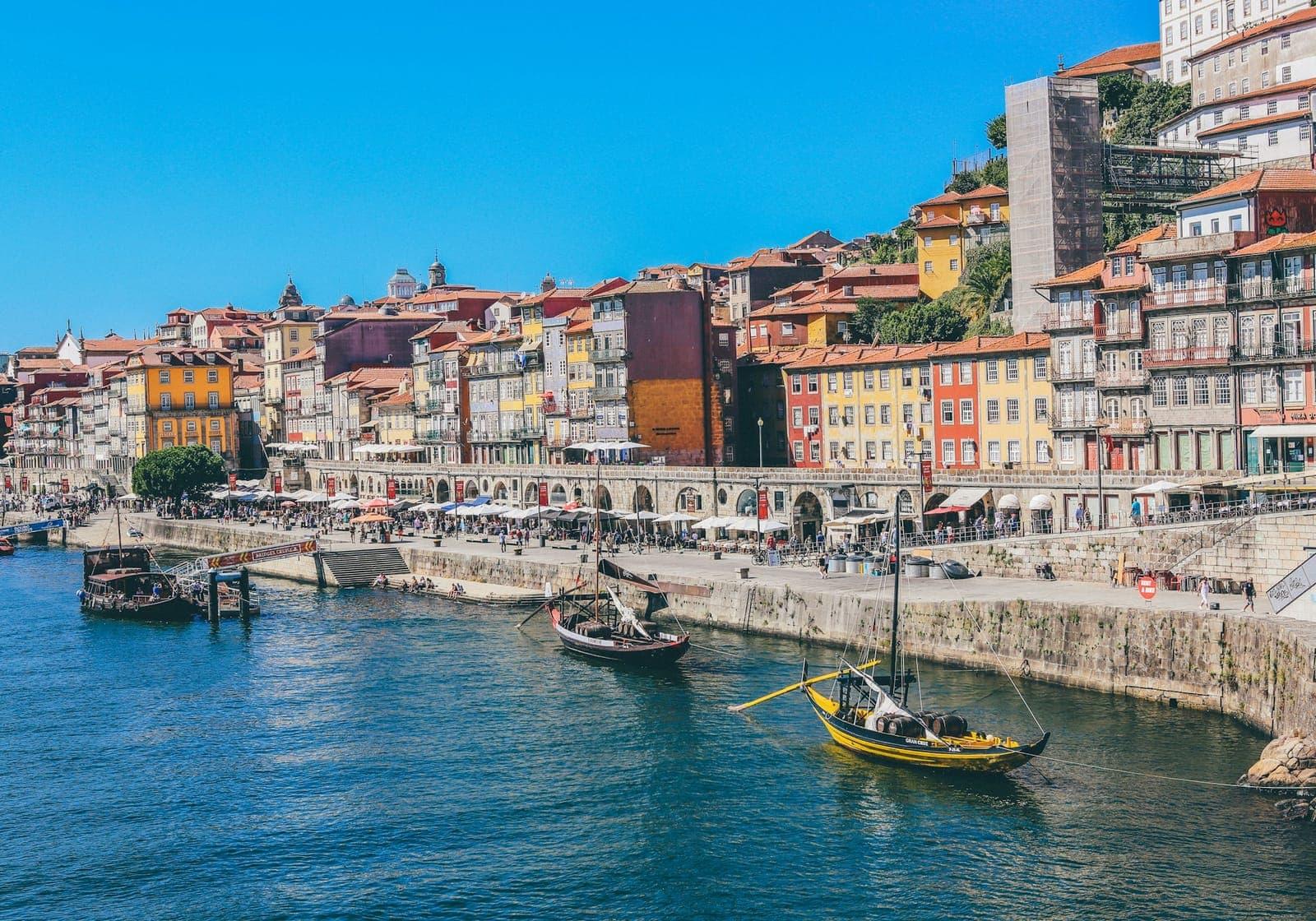
Lisbon — Príncipe Real and Estrela: Príncipe Real is 15min walk from center, has Mercado de Arroios for weekly market, tree-lined garden, and restaurants that open Mondays (Alfama closes). Monthly 1BR rent: €1,400-1,800. Estrela is 10min south, more residential, with the Basílica as tourist anchor but daily life quiet. 1BR: €1,200-1,600. Avoid: Alfama (24/7 tourism, tuk-tuk noise), Bairro Alto (nightlife), Belém (far from functional center).
Kyoto — Eastern Higashiyama and Okazaki: Higashiyama is the east side of the Kamo river, with Kiyomizu Temple as tourism pole but residential machiya (traditional wooden houses) streets in 90% of the district. Monthly 1BR: ¥120,000-180,000 (€800-1,200). Okazaki, to the north, has the National Museum and Biwako Canal, newer with modern cafés. 1BR: ¥140,000-200,000. Avoid: Gion (extreme tourism), Kyoto Station area (noisy, soulless), Arashiyama (far).
Oaxaca — Centro Histórico and Reforma: Centro Histórico is fully walkable, with Zócalo, Mercado Benito Juárez and Templo Santo Domingo. Monthly 1BR: $800-1,100. Reforma, 15min walk north, is where Mexican middle class lives and where the best specialty cafés are. 1BR: $700-1,000. Avoid: Jalatlaco (became Instagram tourism post-2023, prices doubled), San Felipe del Agua (far, needs car).
Chiang Mai — Nimmanhaemin and Old City: Nimmanhaemin is where the digital nomad ecosystem consolidated since 2015: 50+ cafés with pro Wi-Fi, 8 coworkings (Punspace, CAMP, Yellow), healthy restaurants. Monthly 1BR condo: ฿15,000-25,000 (€400-650). Old City (inside the square moat) is more traditional, with temples every 200m, but hotter and residential Wi-Fi 50-100Mbps. Rent: ฿12,000-20,000. Avoid: Santitham (cheaper but no infra), Night Bazaar (3-day tourism).
3-test rule for any new neighborhood: (1) is there a real supermarket within 5min walk? (2) are there 3+ cafés with work tables? (3) are local kids playing on the street at 5pm? If yes to all 3, it's a real residential neighborhood.
Real setup: SIM, banking, coworking — the stack that works in 4 countries
TL;DRLocal SIM month 1 (~$25-35 saved over 2 months), eSIM as bridge for first 2 days, Wise multi-currency + Revolut daily + 1 US Visa backup card, coworking only if Airbnb Wi-Fi fails — Selina/Outsite/WeWork run in 3 of the 4 destinations.
Connectivity: Airalo eSIM for first 2 days (~$5-15 for 5GB), then local SIM. In Lisbon, Vodafone Yorn prepaid €15/month 10GB. In Kyoto, Mobal SIM ¥4,500/month 20GB (Japan is expensive for SIM, Ubigi eSIM is alternative). In Oaxaca, Telcel Amigo Sin Limite $20 USD/month unlimited (best coverage in the South). In Chiang Mai, AIS Travel SIM ฿599/30 days 30GB. Over 60 days break-even local SIM vs continuous eSIM hits ~$35-55 saved.
Banking that survives 4 countries:
| Function | Primary | Backup |
|---|---|---|
| Multi-currency account | Wise (EUR, USD, JPY, THB, MXN) | N/A |
| Daily card | Revolut Premium ($10/month, 0% FX) | Wise Debit (1.6% above limit) |
| ATM withdraw | Wise ($250/month free) | Charles Schwab Debit (no fees worldwide) |
| Emergency backup | 1 US Visa physical card | $200-500 USD cash |
Wise opened native JPY account in 2023 — you receive yen directly without conversion. Revolut Premium covers 80% of €/$/¥ spending with interbank rate up to €1,000/month. ATM in Kyoto: 7-Eleven accepts Wise/Revolut without extra fees, Japanese bank ATMs charge ¥220. ATM in Bangkok/Chiang Mai charges ฿220 per withdrawal by any foreign bank — withdraw ฿20,000 at once (per-transaction limit) to dilute. Charles Schwab Debit reimburses all ATM fees globally — the US nomad classic.
Coworking, when worth it: If Airbnb has confirmed 200Mbps Wi-Fi, coworking is luxury. If it drops below 50Mbps or has noise, worth it. In Lisbon: Second Home Mouraria (€280/month hot desk) or Cowork Central (€220/month). In Kyoto: Impact Hub Kyoto (¥30,000/month). In Oaxaca: Convivio Coworking ($150/month) or Selina Oaxaca ($200/month). In Chiang Mai: Punspace (฿4,500/month ≈ €120) or Yellow Coworking (฿5,500). Outsite and Selina run coliving in 3 of 4 — alternative for those wanting ready-made community.
Additional productivity stack: Mullvad or ProtonVPN ($5/month) for Wi-Fi security; Notion + Google Drive sync backup; portable HDMI cable + Logitech C920 webcam for serious Zoom/Meet calls.
Workation routine: the only one that survives 60 days without burnout
TL;DRSustainable routine: focused work 8am-1pm, lunch + walk 1pm-2:30pm, fixed local activity 3pm-5pm (class, museum, market), community dinner 7pm-9pm. The "work until 10pm" pattern collapses in 3 weeks. Local rhythm sets travel rhythm, not the other way around.
The lie nomad articles tell is "work from the beach". You don't work from the beach. You work from a desk, with coffee, with stable Wi-Fi, seated, exactly like at home. The difference is what comes before and after.
The routine that survives 60 days looks like this: wake 6am-7am aligned to local time, coffee + bright morning, work 8am-1pm in deep block (4 sessions of 75min with 15min break). Important workouts are early morning or sunset. Lunch 1-2pm is local, nearby, cheap (€8 in Lisbon, ¥1,000 in Kyoto, $5 in Oaxaca). 30-45min walk to digest and shift mental zone.
3pm-5pm is immersion zone: 2x/week class (ceramics in Kyoto, Spanish in Oaxaca, cooking class in Chiang Mai), 2x/week museum/gallery/temple visit, 1x/week market for the week's supplies. Friday afternoon 2pm-7pm is mini-expedition: nearby town by train (Sintra/Setúbal from Lisbon, Nara/Osaka from Kyoto, San Felipe del Agua from Oaxaca, Doi Suthep from Chiang Mai).
Dinner 7pm-9pm is community moment. Don't dine alone more than 3 nights in a row. Use Meetup, Couchsurfing Hangouts, Bumble BFF, local nomad Telegram communities. In Lisbon: Lisbon Digital Nomads Telegram (3,000+ members). In Kyoto: Kyoto Foreigners Meetup. In Oaxaca: Oaxaca Digital Nomads Slack. In Chiang Mai: Chiang Mai Nomads (10,000+ members, the most mature in the world).
Sundays are sacred: brain off, long paseo, physical book, no laptop. Whoever uses Sunday to "get ahead on work" burns out in 4 weeks — seen firsthand 7 times.
The paradox is that slow travel only works if you maintain discipline close to what you had at home. The difference is in the quality of the breaks, not the flexibility of hours.
Get one journey a week.
Voyspark editorial newsletter — long-forms, tips and discoveries that don’t fit on Instagram. Weekly, no ads.
No spam. Unsubscribe in 1 click.
Itinerary 1 — Portugal: Lisbon Príncipe Real, 2 months, ~€2,000/month total
TL;DRLisbon Príncipe Real in 2 months runs €3,800-4,200 total including 1BR Airbnb (€2,200-2,500), neighborhood market (€450), cafés/dinners (€700), monthly transport (€80), activities (€600). Schengen waiver covers 90 days. JFK-LIS round-trip $850 low season.
Lisbon works in 2026 despite tourist pressure because Príncipe Real and Estrela are still real residential neighborhoods. You wake up in the old-tile 1BR, walk down Rua D. Pedro V, coffee at Augusto Lisboa for €1.80 (espresso) or Hello Kristof for €4 (specialty). Work from café Wi-Fi or back to the apartment.
Mercado de Arroios on Wednesdays and Saturdays: fresh fish from Sesimbra (€8-12/kg), tomatoes from Quinta da Boavista (€2/kg), Mafra bread (€3/kg artisan). Cooked lunch: salad + baked cod + Casa Ferreirinha wine €6 (€12/day for two).
Optional coworking if Airbnb Wi-Fi fails: Second Home (€280/month), LACS (€250). But confirm with host first — 70% of monthly Airbnb in Príncipe Real have confirmed 200Mbps fiber.
Weekly immersion: Portuguese class at FAUL (€60/month), kizomba at Casa do Brasil (€50/month), Tagus wine tour Saturday (€80 with lunch). Sunday: walk Jardim da Estrela → Lapa → Rio Tejo, lunch at Cervejaria Ramiro off-peak to avoid queue (€35/person).
Total monthly cost:
| Item | Monthly value |
|---|---|
| 1BR Airbnb Príncipe Real | €1,400-1,800 |
| Market + supermarket | €350-450 |
| Café + dinner out 8x | €280-400 |
| Navegante pass (transport) | €40 |
| Classes + activities | €150-250 |
| Monthly total | €2,220-2,940 |
Flights: JFK-LIS-JFK in May 2026 around $850 (TAP, United). Four traps to avoid: high season June-August (price +50%), Alfama as base (24h tourism), tourist restaurant in Bairro Alto at €25/plate, booking Airbnb without confirming fiber.
Itinerary 2 — Japan: Kyoto Higashiyama, 2 months, ~€2,200/month total
TL;DRKyoto Higashiyama 60 days runs €4,200-4,800 total including 1BR machiya (¥280,000-380,000/month ≈ €1,800-2,400), Nishiki market + supermarket (¥40,000/month), bicycle + bus transport (¥3,500/month), traditional classes (¥30,000/month). 90-day visa waiver.
Kyoto is the most distinct of the 4 destinations and the hardest to make financially work. Monthly rent for machiya (traditional wooden house) in eastern Higashiyama varies ¥280,000-380,000 (€1,800-2,400) for 1BR with functional kitchen. Modern apartment in Okazaki: ¥250,000-320,000 (€1,600-2,100).
Home cooking in Kyoto is where slow travel wins. Nishiki Market (15min walk from Higashiyama) has fresh fish, Kyoto tofu (local specialty) and organic vegetables at reasonable prices. Fresco and Life supermarkets cover basics. Food cost 2 people cooking 70%: ¥40,000-55,000/month (€260-360).
Transport: bicycle is king. Monthly rental ¥6,000-8,000 (€40-55). Bus ¥230 per ride, monthly pass ¥4,500. Metro only for Osaka (¥410 one-way). For Tokyo: Shinkansen ¥14,000 one-way (3h), book 2-3 weeks ahead for 1-2 visits.
Immersion: ceramic class at Kawamoto Studio (¥3,000/class, 4x/month = ¥12,000), tea ceremony at Camellia (¥2,500/class), Shotokan karate at Honbu Dojo (¥15,000/month). Temples: Kiyomizu, Ginkakuji, Eikando — admission ¥400-600 each, worth visiting 5-6 over 60 days, not all in 3 days.
Total monthly cost:
| Item | Monthly value |
|---|---|
| 1BR Machiya Higashiyama | ¥280,000-380,000 |
| Market + supermarket | ¥40,000-55,000 |
| Restaurant 8x | ¥30,000-50,000 |
| Bicycle + bus | ¥10,000-12,000 |
| Traditional classes | ¥20,000-35,000 |
| Monthly total | ¥380,000-532,000 (€2,450-3,430) |
Flights JFK-KIX (Osaka, 1h from Kyoto) in May 2026: $1,100-1,400 (ANA, JAL, United). Book 4+ months ahead drops to $950. Four traps: living near Kyoto Station (no soul), ignoring bicycles (city designed for them), eating in Gion (price doubles), trying to visit all 1,600 temples.
Itinerary 3 — Mexico: Oaxaca Centro, 2 months, ~€1,100/month total
TL;DROaxaca Centro/Reforma 60 days runs $2,000-2,600 total ($800-1,100 rent/month + $250 market + $200 café/restaurant + $50 transport + $200 classes). Equals €1,850-2,400 over 60 days or €925-1,200/month. FMM up to 180 days.
Oaxaca consolidated as the most mature Latin slow travel destination of 2026, surpassing Mexico City in quality of life and losing only to Mérida in absolute safety. Centro Histórico is fully walkable: Zócalo, Templo Santo Domingo, Mercado 20 de Noviembre, Andador Macedonio Alcalá.
Furnished 1BR in Centro: $800-1,100/month (monthly Airbnb). In Reforma (15min walk north): $700-950. In Jalatlaco, which was cheap in 2022, price doubled post-2023 — now $1,000-1,400, avoid. Houses with courtyards reach $1,500-2,000 and are worth it for 3+ month stays.
Food in Oaxaca is where the spreadsheet wins most. Mercado 20 de Noviembre has tlayudas at $50 pesos (€2.50), barbacoa $80 pesos (€4), café de olla $20 pesos. Mercado Sánchez Pascuas (Reforma) is where locals shop: vegetables, Oaxaca cheese, mole paste. Food cost cooking 70%: $180-250/month (€170-230).
Immersion: Spanish class at Instituto Cultural Oaxaca ($150/week intensive, or $300/month 4h/week), Oaxacan cooking class with Pilar Cabrera ($90/3h class), mezcal tour 1x/month ($60 with 8 distillates). Sunday: Tlacolula tianguis (ancestral market), 35min by colectivo ($30 pesos), the state's best market.
Total monthly cost:
| Item | Monthly value |
|---|---|
| 1BR Airbnb Centro/Reforma | $800-1,100 |
| Market + supermarket | $180-250 |
| Café/restaurant 12x | $150-220 |
| Transport (Uber + colectivo) | $40-60 |
| Classes + activities | $200-350 |
| Monthly total | $1,370-1,980 (€1,260-1,820) |
Flights JFK-OAX via MEX in May 2026: $550-750 (Aeroméxico, Delta). 4-8h connection in CDMX worth using for a meal in the city. Four traps: rent in Jalatlaco (inflated price), eating only in San Felipe (far, becomes Uber-dependent), missing Día de Muertos without early reservation if staying through November, ignoring pueblos mágicos (Mitla, Hierve el Agua).
Itinerary 4 — Thailand: Chiang Mai Old City/Nimman, 2 months, ~€900/month total
TL;DRChiang Mai 60 days runs ฿55,000-72,000 total (condo ฿15,000-25,000/month + food ฿8,000 + transport ฿2,000 + classes ฿4,000-6,000), equivalent €1,450-1,900 over 60 days or €725-950/month. 60+30 visa exemption.
Chiang Mai holds in 2026 the title of global nomad capital for the 10th consecutive year. Old City (1.5km × 1.5km square moat) is territory of ancient temples and modern cafés. Nimmanhaemin, 10min by taxi/scooter, is the digital hub.
1BR condo in Nimman: ฿18,000-28,000/month furnished, pool, 200-500Mbps Wi-Fi, 24h security (€470-730). In Old City, 1-2BR houses: ฿12,000-20,000 (€315-525). Santitham is 30% cheaper but without café/coworking infra — only worth it for 4+ month stays.
Food in Chiang Mai is what makes ฿900/month total possible. Pad thai ฿50, khao soi ฿60, papaya salad ฿40, latte ฿70-100. Warorot Market for fresh produce: chicken ฿80/kg, mango ฿40/kg, jasmine rice ฿100/5kg. Cooking is easy but doesn't pay vs eating out — difference is small (~฿3,000/month).
Mature coworking: Punspace Nimman (฿4,500/month), Yellow Coworking (฿5,500), CAMP (฿200/day drop-in, best for vibe), Mana Cowork (฿4,000). Cafés with pro Wi-Fi: Ristr8to (specialty coffee), Graph Café, Akha Ama. 100Mbps+ Wi-Fi in most.
Immersion: basic Thai class at Payap University Language Center (฿3,500/month 8h), Muay Thai at Hong Thong Gym (฿5,000/month unlimited), cooking class at Thai Farm Cooking (฿1,000/class, worth doing 2-3), daily Thai massage at massage schools (฿250/hour, real local price, not tourist).
Total monthly cost:
| Item | Monthly value |
|---|---|
| 1BR condo Nimman/Old City | ฿15,000-25,000 |
| Food (street + super mix) | ฿6,000-9,000 |
| Coworking (optional) | ฿4,500-5,500 |
| Transport (Grab + scooter) | ฿2,000-3,000 |
| Classes + Muay Thai | ฿4,000-7,000 |
| Monthly total | ฿31,500-49,500 (€830-1,300) |
Flights JFK-BKK via DOH or DXB in May 2026: $950-1,200 (Qatar, Emirates). BKK-CNX domestic flight ฿1,500-2,500 (Thai AirAsia, Nok Air, 1h10min). Four traps: arriving in high season November-February without booking (price doubles), trusting scooter without international license (฿2,000+ fines common), ignoring burning season February-April (PM2.5 air quality dangerous), staying only in Nimman without knowing Old City and Doi Suthep.
When slow travel does NOT work (and nobody tells you)
TL;DRSlow travel breaks with restrictive visa (Schengen 90/180 limits Europe), school-age child (local school requires residency), synchronous work with US fuso (Thailand unfeasible), recent grief/divorce (becomes escapism, not travel), and those needing active local professional network.
I won't romanticize. Slow travel isn't for everyone, and there are five profiles where it predictably fails.
Family with school-age child (6-14): enrolling in local school in Lisbon or Kyoto requires residency, vaccines, paperwork — friction that kills 2 months easily. International school costs €800-1,500/month per child. Homeschooling depends on country (legal in Portugal and Mexico, complex in Japan and Thailand). Slow travel with 0-5 year old is more viable: routine is more flexible, local daycare $200-400/month.
Synchronous work US West Coast time zone: if you need to be online 9am-6pm San Francisco (UTC-8), Thailand (UTC+7) means working 0am-9am. Breaks in 3 weeks. Lisbon works (UTC+0, overlap 5pm-1am), Oaxaca works (UTC-6, overlap 11am-8pm), Kyoto unfeasible (UTC+9, overlap 1am-10am).
Schengen visa for those wanting 6 months in Europe: Schengen 90/180 forces you to leave 90 days. The classic trick was going to UK/Albania/Serbia/Georgia between blocks — works but exhausting. Portugal D8 digital nomad visa unlocks 1 year + extensions.
Recent grief, divorce or painful firing: 50% of cases becomes escapism. You need roots, not new city. Slow travel only works if leaving a healthy base, not fleeing a bad one. Those using slow travel as therapy spend money and come back worse.
Professional living off in-person network: M&A lawyer, surgeon, enterprise salesperson — 2 months out drops pipeline. Slow travel works for those with asynchronous work (dev, designer, writer, senior consultant already contracted).
Other critical points that only show up after day 30: nostalgia for home food (real weight), fatigue from conversation in 2-3 simultaneous languages, public Wi-Fi fatigue even good, feeling "everyone here is tourist" if you picked wrong neighborhood.
Real friction: what those who stay 60 days feel, not 14
TL;DRDay 30-60 frictions that short tourism hides: tax residency above 183 days, currency banking oscillating 5-10% a month, healthcare without residency (SafetyWing nomad insurance $42-60/month required), friendships disappearing 30 days after exit, decision fatigue in third country.
Frictions that only appear in week 5. List the 5 real ones.
Tax residency: 183 cumulative days in a year makes you tax resident in Portugal, Japan, Mexico, Thailand. If you do 2 months Portugal + 2 months Mexico + 2 months Thailand + 2 months home, you're OK (60 days each, below 183). But slow travel beginner often does 4 months Portugal wanting D8 — then tax residency hits. Consult expat-specialized accountant first ($300-800 initial consultation prevents $10,000+ problem later).
Currency banking: EUR fluctuated 5% vs USD in May/26. THB fluctuated 8%. If you convert everything on arrival, you lose if currency rises. Strategy: keep 70% in USD/Wise multi-currency, convert 30% every 2 weeks aligned with actual spend. Wise shows history — use it to see trend.
Healthcare without residency: US Medicare doesn't work abroad. Regular US health insurance often doesn't cover. Real solution: SafetyWing Nomad Insurance $42-60/month covers 4 countries, emergency, hospitalization. World Nomads is better for sports but expensive ($90+/month). Cigna Global for top tier ($150+/month). Dental: schedule between slow trips, generally cheaper.
Transient friendships: day 60 you have 8-12 "good" connections — lunch, hike, dinner. Day 90 after leaving, 5-6 still respond on WhatsApp. Day 180, 2-3 become real friendship. Accept the statistic. Don't invest emotion in all 12, invest in the 2-3 that click genuinely from the start.
Decision fatigue: every day you decide new café, new lunch, new route. At home, 60% is automatic. Slow travel forces 30-40% more daily decisions and that drains the brain. Solution: create 3-4 fixed habits per base (same breakfast café, same Thursday restaurant, same Saturday market). Cuts 50% of the fatigue.
Exit: the sweet spot to leave is day 60-75
TL;DRSweet spot to leave vs stay is day 60-75: community already formed (not in "every day is new" stage), novelty fatigue dropped, but saturation hasn't arrived. Above 90 days diminishing return kicks in — you've seen the best of the neighborhood. Next country should be context upgrade, not escape.
How to decide to leave? Three signs.
Sign 1 — you're no longer surprised. Day 30 you discover a new café every week. Day 60 you know the best ones. Day 90, you're revisiting because they ran out. When novelty learning drops to 1-2 discoveries/week, time to plan exit.
Sign 2 — productivity dropped for no apparent reason. After 75 days in the same routine, brain needs scenery change. Don't confuse with boredom (which is discomfort) — it's a "everything is same" feeling that kills creativity. Hemingway said this in 1923 about Paris.
Sign 3 — local community started becoming bubble. When 80% of your conversations are with the same 5 expats in your same phase, it's becoming nomad bubble. Nomad bubble is poison — you end up consuming the country through the expat narrative, not your own experience.
Sweet spot for next destination: must be context upgrade, not escape. Leaving Lisbon for Porto is lateral (same country, language, vibe). Leaving Lisbon for Kyoto is vertical upgrade (new language, distinct culture, practical reset). Leaving Lisbon straight to Thailand is shock (only worth it if mentally and logistically prepared).
Ideal sequence for 1-year sabbatical with 4 bases (180 days out considering 4-5 transition days):
- Lisbon (Mar-Apr): soft start, language adjacent
- Kyoto (May-Jun): first major cultural leap
- (Jul-Sep: back to US home base 8-10 weeks)
- Oaxaca (Oct-Nov): Día de Muertos in loco
- Chiang Mai (Dec-Jan): tropical winter, restart
This 4x60-day model breaks the year into 5 chapters without becoming extreme backpacking. Total away from US: 240 days. Total cost ~€8,500-11,000 + flights $5,500 = $14,500-17,500. Whoever rents in the US needs to decide: sublet on Airbnb (covers 60-70% of rent) or close contract and return to different base.
Practical appendix
Essential apps:
- Airbnb (monthly discount) + Spotahome (Europe) + Blueground (corporate mid-tier)
- Wise + Revolut + Charles Schwab Debit + 1 US Visa physical backup
- Airalo (eSIM bridge) + local SIM apps per country
- Google Maps OFFLINE + Maps.me backup
- Notion (nomad workspace) + Google Drive (backup) + 1Password
- SafetyWing (health insurance) + policy and contact in Notion
- Meetup + Couchsurfing Hangouts + Bumble BFF (network)
Checklist 30 days before departure:
- Visa/ETIAS confirmed for each country
- Flights with checked baggage (carry-on doesn't last 60 days real)
- Airbnb confirmed with 2 cities, Wi-Fi 200Mbps documented
- SafetyWing activated, policy saved in Notion
- Wise + Revolut + Charles Schwab physical cards arrived
- Airalo eSIM purchased for first 2 days
- Power of attorney + documents digitized in cloud
- Full laptop backup + external drive left with family
12 items for 2-month bag:
- Laptop + charger + universal adapter
- USB-C hub + portable HDMI cable
- Logitech C920 webcam (if important meetings)
- Mouse + portable keyboard (optional, worth it)
- Noise-cancelling headphones (Sony WH-1000XM5 or Bose QC)
- 7-8 shirts, 3 pants, 1 light jacket, 1 medium coat
- Walking shoes + sandals + 1 dress shoe
- Toiletry bag with 100ml products for first days
- Thermal bottle + small knife
- 2 physical books (rotation with local libraries)
- Extra cables (USB-C, Lightning) + 20,000mAh powerbank
- Physical documents + digital copies
Key points
Airbnb monthly discount cuts 40-55% vs nightly: Lisbon $65/night → $1,300/month, Kyoto ¥18,000/night → ¥350,000/month.
Supermarket + Airbnb kitchen drops food cost 65-75% vs eating out: $400/month cooking in Lisbon vs $1,400 eating out 3x/day.
Schengen allows 90 days in 180 (Portugal fits entirely in one stay); Thailand offers 60-day visa exemption + 30-day extension = 90 days.
Frequently asked questions
No. Slow travel works for anyone with 60-day flexibility: retiree (passive income), university professor (sabbatical), salaried between jobs (intentional gap), couple between projects, parents with recently graduated kid. The "remote freelancer" profile is just the most common because it combines income + flexibility. Salaried can request unpaid leave of 2-3 months every 3-4 years.
Conversation
…Log in to drop your insight
Serious conversation, no trolls. Moderated comments, linked to your Voyspark profile.
Sign in to commentLoading…

About the author
Curadoria Voyspark
2 years in the Voyspark editorial team
Time editorial da Voyspark — escritores, repórteres, fotógrafos e fixers em Lisboa, Tóquio, Nova York, Cidade do México e Marrakech. Coletivo. Sem voz corporativa. Cada peça com checagem cruzada por um editor regional e um chef ou curador local.
Expertise


