Slow travel: how to spend 30 days abroad for the same price as 10 (the math nobody runs)

Flights are a fixed cost. Hotels are an expensive variable. When you stretch the trip, the calculation flips in your favor — provided you know what you're doing.

por Curadoria Voyspark May 15, 2026 15 min Curadoria Voyspark

There's a calculation almost nobody runs before booking a flight: divide the airfare by the number of travel days. Over 7 days, that USD 870 ticket costs USD 124 per day. Over 30 days, USD 29. Add monthly Airbnb (a third the cost of a daily hotel), groceries instead of restaurants, a metro pass instead of single tickets, and the result is strange: thirty days in Europe costs roughly the same money as ten days the traditional way. This piece breaks down the real spreadsheet — Lisbon, Buenos Aires, and Bangkok with numbers — and explains why slow travel isn't "traveling slowly for aesthetics," it's math for people who actually read the invoice.

15 min de leitura

There's a basic travel calculation almost nobody runs before booking a flight. It's simple, brutal, and completely changes the strategy of anyone who travels often. Let me break it down.

Most people think about trips this way: "I have 10 vacation days, how much will I spend?" They add flight + hotel × 10 + food × 10 + attractions and lock in a number. They think it's expensive, complain, go anyway. They come home tired.

There's another way of thinking — not better, not worse, just different, and it fits people with time flexibility. Instead of asking "how much do 10 days cost?", the question becomes "what's the per-day cost if I stretch to 30?" And the game changes.

That's slow travel. Not the Instagram aesthetic version (strolling slowly between vineyards). The math version: staying somewhere long enough that the fixed cost of the trip (the flight, mainly) dilutes to the point where the total daily cost is less than a hotel night in São Paulo.

People who understand this math travel more. People who don't complain that travel is expensive.


The base math, in four lines

Every trip has two cost types: fixed and variable.

Fixed cost is what you pay once, regardless of duration: international round-trip flights, visa fees, travel insurance (usually sold per period but with a minimum), occasionally a car rented for a full week. That cost dilutes the longer you stay.

Variable cost is what you pay per day: lodging, food, local transport, attractions. That cost scales linearly — more days means more spent in aggregate, but the per-day cost tends to drop when you switch modes (monthly instead of daily).

The slow travel play is simultaneous: dilute the fixed while lowering the variable. Daily hotel is expensive; monthly Airbnb costs less per day. Restaurant 3x/day is expensive; groceries plus cooking costs a third. Single metro tickets are expensive; monthly passes cost a fifth. Every component collapses when you stretch the timeline.

I'll show with real numbers.


Flights: the most misunderstood component

A round-trip international flight São Paulo–Lisbon in 2026 runs USD 780-1,220 depending on season and lead time. I'll use USD 870 as the example.

If you stay 7 days, the flight costs USD 124 per travel day.

If you stay 14 days, USD 62.

If you stay 30 days, USD 29.

If you stay 90 days, USD 10.

That number isn't abstract. It enters your mental spreadsheet directly. When you compare a USD 87/day hotel vs a USD 26/day monthly Airbnb, the real difference has to include that amortized flight. On short trips, the flight sinks any savings strategy. On long trips, it becomes noise.

That's why a ticket that looks "expensive" for 7 days is the same ticket "cheap" for 30 days. The fare didn't change. Your math did.

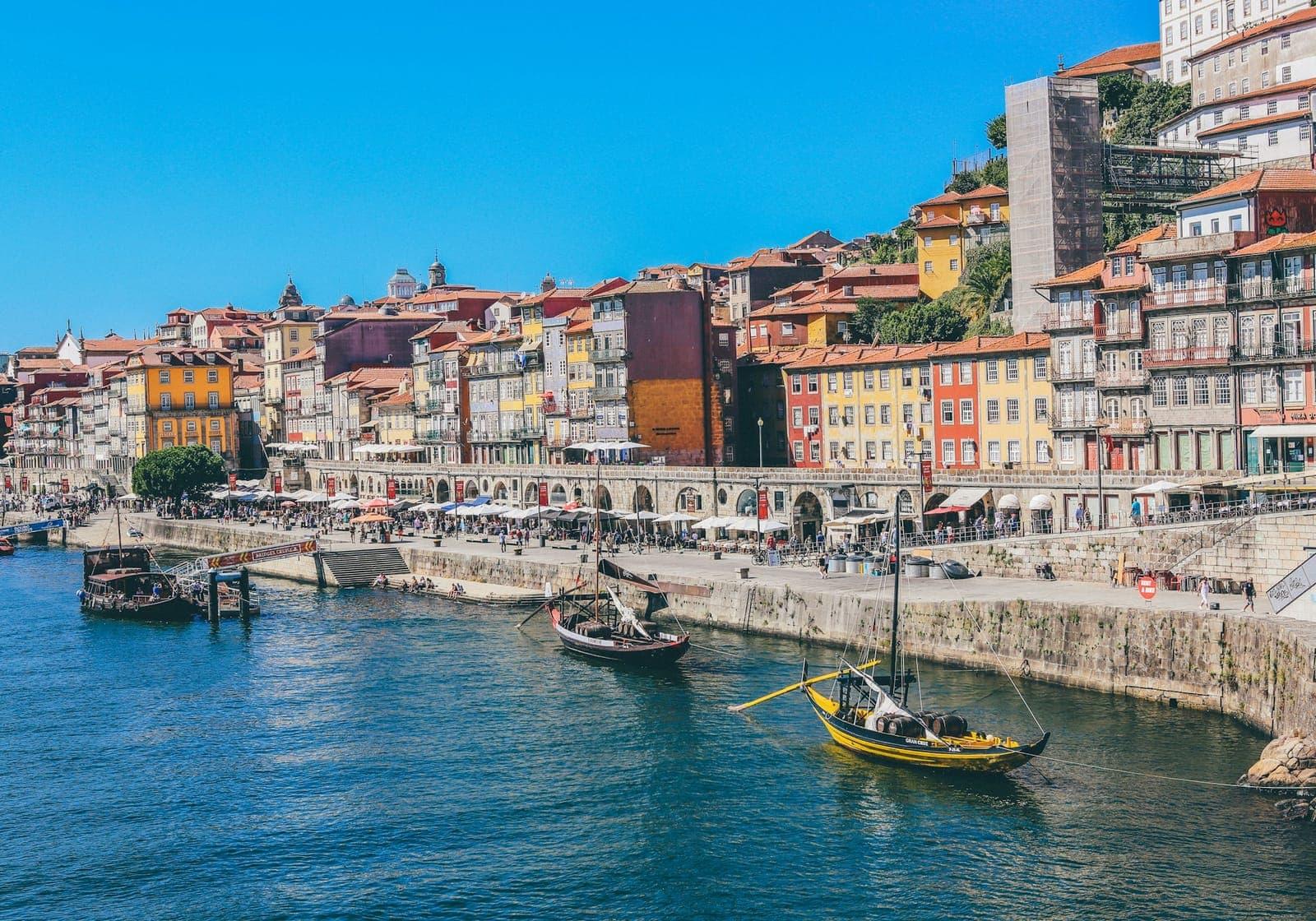
Lodging: where the gap explodes

Here's the component that separates people who travel 30 days economically from people who just extend the financial pain.

A decent 3-star hotel in Lisbon in 2026 costs EUR 80-130 per night, or roughly USD 88-143. I'll use USD 110 as reference.

  • 7 days hotel: USD 770
  • 30 days hotel: USD 3,300

Now monthly Airbnb — a format virtually every serious host offers at 30-50% off the daily rate due to partial tourism-licensing exemption and zero turnover cost.

  • Monthly Airbnb, 1-bedroom well-located Alfama: USD 935-1,210/month
  • Monthly Airbnb, Graça or São Bento, more space: USD 1,100-1,540
  • Monthly Airbnb, Marvila or Areeiro, outside tourist circuit: USD 770-990

Take the average case: USD 1,100/month in Alfama. That's USD 37 per day, vs USD 110 per day for hotel. A 67% reduction.

And that math doesn't even include the hidden gain: equipped kitchen (you don't eat out every day), washing machine (you don't pay laundry), workspace (you don't pay coworking unless you want to), and a fixed address (you receive packages, register documents, become a person instead of a tourist).

The catch: monthly Airbnb requires booking directly with the host or via a platform with a "long stay" filter. Daily rate × 30 days does not give you the same number — it ends up 40-60% more expensive than quoting monthly explicitly. People who don't know this pay the tourist price.


Food: the line item that destroys budgets

This is where most people bleed without noticing.

Eating out in Lisbon in 2026: decent prato do dia lunch EUR 10-15, mid-range dinner EUR 25-40, pastelaria breakfast EUR 4-6. Daily total: EUR 40-60 (USD 44-66) per person. As a couple, USD 88-132 per day. Over 30 days, USD 2,640-3,960 in food alone.

Cooking at home with Portuguese supermarkets (Pingo Doce, Continente, Mercadona, or local Arroios market):

  • Breakfast at home: bread, fruit, egg, coffee — USD 2.20 per person
  • Cooked lunch: pasta with vegetables, salad, simple fish — USD 4.40-6.60 per person
  • Cooked dinner: similar to lunch — USD 4.40-6.60 per person
  • Restaurant 2-3x per week, occasional: USD 33-55 per meal as a couple

Couple's consolidated bill cooking with restaurant 3x/week: USD 660-990/month. A 60-70% reduction vs always eating out.

Groceries in Lisbon, especially outside tourist circuits, are cheap by European standards. Fresh fish, Portuguese vegetables, USD 3.30 wine that's drinkable, Maia or Gleba bread that's the best in the city. Cooking at home isn't giving up the gastronomic experience — it's reorganizing it.

The 3-4 restaurants you visit per week become real, chosen, memorable experiences. Not generic exhausted-tourist lunches grabbed wherever.


Transport: the component nobody calculates

Single metro ticket in Lisbon: EUR 1.80 (USD 2). Navegante monthly pass: EUR 40 (urban zone) or EUR 30 (metro/bus only, no suburban rail).

The average tourist takes 4-6 rides per day: USD 8-12 per day in transport. Over 30 days: USD 230-360.

A 30-day stay with a monthly pass: USD 44 total. An 80% reduction.

That pass covers buses, metro, trams (including the tourist-packed 28), and ferries to Cacilhas and Trafaria. It becomes unlimited mobility across the whole city. People who don't buy it pay EUR 1.80 each time they step on a tram.

Same logic in Buenos Aires (SUBE), Madrid (Abono Mensual), Berlin (Deutschland-Ticket EUR 49/month for the whole country), Tokyo (the Tokyo Subway Ticket is tourist-only, but regular monthly passes are cheaper for residents).

To qualify for the pass in some cities you need a NIF (Lisbon), local CPF (Buenos Aires), or fixed address. Another reason for monthly Airbnb: it gives you an address to attach to documents.

Receba uma viagem por semana.

Newsletter editorial Voyspark — long-forms, dicas e descobertas que não cabem no Instagram. 1x por semana, sem ads.

Sem spam. Cancela em 1 clique.

Concrete case: Lisbon 30 days as a couple

I'll lay out the real spreadsheet. Brazilian couple, middle-class profile, wanting to know Lisbon properly, not rush through.

Item Value
Flights São Paulo–Lisbon round-trip, 2 people USD 2,000
1-month Airbnb in Alfama (furnished 1BR) USD 1,080
Groceries + cooking (couple) USD 330
Restaurant 8-10x in the month (couple) USD 117
Navegante pass × 2 USD 80
Paid attractions, museums, day trips (Sintra, Cascais) USD 250
TOTAL 30 days couple USD 3,857
Per-day cost USD 129

Now the comparison: same couple, 10 days, 3-star hotel, traditional tourist scheme.

Item Value
Flights São Paulo–Lisbon round-trip, 2 people USD 2,000
3★ hotel in Baixa (10 nights) USD 1,000
Eating out 3x/day (couple) USD 750
Single transport tickets + Uber USD 100
Attractions + day trips (rushed) USD 200
TOTAL 10 days couple USD 4,050
Per-day cost USD 405

The honest read: 30 days came out USD 193 cheaper than 10 days. And the daily cost was 3.1× lower.

The experience is also different. The 30 days include grocery shopping in Arroios and greeting the bakery owner who learned your name. The 10 days include the Time Out Market queue, a photo at Castelo de São Jorge, dinner at an overpriced mediocre restaurant because you're exhausted and anything will do.

People who travel 30 days come back with a thesis. People who travel 10 come back with Instagram.


COMPARATIVE_TABLE_30_VS_10_MARKER

Couple comparison across three destinations. Same parameters: round-trip flight from Brazil, monthly Airbnb × daily 3★ hotel, cooking × eating out, transport pass × single tickets.

Destination 30 days total couple Per-day 30d 10 days total couple Per-day 10d Experiential ROI
Lisbon USD 3,830 USD 128 USD 3,580 USD 358 30d wins — walkable city rewards staying
Buenos Aires USD 1,920 USD 64 USD 2,200 USD 220 30d wins by a wide margin — favorable exchange rate amplifies advantage
Bangkok USD 2,470 USD 82 USD 2,580 USD 258 30d wins on comfort — fixed base enables real day trips (Ayutthaya, Kanchanaburi)

Buenos Aires is the most scandalous case: 30 days costs less in absolute terms than 10 days traditional, because a monthly Airbnb in Palermo Soho runs USD 600-900 and Argentine groceries at current exchange rates are almost free. Bangkok also skews toward 30 days because daily hotels are cheap but monthly Airbnb in Thonglor is cheaper still (THB 25-35k/month = USD 700-980).

The lesson: the cheaper the destination's local cost of living and the more expensive the flight, the more slow travel wins.


Who should do slow travel — and who shouldn't

Slow travel doesn't fit every profile. Honest to admit it:

Fits:

  • Digital nomad with dollar/euro income — works remote, picks a destination with a workable time zone, dilutes the fixed cost against the salary that keeps coming.
  • Retiree or pre-retiree — has time and fixed income, gains quality of life instead of hurry.
  • Planned sabbatical — writer, researcher, founder between projects, anyone who took 3-6 deliberate months off.
  • Family with a homeschooled or online-schooled child — can extend because there's no school calendar blocking.
  • Couple without children with work flexibility — entrepreneur, freelancer, consultant — anyone who controls their own schedule.

Doesn't fit:

  • Anyone with formal 10-15 business-day vacation and a rigid boss. Stretching to 30 days requires taking 6 weeks off, which rarely exists.
  • Anyone with a child in traditional school. Even during long breaks (July or December-January), 30 consecutive days is the exception.
  • Anyone traveling to "do a city circuit." Slow travel is a fixed base. Whoever wants 5 cities in 15 days isn't doing slow, they're doing Eurotrip — and that needs hotels.
  • Anyone who doesn't enjoy cooking or shopping. The savings from monthly lodging only materialize alongside a food-habit change. Without it, you spend what you saved on lodging in delivery.

If your life doesn't allow it, that's fine. Do the 10-day trip well. But know: you're not paying for "travel." You're paying for the inverse of flexibility.


The 6 mistakes that destroy the math

Even people who try slow travel often slip up and the calculation collapses. The most common errors:

  1. Not cooking. You rented an apartment with a fully-equipped kitchen and you still eat out 3x/day. Now monthly Airbnb is just a cheap hotel with a sink. Savings lost.

  2. Going in high season with inflated rents. Lisbon in July and August, Buenos Aires in January, Bangkok in December-February. Monthly Airbnb triples in price in some windows. Slow travel works best in shoulder or low season.

  3. Staying in a hotel "because it's easier." No kitchen, no washer, no space — you reproduce the expensive tourist scheme over 30 days. Worst of both worlds.

  4. Not buying a monthly transport pass. Using Uber or single tickets for 30 consecutive days costs more than a domestic flight. Monthly pass always.

  5. Buying everything in tourist-area shops. A grocery in Lisbon's Baixa charges 40% more than Pingo Doce in Arroios. Same product. Slow travel demands stepping outside the circuit.

  6. Counting weekdays as "productive remote-work days" without adjusting the time zone. If you work for a Brazilian client from Lisbon (+4h), your workday starts at 1pm local and ends at 10pm. You "travel" only in the morning. In opposite-zone destinations (Bangkok +10h, Tokyo +12h), it's worse. Calculate the time zone before choosing the destination.

People who avoid these six make slow travel work. People who don't turn 30 days into a disguised hotel and come back thinking "it wasn't worth it."


Where slow travel connects to workation

Slow travel is workation's cousin, but not the same thing.

Workation is the particular case of slow travel where you work remote and dilute the cost into your ongoing salary. The money that would have left the wallet for "vacation" keeps coming in as revenue. So 30 days in Lisbon doesn't cost USD 3,800 — it costs USD 3,800 minus what you would have spent living in Brazil that month (rent, groceries, transport) = real net usually lands between USD 1,300-2,000 more than staying home.

Slow travel without working is extended travel — sabbatical, long vacation, retirement. Here the cost is full, but the per-day cost is still lower than short travel.

The choice between them depends on your relationship with work. Anyone who can work while traveling does workation and wins twice (continuous income + experience). Anyone who needs to disconnect does sabbatical slow travel.

To do real workation, read the Lisbon 6-month workation guide — it breaks down cost neighborhood by neighborhood, decent coworking, and what's left of the NHR tax regime after the reform.


The insight that changes everything

There's a line I heard from a Chilean woman in Lisbon that sums up slow travel better than any spreadsheet: "Short trips are expensive because you're paying to pretend you live somewhere. Long trips are cheap because you actually live there."

The hotel's daily rate includes the "tourist premium" — the markup you pay for convenience without commitment. Breakfast served, towels changed, English-speaking front desk. That premium is expensive because it substitutes what you'd get for free by living: closet, kitchen, laundry, neighbors.

When you allow yourself to actually live somewhere for 30 days, that premium disappears. What's left is the real cost of living — which, in many destinations around the world, is cheaper than the cost of living in São Paulo.

That's the secret nobody tells you in the package ad: expensive travel exists because you bought a package. Cheap travel exists because you ran the spreadsheet.

Run the spreadsheet. It's going to shock you how the numbers flip.

Gostou? Salve ou compartilhe.

Pontos-chave

International flights are a fixed cost. Each extra day proportionally lowers the daily flight cost.

Monthly Airbnb costs 60-75% less per night than an equivalent 3-star hotel.

Eating out 3x/day × 30 days costs triple cooking with occasional restaurants.

Perguntas frequentes

No. It works for anyone with time flexibility: retirees, sabbatical takers, writers, students on long break, freelancers between projects. What slow travel requires is duration (minimum 21 days for costs to dilute), not necessarily remote work. Remote workers get the bonus of keeping income during the trip, but it's not a prerequisite.

Conversa

Faça login pra deixar seu insight

Conversa séria, sem trolls. Comentários moderados, vínculo ao seu perfil Voyspark.

Entrar pra comentar

Carregando…

Sobre o autor

Curadoria Voyspark

2 anos no editorial Voyspark

Time editorial da Voyspark — escritores, repórteres, fotógrafos e fixers em Lisboa, Tóquio, Nova York, Cidade do México e Marrakech. Coletivo. Sem voz corporativa. Cada peça com checagem cruzada por um editor regional e um chef ou curador local.

Especialidades

slow-travelfoodiesustentabilidadecultureworkationfamily
Voyspark AI