

A ranking of 30 countries for solo female travel in 2026 with honest nuance: Japan leads, Slovenia and Georgia surprise, Morocco demands preparation. Country-by-country scams, dress codes, and safety apps.
24 min read
In 2026, solo female travel has become a statistical movement, not an eccentric adventure. Solo Female Traveler Network grew from 49,000 members in 2019 to 124,000 in 2026. Booking reports 38% growth in single-occupancy bookings made by women aged 25-55. Hostels with female-only floors have tripled in Europe. And yet, the question every woman asks before buying her first solo ticket is the same: where, exactly, is it safe?
This article answers that with an honest 30-country ranking, cross-referencing three sources that measure different things — Global Peace Index (macro peace, Vision of Humanity lens), Bounce Women Travel Safety Index (specific female perception, 50 countries surveyed), and Solo Female Traveler Network (qualitative data from 124k women reporting what happened, not what could happen). When the three indexes converge on a country, you have certainty. When they diverge, you have nuance — and the real lesson lives in the nuance.
The ranking's premise isn't "avoid the third world." Georgia, Sri Lanka, and Vietnam outrank Southern Italy and France on solo female safety. The premise also isn't "stick to the first world." Urban USA (Memphis, Baltimore, parts of Chicago) is more dangerous for a solo woman at night than all of Tbilisi.
That's the first lesson: separate real risk from performative risk. Catcalling in Rome annoys but rarely escalates. The wrong neighborhood in Johannesburg at 2 a.m. escalates. Knowing the difference keeps the trip light, not paranoid.
For US/UK/AUS readers specifically: this guide includes visa context where relevant (USA passport gets visa-free entry to 188 countries in 2026, UK 188, AUS 189). Embassy support quality varies wildly — US State Dept has best 24h coverage; UK Foreign Office has best emergency evacuation in conflict zones; AUS Smart Traveller has best granular advisories for Southeast Asia and Pacific.
Criteria — what makes a country safe for solo women in 2026
TL;DRIt's not just homicide rate. It's tourist-specific assault rate + police response quality + sexual harassment density + nighttime public transit infrastructure + ease of accessing help in English (or tourism language) + LGBTQ+ tolerance + emergency gynecology access. Seven axes, not one.
Global Peace Index measures macro: absence of war, militarization, aggregate violent crime. Useful for excluding zones like Yemen or Syria, but useless for choosing between Lisbon and Madrid (both high peace). Bounce Index surveys post-trip women in 50 countries about perception (Did you feel watched? Approached inappropriately? Comfortable walking at night?). Solo Female Traveler Network gathers what actually happened in structured posts — "I was robbed in Barcelona, neighborhood X, time Y."
The honest synthesis uses seven axes:
- Violent crime against foreign women — specific rate, not macro. Japan and New Zealand near zero. USA varies brutally by state.
- Verbal/visual harassment — catcalling density, intrusiveness. Southern Italy and LATAM very high; Japan and South Korea very low.
- Nighttime transit — Berlin and Tokyo have safe metro at 2 a.m. Rome and Mexico City don't.
- Police response in English — Switzerland, Netherlands, Portugal work. Rural Thailand and Egypt break down.
- Emergency medical access — private English-speaking clinics, prescription-free emergency contraception. Available in EU, Japan, Korea, urban Thailand. Hard in Morocco, rural Philippines.
- LGBTQ+ tolerance — for lesbian/bi/trans travelers, some destinations are physically safe but socially claustrophobic (UAE, Qatar, rural Malaysia).
- Solo-friendly infrastructure — female-only hostels, restaurants that accept tables for 1, single-traveler tours without extortionate supplements. Portugal, Japan, Thailand deliver.
When a traveler says "X is safe," ask which axis she's measuring. The honest answer is "these seven, with axis 5 weak in rural zones."
Top 10 countries for solo women in 2026 — the synthesized ranking
TL;DRJapan, Iceland, Slovenia, Switzerland, New Zealand, Portugal, Austria, Ireland, Denmark, Taiwan. Top 4 are nearly tied. Slovenia is the quiet favorite. Portugal is Europe's best safety/price ratio in 2026.
1. Japan — no competitor. Tokyo, Kyoto, Osaka, Hiroshima, Sapporo: walking alone at 11 p.m. through a residential neighborhood back to your hotel is as safe as walking at home. The koban system responds in 4 minutes. Women-only cars on Yamanote, Saikyo, Chuo lines during rush hour. Solo-friendliness in restaurants is maximum: ramen shops, izakayas with counter seating, kissaten — all accept a lone female customer without strangeness. Unique catch: mixed-sex dorms are standard; reserve female-only via Hostelworld filter. 2026 cost: USD 110-180/day average (Tokyo highest). Cultural mentor: read "A Geek in Japan" by Hector Garcia first.
2. Iceland — population 380k, annual homicide rate near zero (1-2 cases/year nationwide historically). Reykjavik at night is safer than the average European city at noon. Ring Road (1,332 km) is drivable solo if you have an international driver's permit and extra insurance (gravel + ash). Solo Female Traveler Network reports Iceland as "the country where you sleep with the door unlocked and nothing happens." Real limit: brutal weather (90 km/h winds in October), absurd 2026 cost (USD 200+/day hostel-restaurant, USD 4 coffee), and isolation — days without seeing anyone on rural roads. Psychological risk more than physical.
3. Slovenia — surprise of recent rankings. Bounce ranked it #1 for women travelers in 2024 and 2025. Ljubljana is compact, cycleable, safe at night. Lake Bled and Triglav are hikeable solo. Cultural pact: Slovenes are athletic, reserved, English-speaking in the capital, with an Alpine non-interference culture. Hostels in Bled (Castle Hostel, Hostel Bledec) are female-friendly with female owners. 2026 cost: USD 70-110/day average. Catch: rural Carpathian Slovenia has weak cell coverage; bring Ubigi eSIM backup.
4. Switzerland — extreme peace, perfect infrastructure, SBB public transit is hypnotically punctual and safe at night. Zurich, Bern, Lugano, Lucerne: walking solo at 1 a.m. is normal. Real catch: highest cost on the planet (USD 250-400/day average in 2026). Rural train stations in the Alps have 4-language staff and pristine bathrooms. Zero violent risk.
5. New Zealand — solo-traveler paradise by design. Backpacker culture structured since the 90s. YHA hostel network with female floors, InterCity bus transport safe and economical, Great Walks trails with bookable DOC huts for solo travelers. Maori and pakeha culture share a non-imposition norm. Limit: Auckland has southern suburbs with night warnings; South Island is zero risk. 2026 cost: USD 110-160/day average.
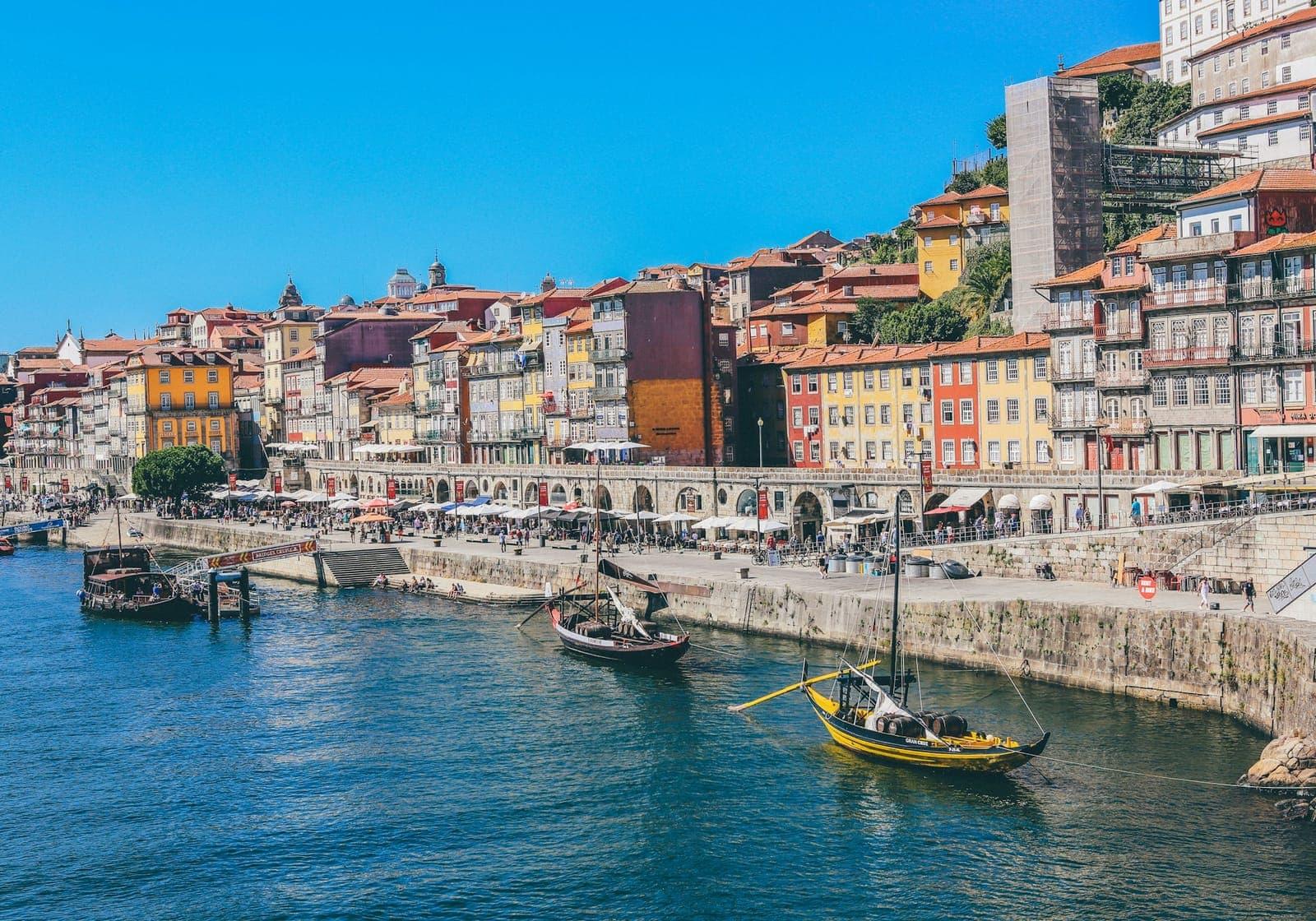
6. Portugal — Europe's best safety/price ratio in 2026. Lisbon, Porto, Algarve, Coimbra, Azores: violence against solo female tourists is statistically very low, PSP police has English tourism unit, private gynecology in hospital costs USD 60 by card, eSIM works nationwide. Catcalling exists but at an order of magnitude lower than Southern Italy. Female hostels in Alfama and Cedofeita are consistent. 2026 cost: USD 75-115/day average. See our Lisbon and Porto guides for cultural background.
7. Austria — Vienna has been Mercer's most livable city for 8 years. Salzburg, Innsbruck, Hallstatt: high peace, ÖBB train safe 24h, solo female safety equivalent to Switzerland at 30% less cost. Limit: German outside the capital; download Google Translate offline. 2026 cost: USD 140-200/day average.
8. Ireland — Dublin and rural west (Galway, Connemara, Aran Islands) are solo-friendly by culture. Irish people strike up conversation with solo travelers without agenda. Dangerous urban neighborhoods exist (Dublin north inner city, parts of Limerick) but are identifiable. 2026 cost: USD 130-180/day average (Dublin expensive, west reasonable).
9. Denmark — Copenhagen is solo paradise: safe bicycle 24h, solo-friendly cafés, Steel House and Generator hostels well-managed. Aarhus, Odense equally peaceful. Risk: Christiania at night (alternative zone) has no-photo rule and tense energy after 10 p.m. 2026 cost: USD 160-230/day average.
10. Taiwan — solo travel discovery of the decade. Taipei at night is as safe as Tokyo. 7-Eleven on every corner selling USD 3 hot meals, MRT safe 24h, female hostels in Ximending and Da'an consistent. Solo Female Traveler Network reports zero serious incidents in 3 years of data. 2026 cost: USD 65-100/day average. Catch: Mandarin is cold with travelers, but most tourism understands basic English.
Get one journey a week.
Voyspark editorial newsletter — long-forms, tips and discoveries that don’t fit on Instagram. Weekly, no ads.
No spam. Unsubscribe in 1 click.
Mid-tier countries — where to feel good with nuance (rank 11-20)
TL;DRGeorgia, Netherlands, Spain (excluding Seville at night and specific neighborhoods), Germany, South Korea, Finland, Estonia, Vietnam, Sri Lanka, Czechia. Solo is viable with average awareness.
11. Georgia (Tbilisi, Kazbegi, Kutaisi) — surprise. Hospitable culture without being invasive. Georgian women travel solo within the country without issue, a cultural green signal. Tbilisi at night is safe in the center (Vera, Mtatsminda). Catch: marshrutka (shared van) driver may touch your knee — refuse and switch vans. 2026 cost: USD 35-55/day average. USD 3 Georgian wine is good.
12. Netherlands — Amsterdam, Utrecht, Rotterdam are absolute solo-friendly. Urban catch: Red Light District after 2 a.m. has drunk intrusive tourism; leave before. 2026 cost: USD 130-180/day average.
13. Spain (urban, excluding certain neighborhoods) — Madrid, Barcelona, Granada, Seville by day: great solo. Madrid Lavapiés and Embajadores at night: pickpocket caution. Barcelona La Rambla and El Raval at night: harassment + pickpocket. Seville old neighborhoods: catcalling. 2026 cost: USD 90-140/day average.
14. Germany — Berlin, Munich, Hamburg, Cologne: solo OK. Berlin specific neighborhoods (south Kreuzberg, Görlitzer Park at night) have drug scene — avoid. 2026 cost: USD 110-150/day average.
15. South Korea — Seoul at night is safe. Korean women travel solo as standard. Cultural catch: drinking happens a lot and a solo female tourist at a bar may receive attention; PC bangs and night cafés are neutral alternatives. 2026 cost: USD 95-140/day average.
16. Finland — Helsinki is standard Nordic (safe). Arctic winter solo requires prep, not social but physical risk (cold). 2026 cost: USD 140-200/day average.
17. Estonia — Tallinn is solo travel gem: compact medieval city, safe, USD 60-90/day average. National public wifi.
18. Sri Lanka — post-2022 crisis stabilized in 2024-2026. Galle, Kandy, Ella, Mirissa: solo OK with knee-length dress and shoulders covered in temples. Female tuk-tuks (PickMe app filters) growing. Catch: deserted beaches at night — avoid. 2026 cost: USD 35-60/day average.
19. Vietnam — Hanoi, Hoi An, Hue, HCMC: solo viable with good radar for scams (fake meter taxi, "hotel closed"). Big cities have female hostels (Hanoi Backpackers, Vietnam Backpacker). Catch: rural north Sa Pa homestay — confirm host family, not single male host. 2026 cost: USD 30-55/day average.
20. Czechia (Prague + interior) — Prague tourist center is safe with common pickpocketing (Charles Bridge afternoon, metro line A). Český Krumlov is tiny solo paradise. 2026 cost: USD 70-105/day average.
Destinations requiring more preparation (rank 21-30)
TL;DRMorocco, Egypt, Turkey, Southern Italy, India (specific urban), Indonesia (Bali OK; Sumatra with guide), Kenya (Nairobi+Masai Mara with operator), Peru (Cusco OK; Lima center with awareness), Argentina (BA OK; north with guide), Philippines (Manila with caution; Cebu, Bohol, Palawan OK). Viable, but demand dress code, tools, and calibrated expectations.
21. Morocco — Marrakech, Fez, Chefchaouen, Essaouira: verbal and visual harassment is high in medinas. Western women solo report daily catcalling, unsolicited "guide" offers, accidental touching in crowds. It's not Iraq, it's exhaustion. Strategy: ankle-length dress + neck scarf, riad with female owner (Riad Dar Anika in Marrakech), pre-booked female guide (Marrakech Female Tour Guides Association), women-only hammam. Good news: serious violence against solo tourists is rare, kidnapping non-existent, tourist police (Brigade Touristique) functions reasonably. 2026 cost: USD 55-90/day average.
22. Egypt (Cairo + Nile Valley) — verbal harassment is the rule on the street, but physical violence rare. Cairo better with guide or tour. Nile cruise Luxor-Aswan is solo-friendly (Viking, Sanctuary Retreats, MS Salacia have trained staff). Knee/shoulder-covering dress mandatory outside hotel. Hijab optional. 2026 cost: USD 70-130/day average.
23. Turkey (Istanbul + Cappadocia) — solo viable in central Istanbul (Sultanahmet, Beyoğlu) and Cappadocia (touristic villages Göreme, Uçhisar). Catch: year of post-2023 political tension and new regime — check State Dept advisory first. Grand Bazaar has nominal but low-level harassment. Female-only hammam at Cağaloğlu. 2026 cost: USD 60-100/day average.
24. Southern Italy (Naples, Palermo, Bari) — systematic catcalling, especially in summer. Organized pickpocketing in central Naples. Serious violence rare. Strategy: Airbnb in residential neighborhood (Posillipo, Vomero in Naples), avoid Spaccanapoli at night, restaurant table for 1 is no problem. 2026 cost: USD 110-160/day average.
25. India (Mumbai, Delhi, Goa, Kerala) — this entry requires honesty. Official statistics underreport crime against women, and Solo Female Traveler Network reports about Delhi (Paharganj, rush-hour metro) are consistently bad (intense gaze, crowd touching, persistent propositions). But Kerala, Goa off-season, Rajasthan with female guide, and South Mumbai (Colaba, Bandra) are functionally OK. Strategy: female-only hostel (Zostel female floor), always Uber/Ola (street taxi only if pre-paid at airport), long kurta + loose pants always, avoid prolonged male eye contact. 2026 cost: USD 35-70/day average.
26. Indonesia (Bali OK, Java/Sumatra with guide) — Bali (Ubud, Canggu, Uluwatu, Seminyak) is true solo paradise: female hostels, women-only yoga retreats (The Yoga Barn, Radiantly Alive), hospitable Balinese culture. Java (Yogyakarta, Bromo) is OK with tour. Sumatra (Bukit Lawang) requires guide. 2026 cost Bali: USD 50-95/day average.
27. Kenya (operated safari) — Nairobi (Westlands, Karen) OK by day; center at night not. Operated safari (Asilia, Gamewatchers, Basecamp) is zero practical risk. Solo female on safari is standard. 2026 cost: USD 200-400/day average (safari).
28. Peru (Cusco and Sacred Valley safe; Lima center awareness) — Cusco, Sacred Valley, Machu Picchu: solo is normal, solid tourist infrastructure, female hostels (Pariwana, Wild Rover) in Cusco. Lima historic center at night: pickpocket caution. Miraflores and Barranco OK. 2026 cost: USD 50-90/day average.
29. Argentina (Buenos Aires OK, north with guide) — Buenos Aires (Palermo, Recoleta, San Telmo by day) solo OK. La Boca after 5 p.m.: no. Salta/Jujuy north: better with local guide. 2026 cost: USD 60-100/day average (rose post-Milei).
30. Philippines (Cebu, Bohol, Palawan OK; Manila with awareness) — Manila Makati and BGC are OK; other urban areas: caution. Islands (Cebu, Bohol, Palawan, Siargao) are solo paradise with female hostels. Limit: typhoons July-October. 2026 cost: USD 45-80/day average.
Mandatory planning checklist — before buying the ticket
TL;DRDuplicated documents + embassy list + insurance with gynecological coverage + international eSIM + panic app configured + trained emergency contact. Six items. Without these, you don't travel.
1. Documents. Passport with 6+ months validity. Digital copy on private Google Drive + iCloud + email. Physical copy in a bag separate from carry-on. International driving permit if driving (AAA issues for USD 20; AA Australia or UK Post Office for similar prices).
2. Embassies. Offline list with phone + WhatsApp + email + 24h hotline for each US/UK/AUS embassy in your route countries. State Dept maintains at travel.state.gov; UK Foreign Office at gov.uk/foreign-travel-advice; Smart Traveller at smartraveller.gov.au — they have more granular advisories than the macro level for specific countries.
3. Insurance. Minimum coverage USD 500k medical + USD 100k repatriation + COVID + cancellation. Confirm specifically: emergency gynecology, morning-after pill, psychology/psychiatry, medical evacuation. 2026 brands that cover: World Nomads Explorer, Allianz Travel Premier, SafetyWing Nomad Insurance (cheapest, USD 45/month), IMG Global Patriot, AXA Schengen Multi Trip.
4. International eSIM. Ubigi (digital eSIM, 130+ countries, USD 10-30 plans per 10GB), Holafly (unlimited plans USD 60-150/month), Airalo (most economical, Asia regional plan USD 18 per 5GB). Set up before boarding.
5. Panic app. bSafe (USD 5/month, auto-records audio+video on activation, sends GPS to emergency contacts, works via SMS without internet). Noonlight (US, integrates with 911). Life360 (continuous family tracking). TripWhistle Global SOS (free, lists emergency numbers from 196 countries).
6. Trained emergency contact. One person at home who knows your complete itinerary (hotels, flights, local contacts), has a passport copy, knows how to activate embassy and insurance, and has 24h WhatsApp access. Mom, sister, best friend. Trained — it's not enough to inform, you have to teach them how to act.
What no one tells you — truths from women who've solo-traveled for 10 years
TL;DRThe real risk is fatigue + financial isolation + cultural reverse-shock, not robbery. Learning to schedule pauses in comfort countries is the skill that separates amateur from veteran.
Mental fatigue is the silent risk. Ten days alone in a country without a shared language blinds your risk radar. You start accepting invitations you'd refuse at home just because you're thirsty for conversation. Solution: female-only dorm for the first 2-3 days of each country to force light interaction (you don't talk to walls), and Tourlina/Maven to organize a dinner with another solo woman in the 1st week of each destination.
Financial isolation is second. Chase card cloned at a Moroccan ATM, Bank of America blocks for anti-fraud, Wise expires for pending verification, and you're cashless in Fez on a Friday night. Solution: three different cards (Wise + Charles Schwab debit + your primary US bank), USD 200 in cash hidden in a location separate from your wallet (bra pocket, under-clothing money belt, inner shoe sole), backup digital account with dedicated emergency balance (SoFi, Revolut). Never just one card.
Cultural reverse-shock takes its toll. Arriving in Tokyo after 3 weeks in Morocco is reverse shock — extreme silence after constant noise. Veteran solo travelers plan 3-5 day pauses in comfort countries between demanding destinations. Portugal, Japan, New Zealand, Slovenia, Austria function as resets. Resetting isn't weakness, it's long-haul strategy.
You will lie. About your name, about a fictional husband, about your route. "My husband is meeting me at the hotel in 2 hours" is a phrase veteran solo women use without ceremony. It's not about integrity — it's about minimizing friction. A fake wedding ring at the Doha duty-free (USD 8) is a veteran's purchase. The solo woman in 2026 has understood that a tool is a tool, not moral betrayal.
The internet will disappoint you. Solo travel reels are performance, not reality. The blogger in a white dress in the Sahara doesn't mention the driver who asked for USD 200 extra on the way back. The TikTok "I went solo to Tokyo at 24" doesn't show the night crying in a capsule room because jet lag turned into anxiety. Solo travel is wonderful and hard. Both. Veterans say this. Influencers still don't.
Finally: the solo traveler of 2026 knows safety comes from preparation + intuition + tools, not a perfect country. Japan is the safest country in the world and still Japanese women carry anti-chikan whistles. Portugal is among Europe's safest and still American solo women in Lisbon use panic apps. It's not paranoia, it's maturity. Travel insurance is like car insurance: you buy it hoping not to use it. And almost never use it. But the peace of mind pays for itself.
Safe travels. Leave light, come back whole, with a story to tell.
Key points
Japan is the safest country on the planet for solo female travelers in 2026 — not because of performative kindness, but because of structure: women-only train cars during rush hour, koban (mini-police boxes) in every neighborhood, street assault rates statistically near zero, and a cultural norm of non-interference that protects without isolating. Solo Female Traveler Network has ranked Tokyo above Reykjavik since 2023.
The indexes don't measure the same thing. Global Peace Index measures macro peace (Iceland #1, Ireland #2, Austria #3). Bounce Women Travel Safety Index measures specific female perception (Slovenia, Switzerland, Japan top). Solo Female Traveler Network (124k members, qualitative data) places Japan, New Zealand, and Portugal in the top 5. Cross-referencing all three gives you a real read, not tourism marketing.
Synthesized 2026 top 10: 1) Japan, 2) Iceland, 3) Slovenia, 4) Switzerland, 5) New Zealand, 6) Portugal, 7) Austria, 8) Ireland, 9) Denmark, 10) Taiwan. Countries like Georgia (12), Sri Lanka (18), and Vietnam (15) rank higher than expected because scams are predictable and violence against solo female travelers is statistically low, despite cultural noise.
Conversation
…Log in to drop your insight
Serious conversation, no trolls. Moderated comments, linked to your Voyspark profile.
Sign in to commentLoading…

About the author
Curadoria Voyspark
2 years in the Voyspark editorial team
Time editorial da Voyspark — escritores, repórteres, fotógrafos e fixers em Lisboa, Tóquio, Nova York, Cidade do México e Marrakech. Coletivo. Sem voz corporativa. Cada peça com checagem cruzada por um editor regional e um chef ou curador local.
Expertise


