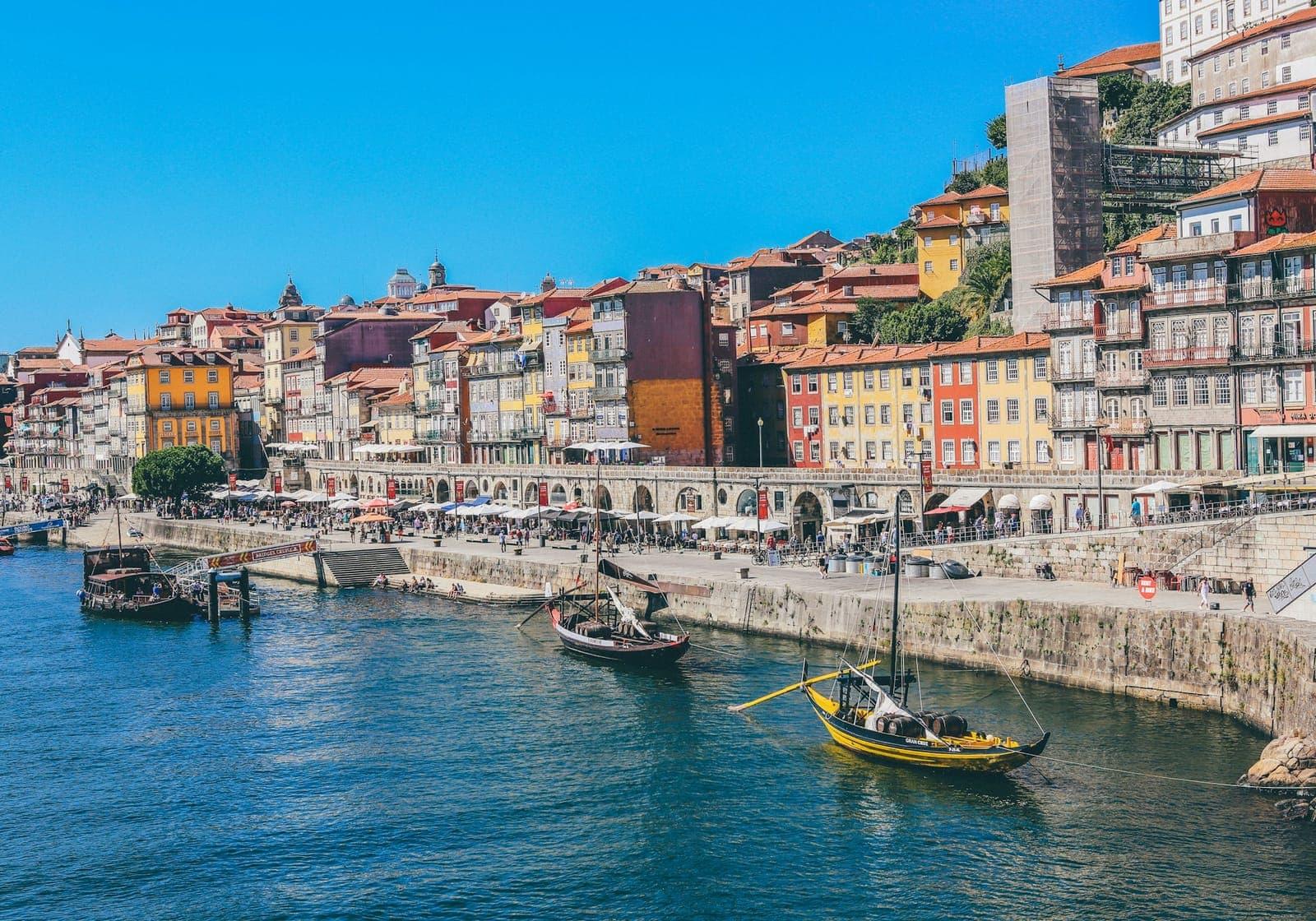
In May 2026, three of the world's most desired cities moved from complaining to charging. Venice fines you if you walk in without paying. Barcelona voted to ban short-term rentals entirely by 2028. Amsterdam runs an official campaign telling you to stay home. This piece breaks down exactly what changed in each city, what the real fine is, and hands you the smart dupes that haven't gone viral yet — because the good traveler in 2026 is the one who knows the local matters more than the photo.
13 min de leitura
On July 14, 2024, 150,000 people marched in Palma de Mallorca holding signs that read "Mallorca no es vende". In Barcelona, the same month, activists sprayed water on tourists sitting at bar tables along Las Ramblas. In Amsterdam, the city launched an official campaign called "Stay Away" showing young British men being arrested for urinating in the street. In Venice, starting April 2024, the city began charging an entry fee.
This wasn't an isolated mood swing. It was the tipping point. In 2026, overtourism stopped being a resident's complaint and became public policy with the force of law. Real fines. Mandatory QR codes. Tourist rentals banned. Cruises banned. New hotels banned.
The average international traveler arrives in 2026 not knowing any of this and runs into expensive surprises. This piece is the manual for visiting the three most regulated cities in Europe without becoming the problem — and the dupes that deliver 80% of the experience for half the stress.
Venice: the first city in the world to charge admission
The Contributo di Accesso went live on April 25, 2024 as a 29-day experiment. In 2025 it expanded to 54 days. In 2026 it became a fixed calendar rule: every Friday, Saturday, Sunday and holiday between April 18 and July 27, 8:30 AM to 4:00 PM, day-trippers pay to enter the historic center.
The price varies. Book more than 4 days ahead and you pay €5 (about USD 5.50). Book last minute and you pay €10 (about USD 11). Children under 14 don't pay but must be registered in the parent's QR code. Hotel guests in Venice don't pay — they already contribute via the lodging tax, billed separately by the hotel (€1-5 per night depending on category).
How it works: you go to cdaverify.veneziaunica.it, enter your details, pay with an international card, get a QR code by email. Arriving at the Liberty Bridge, Piazzale Roma or Santa Lucia station, there are random checkpoints. The inspector asks for the QR. No valid QR, instant fine of €50-300 plus the retroactive entry fee.
In 2026 there are also coupled ZTL (Limited Traffic Zones): tour groups over 25 people are banned in the center, and guides must be registered with the city. Loudspeakers on tours are banned — using a megaphone gets you a €25-500 fine.
Venice in 2026 works for those who sleep inside it. Anyone arriving by day trip from Padua or Venice Mestre to photograph San Marco and leave is the profile the city wants to push away. Solution: either stay inside (more expensive, more authentic, no checkpoint line) or flip the trip — visit the lagoon's periphery instead of the center.
Smart dupe: Chioggia. Town at the southern tip of the lagoon, 30 minutes by bus from Venice. Identical canals, a bridge with a daily fish market, restaurants where €25 buys a full seafood dinner. Zero tour buses, zero queues, no entry ticket. Venetians call Chioggia "little Venice" — but because nobody knows, it's still worth it.
Complementary dupe: Murano. Skip Burano (it's become Disneyland) and stay in Murano, where the glassblowers actually work and the workshops welcome visitors. Vaporetto 4.1 or 4.2 from Fondamente Nove runs every 12 minutes.
Barcelona: the end of tourist rentals
On June 21, 2024, mayor Jaume Collboni announced what nobody saw coming: Barcelona will eliminate all 10,101 short-term tourist rental licenses by November 30, 2028. Not a cap. Not a quota. Total end.
In 2026, the process is underway. About 1,800 licenses have already dropped — some not renewed, others irregular. Those remaining must display the HUTB number (Habitatge d'Ús Turístic Barcelona) in every listing. No HUTB on the Airbnb or Booking listing means illegal. An illegal booking can be cancelled by the city with no refund.
How to verify: the HUTB number always starts with the prefix, hyphen and digits (e.g., HUTB-006789). You can validate it on the official registry at registreturisme.gencat.cat. If the host won't provide the number before booking, it's a trap.
Beyond the ban, Barcelona has applied since 2024 a municipal tourist tax of €4-7 per person per night (depending on category) plus the regional Catalan tax of €1.75-3.50. Total: up to €10.50 per person per night at a 5★ hotel. Children under 16 are exempt.
The pressure began in Park Güell, capped at 1,600 visitors per hour since 2023, and at Sagrada Família, which runs on timed slots with mandatory booking 30-60 days ahead. In 2026 even previously overlooked neighborhoods (Gràcia, Sant Antoni) started restricting guided group tours.
Smart dupe: Tarragona. Roman capital of Catalonia, 1h20 by train from Barcelona Sants. Seafront amphitheater, intact medieval city, serious Catalan gastronomy at half the price, blue-flag beaches. In 2026, zero overcrowding. Spanish domestic tourism, almost no foreigners.
Complementary dupe: Valencia. 3 hours by train from Barcelona. Catalan-Valencian city with the City of Arts and Sciences, a central market that shames La Boqueria, original paella (not Barcelona's tourist version), urban beach at Malvarrosa.
Forget Sitges. It's become a packed extension of Barcelona, full ferry, downtown prices.
Amsterdam: the "Stay Away" campaign and the cruise ban
In 2023, Amsterdam did something unprecedented: it launched a targeted ad campaign asking young British men to not visit the city. Geo-targeted ads on YouTube and TikTok showed images of arrest, fines, and vomiting, warning about the legal consequences of party behavior. In 2024 it expanded to young Germans and French. In 2026 it's still running.
It's not just a campaign. In July 2024 the city council passed a ban on new hotels in the center. In 2026, no new hotel has opened inside the A10 ring. In January 2026 the ban on cruise ships at the central PTA terminal kicked in — they now dock in IJmuiden, 25 km out, with mandatory bus transfer. Cruise visits dropped from 190 a year to 50 in 2026, with a target of zero by 2035.
The tourist tax is Europe's highest: 12.5% on the hotel rate plus €3 per person per night. At a 4★ hotel at €220, that's €30 extra per night. Airbnb was capped in 2020 at 30 nights per year per property — in 2026 enforcement is digital and automatic, with platforms required to block listings after the limit.
Coffee shops: the city tried to ban tourists in 2023, walked it back in 2024 under economic pressure, but in 2026 set restricted zones. The Red Light District closes at 1 AM (instead of 3 AM), some streets ban window displays, and guided prostitution tours were banned in 2020.
Smart dupe: Haarlem. 15 minutes by train from Amsterdam Centraal. Older sister city, identical canals, the Frans Hals museum rivals any gallery in downtown Amsterdam, Wednesday and Saturday market at Grote Markt. A 4★ hotel costs €110 when the Amsterdam equivalent costs €220.
Forget Utrecht. It became the "conscious destination" recommended in every guide and it's packed. In 2026 Utrecht already has its own tourist tax and is debating caps.
Operational play: sleep in Zaandam. Town glued to Amsterdam, 12 minutes by direct train. The Inntel Zaandam Hotel is the icon of the stacked green houses — €130 a night when the Amsterdam equivalent costs €280. Take the 9 AM train in for sightseeing, head back at 10 PM to sleep. You save money, sleep in peace, and get your own town to explore.
Receba uma viagem por semana.
Newsletter editorial Voyspark — long-forms, dicas e descobertas que não cabem no Instagram. 1x por semana, sem ads.
Sem spam. Cancela em 1 clique.
The European overtourism table for 2026
| City | 2026 Restriction | Penalty | Smart dupe |
|---|---|---|---|
| Venice | Contributo di Accesso €5-10 on 54 days/year. Online booking required. | €50-300 plus retroactive entry fee | Chioggia (southern lagoon) |
| Barcelona | All short-term rentals being phased out by 2028. HUTB number required in listing. | Cancellation with no refund, €60k fine to host | Tarragona (1h20 by train) |
| Amsterdam | Full ban on new central hotels. Cruise ships banned from PTA. 12.5% + €3/night tax. | €4,500 fine to illegal hotel, €380 to tourist for misbehavior | Haarlem (15 min by train) |
| Mallorca | 12 million tourists/year cap. Illegal rentals fined €40k. Beach daily quotas. | €750 to tourist renting without license | Menorca (calm sister) |
| Santorini | €20 cruise passenger tax. Cap of 8,000 cruisers/day. | Boarding denied without proof of tax | Folegandros (3 hr ferry) |
How to visit anyway
Regulation doesn't stop you from going. It forces you to plan better. In 2026, the cheap, improvised trip to these cities is over. The well-planned trip is alive and well.
Venice: go to cdaverify.veneziaunica.it 30 days before your trip, book the exact day, download the QR to your phone. If your trip is two days, book both. If you're staying in a hotel inside Venice, get written booking confirmation — that exempts you from the Contributo, but you still pay the lodging tax billed by the hotel. Vaporetto: the 7-day Venezia Unica card is €65 (about USD 71) and pays off if you use 4+ rides per day.
Barcelona: if Airbnb, demand the HUTB number before booking. No number, no booking. Hotels operate normally, no risk. Book Sagrada Família, Park Güell and Casa Batlló 60 days ahead — day-of tickets sell out in high season. To get around: the T-Casual card with 10 rides costs €12.55 (about USD 14), works on metro and bus, transferable between people.
Amsterdam: stay in Zaandam or Haarlem if you want a fair price. Book museums (Rijksmuseum, Van Gogh, Anne Frank) 90 days ahead — Anne Frank literally sells out in 4 minutes when a new batch releases (first working day of each month for three months ahead). The I amsterdam City Card only pays off if you hit 4+ museums in 48 hours. The 24-hour GVB card is €9 (about USD 10), good for tram and metro.
The ethics of the choice: how to be a good tourist in 2026
All this regulation isn't anti-tourism. It's anti-behavior. The city doesn't hate you for being there — it hates you for spending at Starbucks on St. Mark's Square, renting an Airbnb that displaced a Venetian family, making noise at 2 AM in a Born residential street, vomiting into an Amsterdam canal after a night at the Coffee Shop.
There is a tourist these cities want. It's the one who:
- Eats at a trattoria off the tourist trail, pays cash, leaves €2 tip (in Italy a tip isn't mandatory — service is already in the "coperto," but €1-2 per person is appreciated).
- Learns to say "bon dia" in Catalan, "buongiorno" in Italian, "goedemorgen" in Dutch. Not memorization. Recognition that the place existed before you arrived.
- Buys at the local bakery instead of a fast-food chain. In Venice, a cicchetti with an ombra (glass of wine) at a bacaro costs €4 and feeds a family directly.
- Books a registered local guide for a tour, not a free walking tour (which is predatory toward underpaid guides).
- Doesn't photograph residents. Full stop. A Venetian woman leaving the market isn't a backdrop.
- Carries the bag. Barcelona's Gràcia neighborhood hates people rolling a suitcase over cobblestones early in the morning. Bubble wrap on the handle solves it.
- Respects quiet hours. In Amsterdam, after 10 PM, you speak softly on the street. It's not a written rule — it's culture. Fines exist (€140 for noise).
Tipping varies a lot:
- Italy: 5-10% at a restaurant if service isn't included. Espresso at the counter, nothing.
- Spain: 5% at a good restaurant, round up the bill at a bar.
- Netherlands: 5-10% if you enjoyed it. Not mandatory, service is included.
In all three countries, don't leave loose change as a tip — it sounds offensive. Use a bill or round up.
What to expect in 2027
The regulatory wave will expand. In 2027, Paris is debating a Venice-style historic-center fee. Lisbon is already studying Airbnb caps in Alfama and Bairro Alto. Florence announced a restriction on tour groups over 25 people. Rome is studying a fee to enter Trastevere on weekends.
The traveler prepared for 2026 and 2027 accepts a simple truth: the Europe of 2015 — cheap Airbnb in historic centers, improvised day trips, unlimited selfies — is over. Europe in 2026 charges to enter, asks you to stay out, demands a license to host.
And it's still Europe. You only have to decide if you want to pay the price — in money and in respect — or go to the places that haven't been regulated yet.
Chioggia is waiting. Tarragona is waiting. Haarlem is waiting. And five years from now, maybe those will be the cities charging admission.
Voyspark content. For a personalized itinerary around European overtourism, talk to Atlas in the chat.
Pontos-chave
Venice charges a Contributo di Accesso of €5-10 per day-tripper on 54 days of the 2026 calendar (Fridays, Saturdays, Sundays and holidays from April through July). Walk in without a paid QR code and the fine is €50-300. Book online up to 30 days ahead at cdaverify.veneziaunica.it (about USD 5-11).
Barcelona voted in June 2024 to end all short-term tourist rentals (STRs) by 2028. By 2026 active licenses are already down 18%. Rentals must show a HUTB license number in the listing — anything else is illegal and cancellable.
Amsterdam has Europe's highest tourist tax: 12.5% on the hotel rate plus €3 per person per night since January 2024 (still in force in 2026). Cruise ships are banned from the central terminal as of 2026, and new hotels have been banned since 2024.
Perguntas frequentes
€5 if booked more than 4 days in advance, €10 last minute. Active on Fridays, Saturdays, Sundays and holidays between 18 April and 27 July, from 8:30 to 16:00. Kids under 14 exempt but must be on the responsible adult's QR. Hotel guests in Venice don't pay.
Conversa
…Faça login pra deixar seu insight
Conversa séria, sem trolls. Comentários moderados, vínculo ao seu perfil Voyspark.
Entrar pra comentarCarregando…

Sobre o autor
Curadoria Voyspark
2 anos no editorial Voyspark
Time editorial da Voyspark — escritores, repórteres, fotógrafos e fixers em Lisboa, Tóquio, Nova York, Cidade do México e Marrakech. Coletivo. Sem voz corporativa. Cada peça com checagem cruzada por um editor regional e um chef ou curador local.
Especialidades