

The question "how much cash should I bring on a trip?" has no single answer. The US with USD 100-200 covers an entire stay. Vietnam without cash leaves you stuck at your first pho. Cuba without cash breaks the whole trip. Tokyo accepts cards less than you'd think. This guide covers 15 destinations with a recommended daily cash table, the currency that performs best (USD, EUR, or local), whether it pays to bring it from home or exchange at destination, and why the airport is always the worst option. At the end, a rule of thumb that works for any country in the world.
15 min read
The question "how much cash should I bring on a trip?" sounds simple, but it actually packs three different decisions: how much, in which currency, and where to exchange. Most travelers answer it from the couch based on cousin-folklore — "take 500 bucks, that'll do" — and discover at destination that the math doesn't work. Too much cash pays for expensive insurance, becomes a target in a robbery, and sits idle in a hotel safe. Too little forces you into an airport ATM with rotten rates, or worse, leaves you hostage to a single card that may get blocked on first use.
The right answer depends on the destination. The US and Canada are card economies: you spend 10 days and barely touch cash. Tokyo, counterintuitively, still demands daily cash for eating outside the tourist circuit. Vietnam, Cambodia, Laos, and Cuba are almost pure cash economies — without physical money you don't move. Argentina is a parallel universe, where USD in hand is worth 30-50% more than card. Each place has its logic. This guide is the table that was missing.
The 30% rule
TL;DRBefore diving country by country, fix this rule of thumb for any destination: Cash in hand should never exceed 30% of the total trip budget. The other 70% splits between: International credit card (40-50%): hotel, flights bought at destination, expensive dinners, medical emergencies.
Before diving country by country, fix this rule of thumb for any destination:
Cash in hand should never exceed 30% of the total trip budget.
The other 70% splits between:
- International credit card (40-50%): hotel, flights bought at destination, expensive dinners, medical emergencies.
- Global-account debit card (20-30%): daily spending in destination currency, with low spread — Wise and Revolut lead in May/26.
Cash stays with you for three reasons only: street markets, local transport (taxi, tuk-tuk, bus), and countries where cards don't work. Anything that can be paid by card should be paid by card — provided your card's spread is decent.
Destination table — recommended daily cash
TL;DRThe values below are for a middle-class traveler at a "city explorer" pace, eating out twice a day, mixing public transport with taxi when needed. Doesn't include accommodation (always card) or domestic flights. This is the cash that stays in your pocket to run the day.
The values below are for a middle-class traveler at a "city explorer" pace, eating out twice a day, mixing public transport with taxi when needed. Doesn't include accommodation (always card) or domestic flights. This is the cash that stays in your pocket to run the day.
| Country / Destination | Recommended daily cash | Preferred currency | Cards work? | Where to exchange |
|---|---|---|---|---|
| USA | USD 30-50 | Local USD | Yes, 98% of places | At home (better rate) |
| Canada | CAD 30-50 | Local CAD | Yes, 98% of places | At home (USD) and exchange there |
| Western Europe (FR, IT, ES, PT, DE, NL) | EUR 30-50 | Local EUR | Yes, 95% | At home |
| United Kingdom | GBP 30-50 | Local GBP | Yes, 98% (contactless dominant) | At home |
| Japan (Tokyo, Kyoto) | JPY 10k-15k | Local JPY | Hybrid (60% of places) | At home in JPY or USD + local exchange |
| Vietnam | USD 40-60 or VND equivalent | USD or VND | Limited (hotels/tourist restaurants only) | At destination (downtown exchanges) |
| Cambodia | USD 30-50 | Clean USD (yes, USD circulates locally) | Almost not | No need to exchange — use USD |
| Laos | USD 30-50 or LAK | USD or LAK | Poorly | At destination |
| Thailand | THB 1,000-1,500 | Local THB | Hybrid (70% of places) | At destination (Bangkok has better rates than airport) |
| Indonesia (Bali) | IDR 500k-800k | Local IDR | Hybrid (60% of tourist places) | At destination (reliable exchanges) |
| Argentina | USD 30-60 | Physical USD (exchange at blue) | Yes, but loses 30-50% | At home in USD + blue exchange there |
| Cuba | EUR 50-100 | Physical EUR (USD has penalty) | Barely works | At home in EUR |
| Mexico | MXN 500-1,000 | Local MXN | Yes in cities (90%) | At destination or at home in USD |
| Egypt | USD 30-50 or EGP | USD or EGP | Poorly (only big hotels) | At destination (reliable exchanges) |
| Morocco | MAD 300-500 | Local MAD | Hybrid (60% of places) | At destination (dirham is a closed currency — can't be brought from home) |
| Turkey | TRY 1,000-1,500 or USD | USD (high inflation) | Yes, but lira devalues fast | At destination (daily exchange to avoid accumulation) |
US, Canada, and Western Europe — the card world
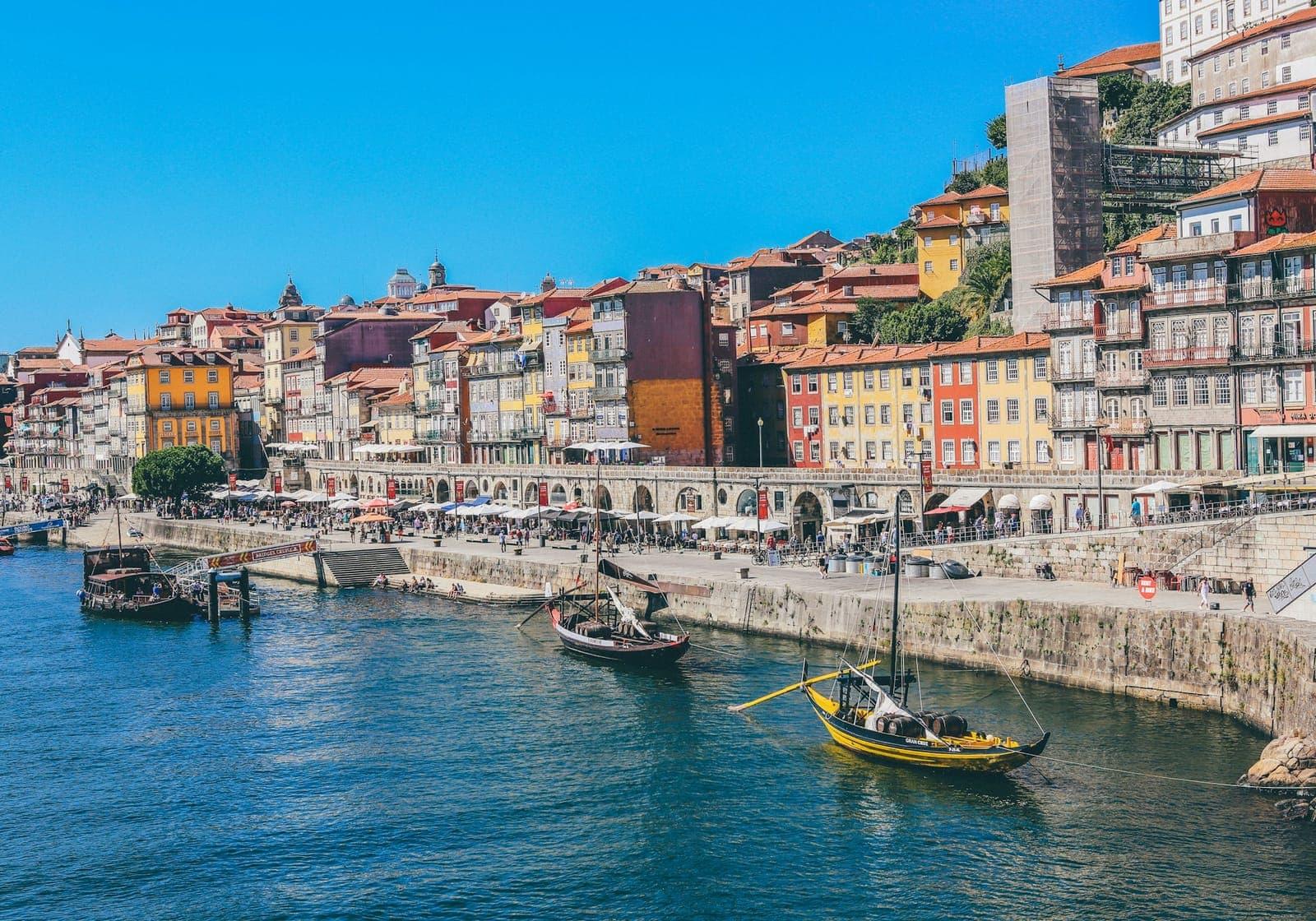
TL;DRIn these destinations, cash is almost decorative. The US has had dominant contactless since 2020, Western Europe followed, Canada too. You spend 10 days in New York, Paris, Lisbon, or Toronto and barely see a bill. Everything is card, Apple Pay, or Google Pay.
In these destinations, cash is almost decorative. The US has had dominant contactless since 2020, Western Europe followed, Canada too. You spend 10 days in New York, Paris, Lisbon, or Toronto and barely see a bill. Everything is card, Apple Pay, or Google Pay.
When you need cash: hotel tips (USD 1-2 per bag, USD 2-5 a day for housekeeping), traditional taxi tip outside Uber, street markets (Borough Market in London, producer markets in southern Europe, Chinatown in any big city), and small bars in non-tourist neighborhoods. In Paris and Lisbon, neighborhood bakeries sometimes have a card minimum (EUR 5-10) — cash solves the friction.
How much to bring: USD 100-200 or EUR 100-200 easily covers 7-10 days. Bringing more is just paying spread for nothing.
Where to exchange: At home, always. A downtown exchange in your origin city beats any airport counter. Compare three places before committing.

About the author
Curadoria Voyspark
2 years in the Voyspark editorial team
Time editorial da Voyspark — escritores, repórteres, fotógrafos e fixers em Lisboa, Tóquio, Nova York, Cidade do México e Marrakech. Coletivo. Sem voz corporativa. Cada peça com checagem cruzada por um editor regional e um chef ou curador local.
Expertise


